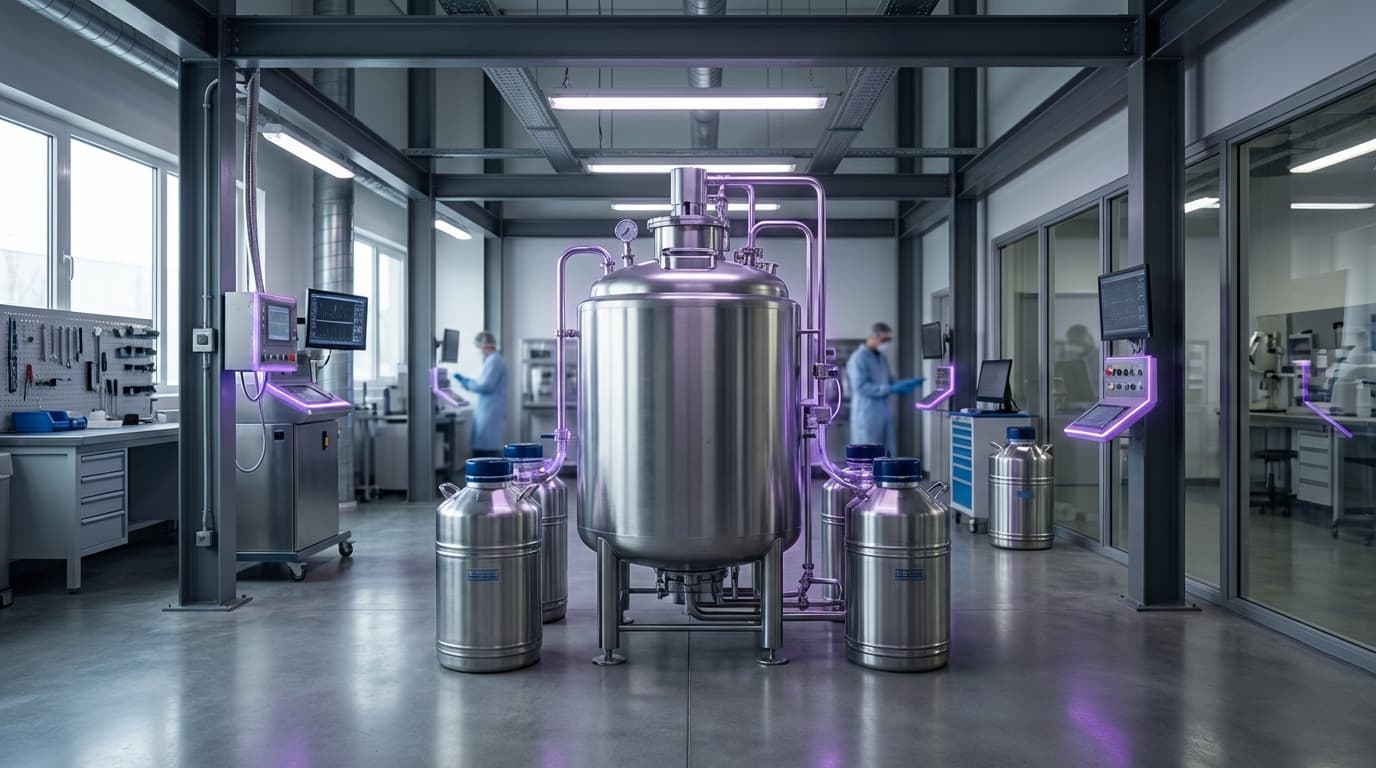
Cryopreservation Systems
Cryopreservation systems represent a radical departure from traditional end-of-life practices, treating biological death not as a final endpoint but as a potentially reversible medical condition. These systems employ sophisticated medical-grade equipment designed to preserve human bodies or isolated neural tissue at cryogenic temperatures, typically around -196°C using liquid nitrogen. The preservation process begins immediately after legal death, when specialized perfusion equipment replaces blood and bodily fluids with cryoprotectant solutions—chemical compounds that prevent ice crystal formation during cooling, which would otherwise cause catastrophic cellular damage. The controlled cooling process follows precise temperature gradients, carefully managing the transition from body temperature to cryogenic storage conditions. Once stabilized, preserved specimens are transferred to specialized dewars—heavily insulated storage vessels that maintain consistent ultra-low temperatures through continuous liquid nitrogen immersion. These storage systems incorporate redundant monitoring technologies that track temperature fluctuations, nitrogen levels, and structural integrity, with automated alert systems designed to notify facility operators of any deviations from optimal preservation conditions.
The emergence of cryopreservation infrastructure addresses a fundamental challenge in how societies conceptualize mortality and medical intervention. Traditional burial and cremation practices offer no possibility of future medical intervention, while cryopreservation proponents argue that advances in nanotechnology, cellular repair mechanisms, and regenerative medicine may eventually enable revival and treatment of conditions that are currently fatal. This approach has given rise to specialized facilities that function as long-term biological repositories, requiring decades or potentially centuries of continuous operation. The engineering challenges are substantial: storage facilities must withstand natural disasters, maintain uninterrupted power and nitrogen supplies, and ensure institutional continuity across generations. Some facilities have developed earthquake-resistant vault designs, established endowment funds for perpetual maintenance, and created legal frameworks to protect preserved individuals' interests. The industry also grapples with ethical questions around consent, resource allocation, and the definition of death itself, as preservation must begin within minutes of cardiac arrest to maximize cellular viability.
Current cryopreservation services are offered by a small number of specialized organizations, primarily in the United States and Russia, with several hundred individuals currently in cryogenic storage and several thousand having made arrangements for future preservation. The technology remains controversial within mainstream medical and scientific communities, with critics noting the absence of demonstrated revival protocols and the speculative nature of future reanimation technologies. However, research into cryobiology continues to advance, with successful preservation and revival of simpler organisms and tissues providing proof-of-concept for cellular-level preservation techniques. The field intersects with broader trends in life extension research, personalized medicine, and transhumanist philosophy, which views biological limitations as engineering problems awaiting technological solutions. As the preserved population grows and storage durations extend, cryopreservation systems are evolving from experimental medical procedures into long-term infrastructure projects, raising questions about institutional stability, legal personhood, and society's obligations to the cryopreserved—a population that exists in a liminal state between death and potential future life.
Related Organizations

A cryobiological research company developing vitrification solutions and perfusion technologies.
The world's longest-operating cryonics organization, providing whole-body and neuropreservation services.

The first and largest cryopreservation provider in Europe, offering end-to-end biostasis services.

A member-owned non-profit corporation providing cryonics services and storage.

A research institute conducting the first human cryopreservation in China.

Research lab focused on low-temperature biology and preservation of neural tissue.

A foundation dedicated to translational research in biostasis and cryopreservation.

Operates the first cryonics storage facility in the Southern Hemisphere.

A smaller cryonics provider focusing on affordable neuro-preservation.
Supporting Evidence
Research this in Signals
Signals turns a topic into a sourced research record you can inspect and rerun. Your first scan is free, and this one starts with Cryopreservation Systems already loaded, so edit it or scan as is.