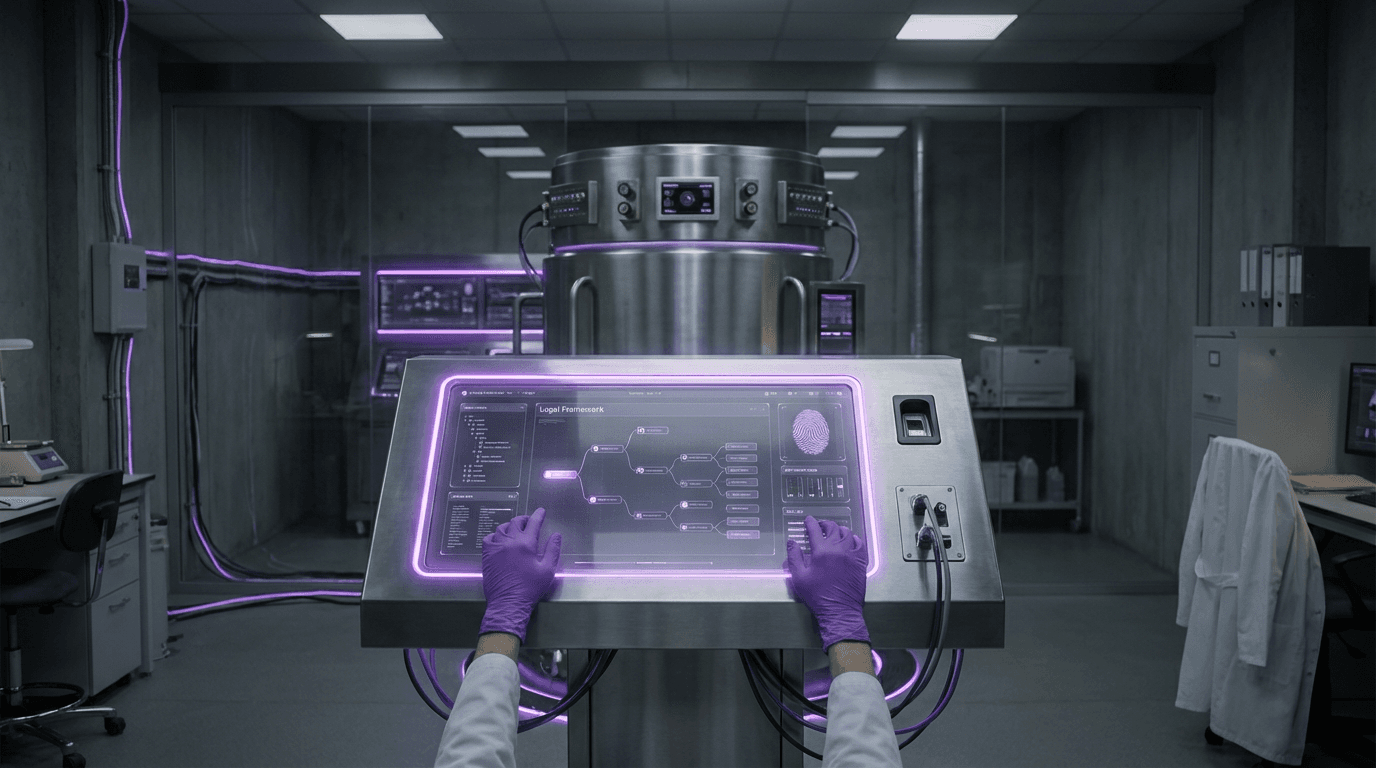
Cryonics Consent & Revival Frameworks
Cryonics Consent & Revival Frameworks represent a novel intersection of bioethics, contract law, and future-oriented governance designed to address the unprecedented legal and ethical challenges posed by human cryopreservation. At their core, these frameworks establish protocols for obtaining informed consent from individuals choosing cryonic suspension, defining the rights and responsibilities of preservation organizations, and anticipating the complex legal status of individuals who may be revived decades or centuries after their biological death. The technical foundation involves creating legally binding documents that must remain enforceable across potentially vast timescales, addressing questions of personhood, identity continuity, and the legal standing of someone who exists in a state between life and death. These frameworks also establish governance structures for making revival decisions, including medical criteria for determining when revival technology has sufficiently advanced, who holds authority to authorize reanimation attempts, and how to handle scenarios where revival becomes possible but the individual's original wishes may conflict with contemporary ethical standards or technological limitations.
The development of these frameworks responds to growing interest in life extension technologies and the increasing number of individuals opting for cryopreservation, which currently lacks comprehensive legal recognition in most jurisdictions. Traditional legal systems were designed around clear distinctions between living and deceased persons, leaving cryopreserved individuals in a regulatory void where their status, rights, and the obligations owed to them remain ambiguous. These protocols address critical industry challenges including liability for preservation failures due to equipment malfunction, organizational bankruptcy, or natural disasters, as well as the thorny question of property rights and inheritance when someone's legal death triggers estate distribution but potential revival remains possible. Research in this area also grapples with the problem of consent validity across time—how can someone meaningfully consent to revival into a world they cannot imagine, with medical procedures that don't yet exist, under social conditions they cannot anticipate? Furthermore, these frameworks must consider the rights of revival-era society to refuse reanimation, the potential for discrimination against revived individuals, and the allocation of responsibility for integrating someone into a radically transformed world.
While no jurisdiction has yet enacted comprehensive cryonics legislation, legal scholars and bioethicists are actively developing model frameworks, and some cryonics organizations have implemented internal governance protocols to address these challenges. Early approaches include establishing trust structures to ensure long-term funding for preservation, creating detailed advance directives that specify conditions under which revival should or should not be attempted, and developing ethical review boards to evaluate revival decisions when technology permits. These frameworks connect to broader discussions about the legal status of emerging biotechnologies, the rights of future persons, and society's obligations to individuals who exist in liminal states. As cryopreservation technology improves and public interest grows, the pressure for formal legal recognition will likely intensify, potentially leading to new categories of legal personhood and unprecedented challenges in balancing individual autonomy with collective responsibility across generational timescales.
Related Organizations
The world's longest-operating cryonics organization, providing whole-body and neuropreservation services.

The first and largest cryopreservation provider in Europe, offering end-to-end biostasis services.

A member-owned non-profit corporation providing cryonics services and storage.

A foundation dedicated to translational research in biostasis and cryopreservation.

Operates the first cryonics storage facility in the Southern Hemisphere.

A research institute conducting the first human cryopreservation in China.


A smaller cryonics provider focusing on affordable neuro-preservation.
A 501(c)(4) organization created to advance legislation and policies for longevity.

Supporting Evidence
Research this in Signals
Signals turns a topic into a sourced research record you can inspect and rerun. Your first scan is free, and this one starts with Cryonics Consent & Revival Frameworks already loaded, so edit it or scan as is.