








Remote Patient Monitoring
This page is a narrower case of it.
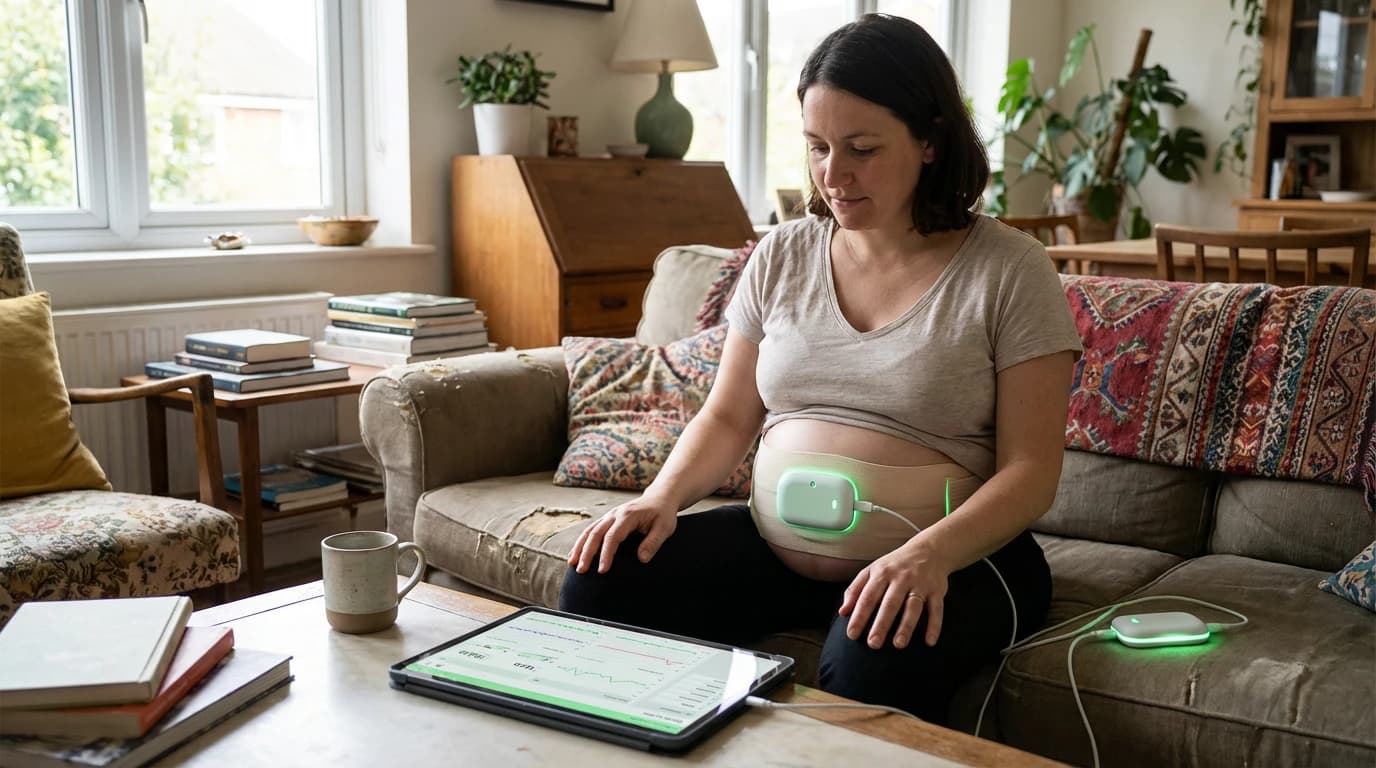
Remote pregnancy monitoring represents a significant shift in prenatal care delivery, leveraging connected medical devices and digital platforms to enable continuous maternal-fetal surveillance outside traditional clinical settings. The technology typically integrates FDA-cleared or medically validated sensors—such as blood pressure cuffs, fetal Doppler devices, and wearable monitors—with smartphone applications and cloud-based data systems. These devices capture vital physiological parameters including maternal blood pressure, heart rate, weight, glucose levels, and fetal heart rate patterns, transmitting this information securely to healthcare providers through encrypted digital channels. Advanced implementations may incorporate artificial intelligence algorithms to detect anomalies or concerning trends in the data streams, flagging potential complications such as preeclampsia, gestational diabetes, or fetal distress before they become critical.
The traditional prenatal care model, built around scheduled in-person visits, faces mounting challenges in an era of healthcare resource constraints, geographic barriers, and evolving patient expectations. Many expectant mothers, particularly those in rural areas or with limited mobility, struggle to attend frequent appointments, while healthcare systems grapple with capacity limitations and the need to identify high-risk pregnancies earlier. Remote monitoring addresses these challenges by enabling more frequent data collection without corresponding increases in clinic visits, allowing providers to stratify patients by risk level and allocate resources more efficiently. This approach proves particularly valuable for managing high-risk pregnancies, where conditions like hypertension or preterm labor risk require closer surveillance than standard care protocols can provide. The technology also empowers expectant mothers with greater agency over their prenatal care, reducing anxiety through increased visibility into their pregnancy's progression while maintaining continuous connection to medical expertise.
Early clinical deployments and pilot programs indicate promising outcomes, with research suggesting that remote monitoring can reduce emergency department visits, prevent preterm births, and improve maternal satisfaction with prenatal care. Healthcare systems in both developed and developing regions are exploring hybrid care models that combine remote monitoring with strategic in-person visits, optimizing the balance between accessibility and hands-on clinical assessment. The technology has gained particular momentum following recent global health disruptions that accelerated telemedicine adoption, demonstrating that continuous remote surveillance can maintain or even enhance care quality compared to traditional visit-based models. As reimbursement policies evolve to support virtual care and sensor technology becomes more affordable and user-friendly, remote pregnancy monitoring is positioned to become a standard component of prenatal care delivery. This trajectory aligns with broader healthcare trends toward preventive medicine, patient-centered care, and the strategic deployment of digital health tools to extend clinical capabilities beyond hospital walls, ultimately working toward the goal of safer pregnancies and healthier outcomes for both mothers and infants.
Virtual care platform for obstetrics that provides remote monitoring kits (BP cuffs, scales) to manage risk.
Develops a wearable patch for tracking contractions and maternal health parameters at home.
Creator of INVU, an FDA-cleared prescription-grade remote pregnancy monitoring platform (wearable belt).

Pulsenmore
Israel · Company
Develops a handheld home ultrasound device that connects to a smartphone for remote clinical review.
Produces HeraBEAT, a medical-grade fetal heart rate monitor for home use, integrated with a care platform.
A modern maternity clinic that integrates remote monitoring into its collaborative care model.
Global electronics giant producing the Lumea series, one of the most widely sold at-home IPL devices.
Provides a value-based maternity care platform that integrates remote monitoring data for payers and providers.
Known for infant monitoring, they have expanded into pregnancy with the Owlet Pregnancy Band (research/beta).
Published forecasts about this technology, graded against what happened in Hindsight.
Remote Patient Monitoring
This page is a narrower case of it.
Signals turns a topic into a sourced research record you can inspect and rerun. Your first scan is free, and this one starts with Remote Pregnancy Monitoring already loaded, so edit it or scan as is.