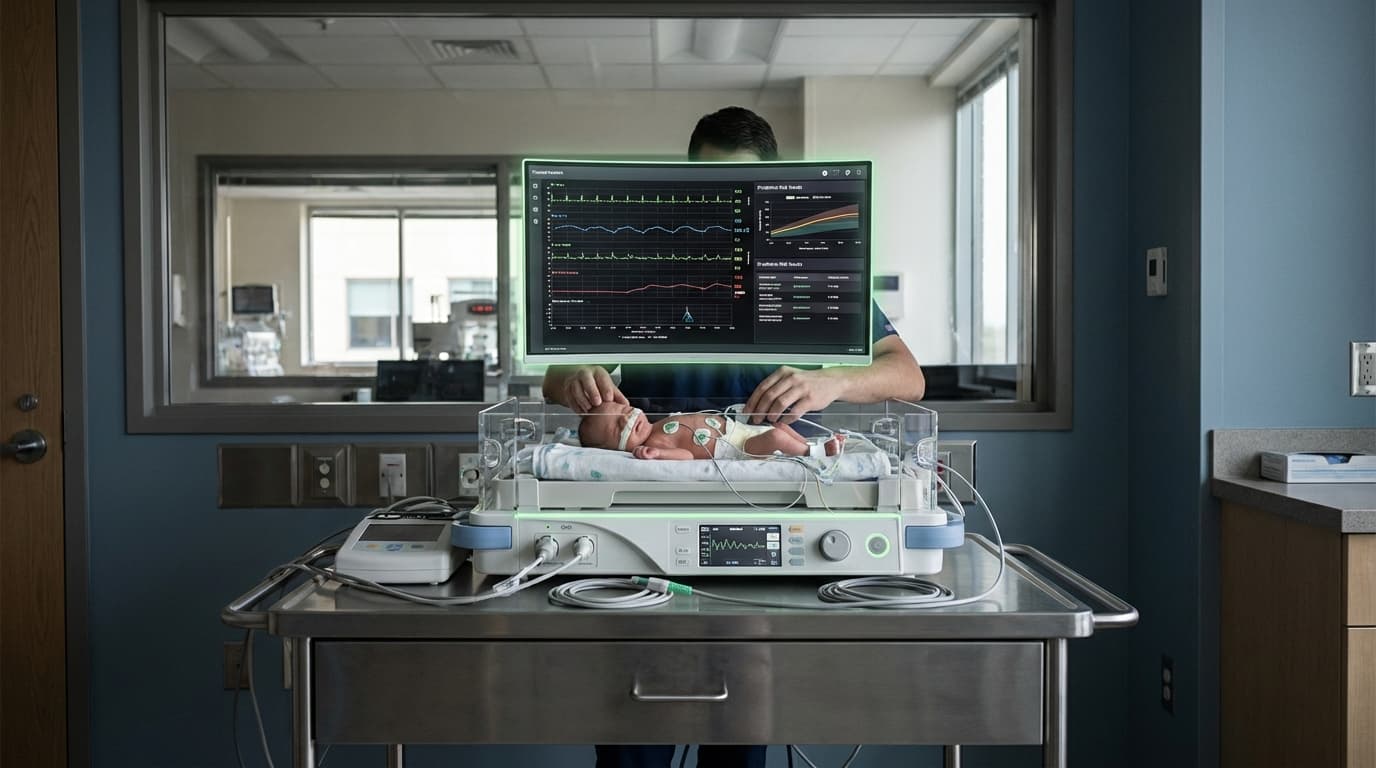
Preterm Prediction AI
Preterm birth, defined as delivery before 37 weeks of gestation, remains one of the most significant challenges in maternal-fetal medicine, affecting approximately 10% of pregnancies globally and representing the leading cause of neonatal mortality and long-term developmental complications. Traditional risk assessment methods rely on clinical history, physical examination findings, and limited biomarkers, but these approaches often lack the precision needed to identify at-risk pregnancies early enough for effective intervention. Preterm Prediction AI addresses this critical gap by employing sophisticated machine learning algorithms that can process and integrate vast amounts of heterogeneous data—including electronic health records, ultrasound imaging, cervical length measurements, biochemical markers, genetic profiles, and even social determinants of health—to generate individualized risk assessments with unprecedented accuracy. These systems utilize deep learning architectures, particularly convolutional neural networks for imaging analysis and recurrent neural networks for temporal health data, to identify subtle patterns and correlations that may elude human clinical judgment.
The healthcare implications of accurate preterm birth prediction extend far beyond simple risk stratification. Early identification of high-risk pregnancies enables clinicians to implement targeted interventions such as progesterone supplementation, cervical cerclage procedures, or enhanced monitoring protocols that can potentially delay delivery and improve neonatal outcomes. This technology also addresses the significant economic burden associated with preterm birth, which generates billions in healthcare costs annually through extended neonatal intensive care stays and long-term developmental support services. By enabling more precise resource allocation, hospitals can better prepare for high-risk deliveries, ensuring appropriate staffing levels and specialized equipment availability. Furthermore, these predictive models help reduce unnecessary interventions in low-risk pregnancies, minimizing the anxiety and medical procedures that can accompany false-positive assessments under traditional screening methods.
Research institutions and healthcare systems have begun integrating these AI-driven prediction tools into clinical workflows, with early deployments demonstrating promising improvements in risk assessment accuracy compared to conventional methods. Several academic medical centers are conducting validation studies to establish clinical utility across diverse patient populations, recognizing that algorithmic fairness and performance across different demographic groups remains a critical consideration. The technology shows particular promise when combined with continuous remote monitoring systems that can track maternal vital signs and uterine activity patterns between clinical visits, creating a comprehensive surveillance framework. As these systems mature and accumulate larger training datasets, their predictive capabilities are expected to improve further, potentially enabling personalized intervention strategies tailored to specific risk profiles. This advancement aligns with broader trends toward precision medicine in obstetrics, where individualized care pathways replace one-size-fits-all protocols, ultimately working toward the goal of reducing preventable preterm births and improving outcomes for vulnerable newborns during their critical early development.
Related Organizations

Develops the PreTRM Test, a blood test using proteomic biomarkers and AI to predict the risk of spontaneous preterm birth.

Uses machine learning to analyze cell-free RNA in maternal blood to predict pregnancy complications like preeclampsia and preterm birth.

A major nonprofit organization that funds research and collects data to fight premature birth and birth defects.

Focuses on exosome-based liquid biopsy tests to detect early warning signs of preterm birth.

One of the largest private foundations in the world.

Produces the Fetal Fibronectin (fFN) test, a gold standard for preterm prediction, and invests in next-gen diagnostics.

Develops ultrasound systems (Voluson) with AI features that assist in assessing fetal development and cervical length, key indicators for preterm risk.

Supporting Evidence
Research this in Signals
Signals turns a topic into a sourced research record you can inspect and rerun. Your first scan is free, and this one starts with Preterm Prediction AI already loaded, so edit it or scan as is.