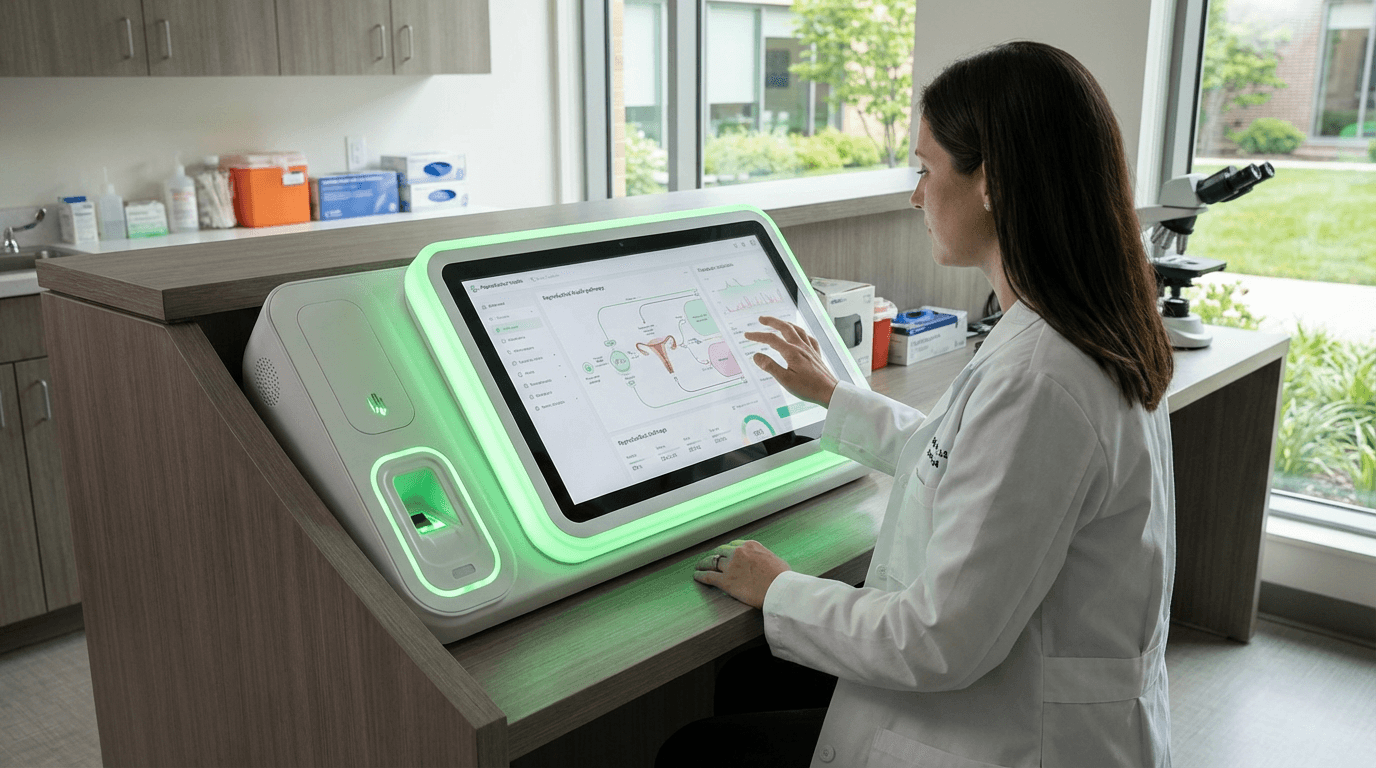
Virtual Fertility Clinics
Virtual fertility clinics represent a fundamental shift in reproductive healthcare delivery, moving conception support from predominantly in-person clinical settings to comprehensive digital platforms. These systems integrate multiple technological components: at-home diagnostic kits that measure hormone levels, ovulation patterns, and sperm quality; telehealth infrastructure enabling video consultations with reproductive endocrinologists and fertility specialists; and artificial intelligence algorithms that analyse patient data to identify potential fertility issues and recommend personalised treatment pathways. The platforms typically coordinate the entire fertility journey, from initial assessment through treatment monitoring, using secure digital health records that allow specialists to track patient progress remotely. Some systems incorporate wearable sensors and smartphone applications that continuously monitor biomarkers relevant to reproductive health, providing a more complete picture of fertility status than traditional point-in-time clinic visits could offer.
The fertility industry has long faced significant barriers to access, including geographic constraints that require patients to travel repeatedly to specialised urban centres, scheduling inflexibility that conflicts with work obligations, and the emotional burden of frequent clinical visits during an already stressful process. Virtual fertility clinics address these challenges by dramatically reducing the need for in-person appointments, with research suggesting that up to seventy percent of traditional fertility workup procedures can be conducted remotely. This model lowers both the financial and time costs associated with fertility treatment, potentially expanding access to populations previously underserved by conventional reproductive medicine. The technology also enables more continuous monitoring than traditional care models, where patients might visit clinics only every few weeks, allowing for faster identification of issues and more responsive treatment adjustments. Additionally, the digital format creates opportunities for asynchronous communication, where patients can message care teams with questions outside standard office hours, reducing anxiety and improving treatment adherence.
Several healthcare systems and specialised fertility providers have begun deploying virtual clinic models, particularly accelerated by telehealth adoption during recent years. Current implementations typically follow a hybrid approach, where initial consultations, ongoing monitoring, and treatment planning occur virtually, while procedures requiring physical intervention—such as intrauterine insemination or egg retrieval—still take place in clinical settings. Early deployments indicate strong patient satisfaction, particularly among those balancing demanding careers or living in rural areas distant from fertility specialists. The technology aligns with broader trends toward distributed healthcare delivery and patient-centred care models that prioritise convenience and personalisation. As artificial intelligence capabilities mature, these platforms are expected to offer increasingly sophisticated predictive analytics, potentially identifying optimal treatment windows or predicting treatment success rates with greater accuracy than current clinical protocols. The virtual fertility clinic model represents not merely a digitisation of existing services but a reimagining of how reproductive healthcare can be delivered in ways that better accommodate the realities of modern life while maintaining clinical effectiveness.
Related Organizations

A virtual clinic for women's and family health that integrates doula support into its care pathways.

Provides at-home hormone testing and virtual clinical support to diagnose reproductive health issues and guide fertility treatments.

A network of fertility clinics that integrates virtual care, testing, and physical clinics into a unified tech-enabled platform.

A digital fertility clinic for men, offering at-home sperm testing and cryopreservation kits with virtual analysis results.

Posterity Health
United States · Startup
A digital male fertility platform offering virtual consults, at-home testing, and coordination for in-person procedures.

Global fertility benefits provider that includes coverage and matching for doula support.

Uses AI and machine learning to provide personalized IVF success predictions, integrated into fertility clinics to counsel patients remotely.

Gaia
United Kingdom · Startup
Combines IVF insurance/financing with a digital care platform to predict costs and outcomes.
Supporting Evidence
Research this in Signals
Signals turns a topic into a sourced research record you can inspect and rerun. Your first scan is free, and this one starts with Virtual Fertility Clinics already loaded, so edit it or scan as is.