AI Embryo Selection
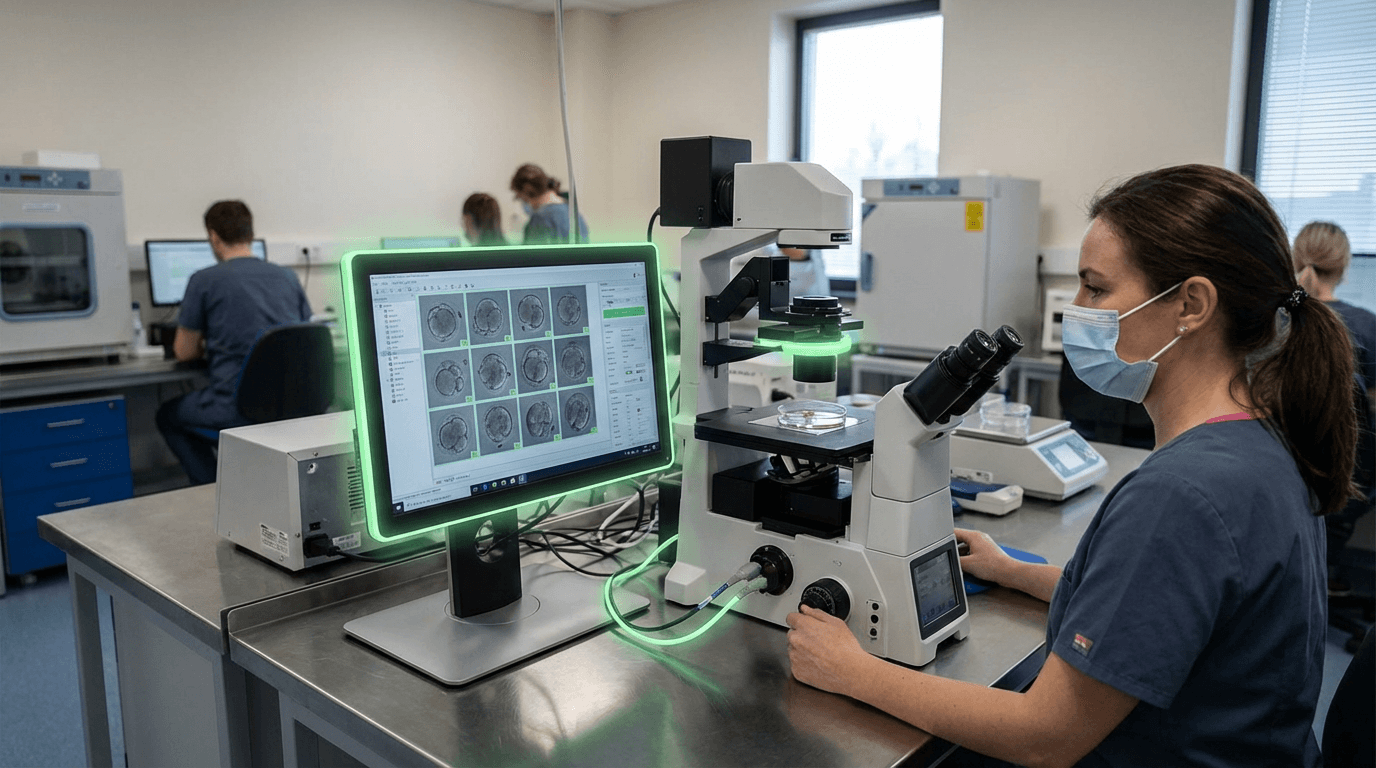
AI embryo selection represents a significant advancement in assisted reproductive technology, applying deep learning algorithms to analyze time-lapse microscopy images of developing embryos during in vitro fertilization (IVF). Traditional embryo assessment relies on embryologists manually examining embryos at specific developmental stages, a process that is inherently subjective and dependent on individual expertise. AI-based systems continuously monitor embryos through time-lapse imaging, capturing thousands of images throughout the critical early development period. These systems employ convolutional neural networks trained on large datasets of embryo images correlated with pregnancy outcomes, learning to identify subtle morphological features and developmental patterns that may be imperceptible to human observers. The algorithms assess factors such as cell division timing, fragmentation patterns, blastocyst formation quality, and other morphokinetic parameters to generate objective scores predicting each embryo's likelihood of successful implantation and healthy pregnancy.
The fertility industry faces persistent challenges in optimizing IVF success rates while minimizing the risks associated with multiple pregnancies. Current embryo selection methods achieve pregnancy rates of approximately 30-40% per transfer cycle, leaving substantial room for improvement. AI embryo selection addresses this limitation by providing more consistent, data-driven assessments that can help identify the single most viable embryo for transfer, reducing the need for multiple embryo transfers that can lead to high-risk multiple pregnancies. This technology also helps overcome the shortage of highly experienced embryologists and reduces inter-observer variability in embryo grading. By automating the continuous monitoring process, these systems free embryologists to focus on other critical aspects of patient care while ensuring no crucial developmental moments are missed. The technology enables fertility clinics to standardize their assessment protocols and potentially improve outcomes for patients who have experienced repeated IVF failures.
Several fertility clinics and research institutions have begun integrating AI embryo selection systems into their clinical workflows, with early deployments indicating promising improvements in pregnancy rates and reductions in time to successful pregnancy. Some systems are being used as decision-support tools that augment rather than replace embryologist judgment, combining AI-generated scores with traditional morphological assessment. Research suggests that these hybrid approaches may offer the most balanced path forward, leveraging computational power while maintaining human oversight. The technology aligns with broader trends toward precision medicine and personalized reproductive care, where treatment protocols are increasingly tailored to individual patient characteristics and embryo quality metrics. As datasets grow larger and algorithms become more sophisticated through exposure to diverse patient populations and outcomes, the predictive accuracy of these systems is expected to improve further. The development of explainable AI models that can articulate the specific features driving their predictions may also help build trust among clinicians and patients, facilitating wider adoption of this technology in the coming years.
Related Organizations

Presagen
Australia · Company
Creator of Life Whisperer, a non-invasive AI tool that analyzes static embryo images to predict viability.

An international medical device group focused on the IVF field.


Fairtility
Israel · Startup
AI-powered decision support tool for IVF professionals.

ImVitro
France · Startup
Develops EMBRYOLY, a SaaS platform applying computer vision to microscope footage for embryo evaluation.

Harrison.ai
Australia · Startup
An Australian clinician-led technology company developing AI diagnostic tools for IVF and Radiology (Annalise.ai).

Virtus Health
Australia · Company
One of the world's largest fertility networks, actively developing and deploying the 'Ivy' AI technology.

The Center for Reproductive Medicine conducts pioneering research on the 'Stork' algorithm for embryo classification.

A leading fertility and women's healthcare company providing IVF genetic testing services.

Supporting Evidence
Research this in Signals
Signals turns a topic into a sourced research record you can inspect and rerun. Your first scan is free, and this one starts with AI Embryo Selection already loaded, so edit it or scan as is.