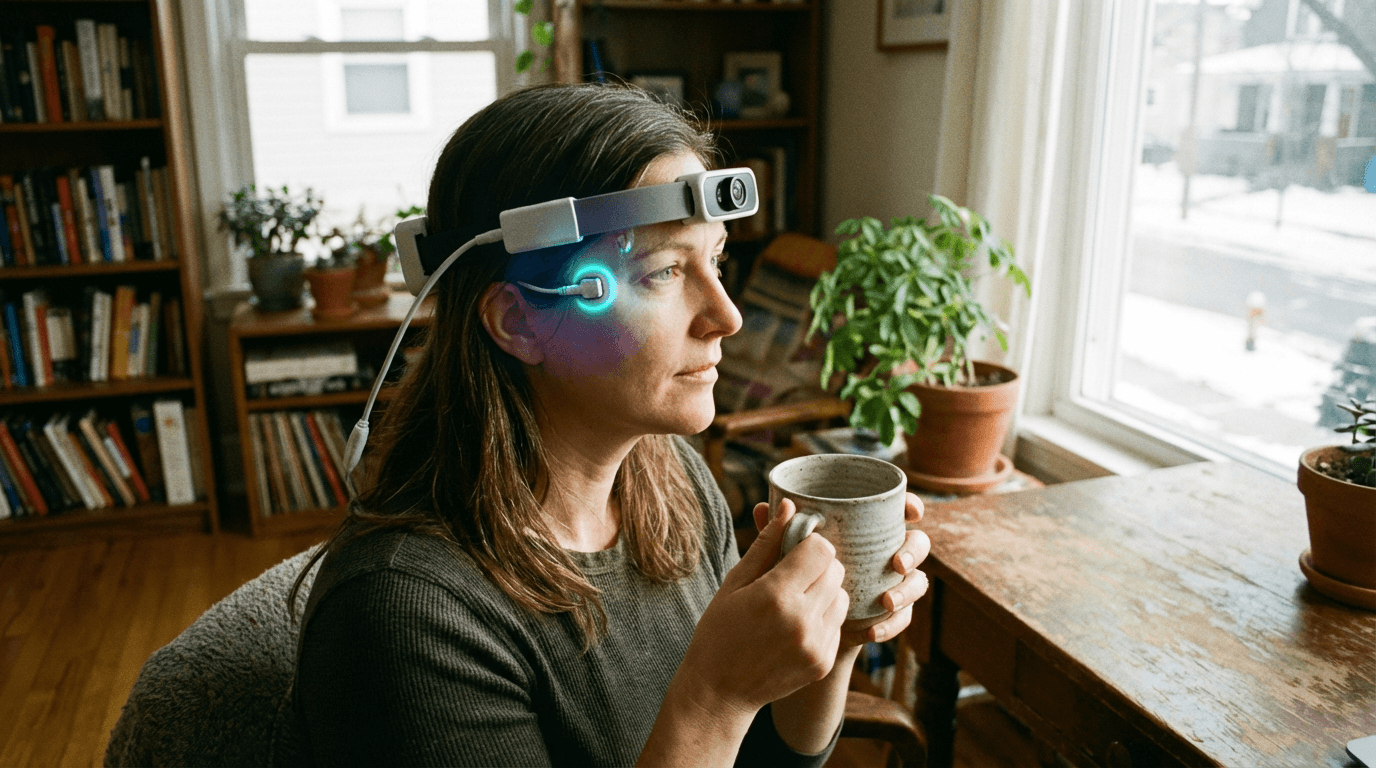
Visual Neuroprostheses
Visual neuroprostheses are neural implants that restore vision by bypassing damaged eyes or optic nerves to stimulate the visual system directly, either at the retina (retinal implants) or at the visual cortex (cortical visual prostheses), creating artificial vision through patterns of phosphenes (perceived spots of light) that the brain can interpret as visual information. Cortical visual prostheses stimulate the visual cortex directly, enabling vision restoration even when the eyes and optic nerves are completely non-functional, while retinal implants stimulate surviving retinal cells. These systems use cameras to capture visual information and translate it into stimulation patterns that create phosphene-based vision, enabling blind individuals to perceive basic visual patterns and navigate their environment. Companies like Second Sight, Pixium Vision, and research institutions are developing these technologies.
This innovation addresses the challenge of restoring vision for people who are profoundly blind, where traditional approaches cannot help. By directly stimulating the visual system, these prostheses can restore some visual function. The technology is being developed for conditions like retinitis pigmentosa and complete blindness.
The technology is particularly significant for people with profound blindness, where restoring any visual function could dramatically improve quality of life. As the technology improves, it could enable better vision restoration. However, achieving high resolution, creating natural visual perception, and managing long-term stability remain challenges. The technology represents an important approach to vision restoration, but requires continued development to achieve the resolution and quality needed for practical use. Success could restore vision for blind individuals, but the technology must overcome significant challenges in creating high-quality visual perception and maintaining long-term functionality.
Related Organizations
France · Company
Develops the Prima System, a sub-retinal photovoltaic wireless implant.

Developing the Science Eye, a visual prosthesis combining gene therapy and a micro-LED display implant.
Bionic Vision Technologies
Australia · Consortium
An Australian consortium commercializing a suprachoroidal retinal implant.
United States · University
Lead institution for the Intracortical Visual Prosthesis (ICVP) project.
Nano Retina
Israel · Startup
Developer of the NR600, a miniature artificial retina designed to be implanted with a minimally invasive procedure.
Netherlands · Startup
Developing a cortical visual prosthesis to restore vision in blind people.
Supporting Evidence
Research this in Signals
Signals turns a topic into a sourced research record you can inspect and rerun. Your first scan is free, and this one starts with Visual Neuroprostheses already loaded, so edit it or scan as is.