Silent Speech Interfaces
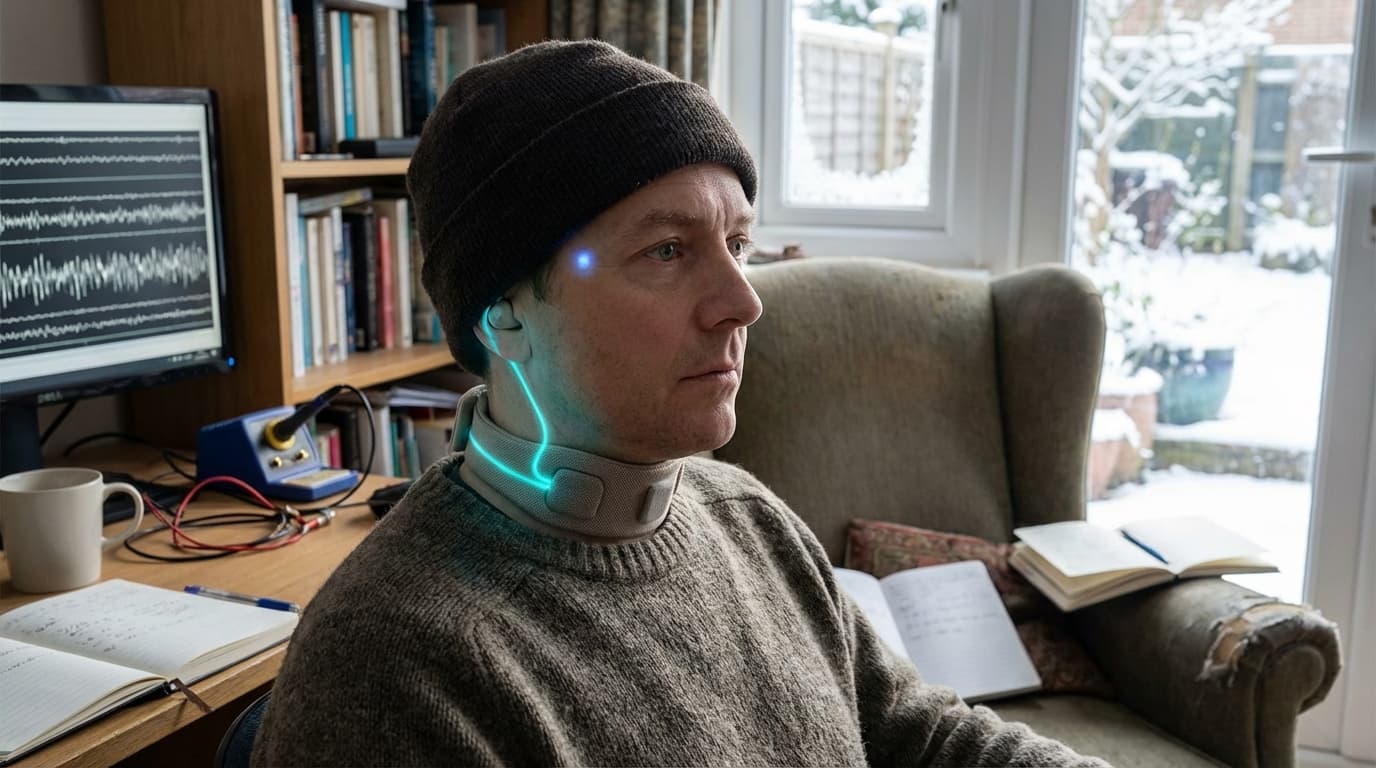
Silent speech interfaces are brain-computer interfaces that decode 'imagined speech' (thinking about speaking without actually speaking) or subvocalization (subtle muscle movements associated with speech) directly from neural activity in the motor cortex or speech-related brain areas, enabling voiceless communication where thoughts can be translated into text or speech without any audible output. This technology enables private communication (where others can't hear what you're thinking) or communication for patients with locked-in syndrome (who are conscious but cannot move or speak), potentially restoring the ability to communicate for people who have lost speech function while also enabling new forms of private human-computer interaction.
This innovation addresses the need for communication in situations where speech is impossible or undesirable, where traditional communication methods fail. By decoding imagined speech, these systems can restore communication for people with severe disabilities or enable new forms of private interaction. Research institutions and companies are developing these technologies.
The technology is particularly significant for assistive communication, where restoring speech could dramatically improve quality of life. As the technology improves, it could also enable new applications in privacy and human-computer interaction. However, ensuring accuracy, managing the complexity of language, and achieving real-time performance remain challenges. The technology represents an important direction for BCIs, but requires extensive development to achieve the accuracy and speed needed for practical use. Success could restore communication for people with severe disabilities, but the technology must overcome significant challenges in decoding the complexity of language from neural signals.
Related Organizations
United States · University
A premier neurosurgery research lab led by Dr. Edward Chang, famous for decoding full sentences from the brain activity of paralyzed patients.

Builds AI-powered BCI headsets with AR displays for accessibility and communication.
United States · Startup
Developing a neural interface wearable that detects subvocalization (silent speech) via EMG to allow users to speak without sound.
United States · Consortium
A multi-institutional consortium developing BCIs to restore communication, mobility, and independence for people with neurologic disease.
United States · University
Developers of 'AlterEgo', a non-invasive wearable headset that allows humans to converse in natural language with machines via subvocalization.

Develops the Quest Pro and research prototypes (Butterscotch, Starburst) focusing on foveated systems.

Translational research center developing implantable neuro-sensing devices for communication restoration in locked-in patients.
United States · Startup
Developing a non-invasive optical BCI (using specialized fNIRS) to decode mental intent and imagined speech concepts.
Netherlands · University
Leading research centre for cognitive neuroscience.

A massive EU research initiative that has developed graphene-based brain implants specifically tested for high-precision speech decoding.
Supporting Evidence
Research this in Signals
Signals turns a topic into a sourced research record you can inspect and rerun. Your first scan is free, and this one starts with Silent Speech Interfaces already loaded, so edit it or scan as is.