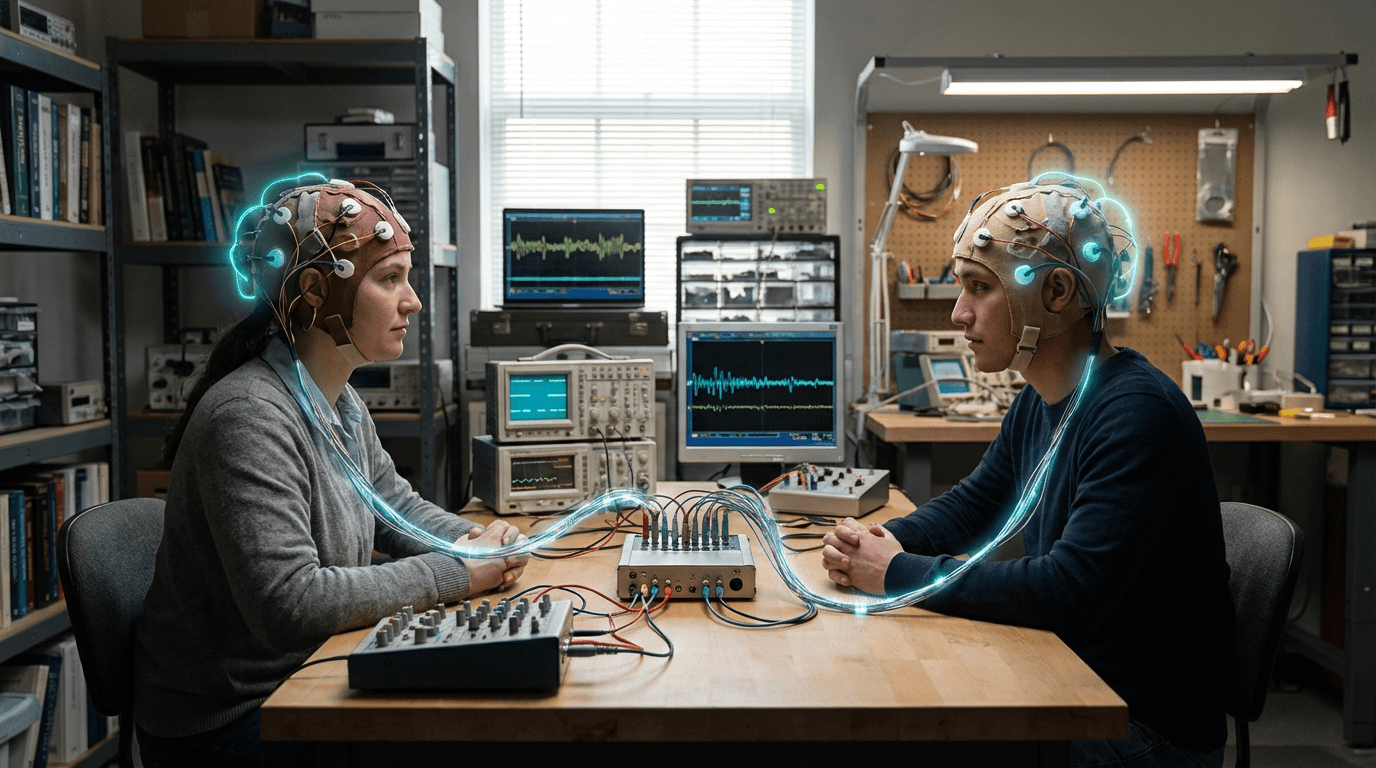
Brain-to-Brain Communication
Brain-to-brain communication systems are experimental interfaces that allow the direct transmission of information (simple messages, motor commands, or sensory experiences) from one person's brain to another's via internet-mediated links that connect brain-computer interfaces (BCIs) that read from one brain to computer-brain interfaces (CBIs) that write to another brain, creating a direct communication pathway between nervous systems that bypasses traditional sensory and motor channels. These systems enable 'synthetic telepathy' where thoughts or intentions can be transmitted directly between brains, potentially enabling new forms of communication, collaboration, or even shared experiences, though current systems are limited to simple information transfer and remain largely experimental.
This innovation addresses the fundamental question of whether direct brain-to-brain communication is possible, where information could be shared without speech, text, or other traditional communication methods. By enabling direct neural communication, these systems could create entirely new forms of human interaction. Research institutions are developing these technologies, though they remain experimental.
The technology is particularly significant for exploring the possibilities of direct neural communication, potentially enabling new forms of human interaction and collaboration. As the technology improves, it could enable new applications in communication, collaboration, and potentially shared experiences. However, ensuring accuracy, managing complexity, addressing ethical concerns, and understanding the implications remain challenges. The technology represents an ambitious vision for human communication, but requires extensive development and raises profound ethical questions. Success could enable revolutionary new forms of communication, but the technology is still very early-stage and faces significant technical and ethical challenges. The implications of direct brain-to-brain communication raise important questions about privacy, identity, and the nature of human interaction.
Related Organizations
United States · University
Academic research center known for pioneering direct brain-to-brain interfaces, including a collaborative Tetris-like game played by three people using only their minds.

The Soft Machines Lab at CMU develops soft multifunctional materials and robots.

Runs the Semantic Forensics (SemaFor) program to develop technologies for automatically detecting, attributing, and characterizing falsified media.

The Duke Quantum Center (Kenneth Brown) focuses heavily on fault-tolerant architectures and error correction decoding.

Battelle
United States · Nonprofit
A massive applied science and technology organization developing PFAS Annihilator™ and other advanced remediation tech.
United States · University
Researchers here have developed secure wireless transmission protocols specifically for implantable medical devices.

Neuroscience company developing non-invasive brain recording technology (Flow and Flux).
Supporting Evidence
Research this in Signals
Signals turns a topic into a sourced research record you can inspect and rerun. Your first scan is free, and this one starts with Brain-to-Brain Communication already loaded, so edit it or scan as is.