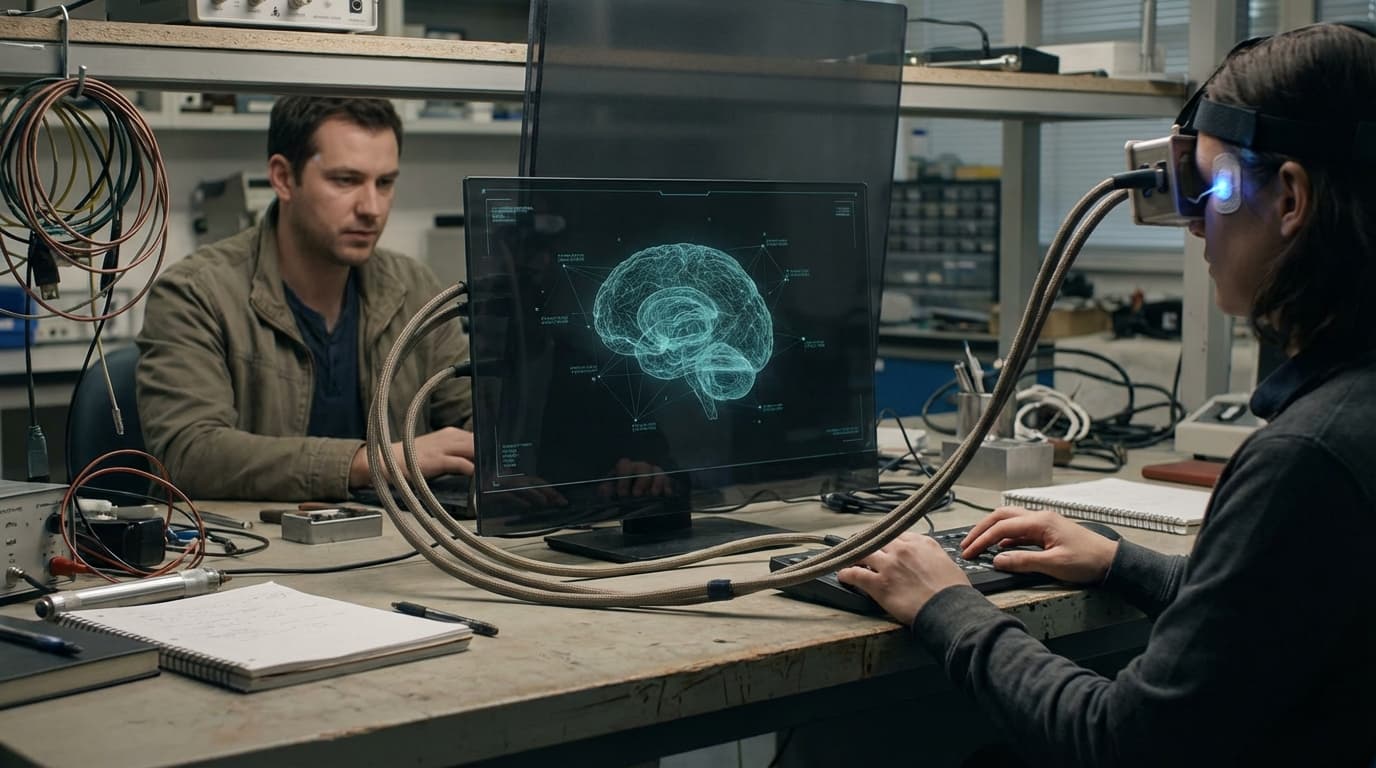
Digital Neuro-Twins
Digital neuro-twins are personalized computational simulations of a specific patient's brain network, created by modeling the individual's unique neural anatomy, connectivity, and dynamics based on imaging data, recordings, and other patient-specific information. These virtual models allow clinicians to test different stimulation protocols, surgical approaches, or treatment strategies virtually in the digital twin before applying them to the actual patient, enabling optimization of outcomes and minimization of side effects by predicting how the patient's brain will respond to different interventions, similar to how engineers test designs in computer simulations before building physical prototypes.
This innovation addresses the challenge of optimizing neuromodulation and neurosurgical treatments, where trial-and-error approaches can waste time and cause unnecessary side effects. By enabling virtual testing, digital twins can improve treatment planning. Research institutions are developing these technologies.
The technology is particularly valuable for complex treatments like deep brain stimulation, where optimizing stimulation parameters is challenging. As the technology improves, it could become standard for treatment planning. However, ensuring model accuracy, integrating diverse data sources, and validating predictions remain challenges. The technology represents an important tool for personalized medicine in neurology, but requires extensive development to achieve the accuracy needed for clinical use. Success could improve treatment outcomes and reduce side effects, but the technology must prove that models can accurately predict patient responses.
Related Organizations
Germany · Open Source
An open-source neuroinformatics platform for full-brain network simulation using biologically realistic connectivity.

Develops the Neurotwin technology, a computational model of a patient's brain used to optimize non-invasive brain stimulation protocols.
Germany · University
A leading medical university and home to the Brain Simulation Section led by Petra Ritter.
Belgium · Consortium
Digital research infrastructure created by the EU Human Brain Project to host brain atlases and simulation engines.

Provides patient-specific digital models (Sim&Size) for neurovascular interventions, specifically aneurysm treatment.

Software corporation specializing in 3D design and digital mock-ups.

Creates 'Prognostic Digital Twins' of patients to populate control arms in clinical trials, reducing the need for placebo patients.
Supporting Evidence
Research this in Signals
Signals turns a topic into a sourced research record you can inspect and rerun. Your first scan is free, and this one starts with Digital Neuro-Twins already loaded, so edit it or scan as is.