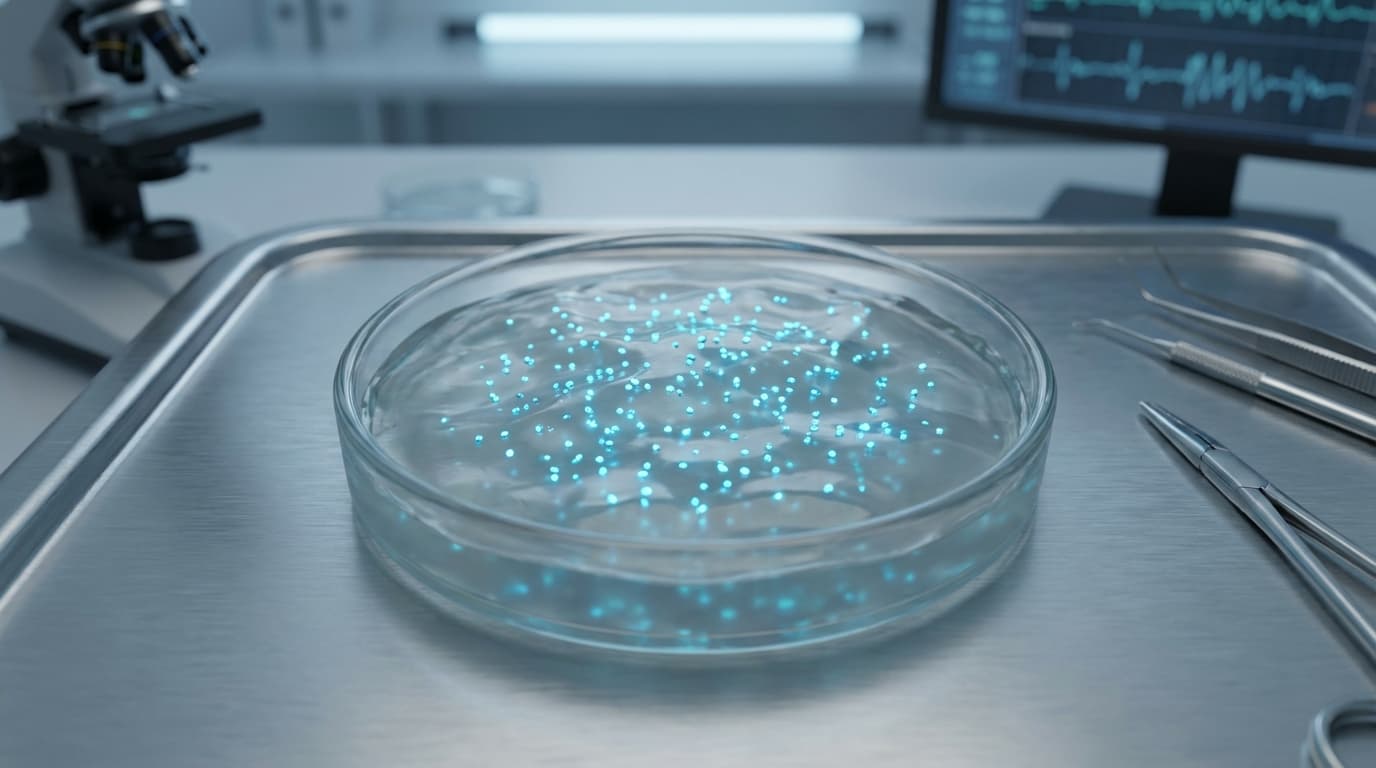
Implantable Neural Dust
Implantable neural dust consists of microscale wireless sensor motes the size of grains of sand that can be injected into peripheral nerves or brain tissue to record neural activity and transmit data wirelessly, powered by ultrasonic energy beamed from outside the body rather than requiring batteries or wires. These tiny devices can be distributed throughout neural tissue like 'dust,' enabling distributed sensing across large volumes of tissue with minimal scarring or tissue damage due to their small size, potentially opening pathways to long-lived brain-computer interfaces that can monitor neural activity over extended periods without the complications of larger, wired implants.
This innovation addresses the challenge of creating long-term, distributed neural interfaces that don't cause significant tissue damage or require wires that can break or cause infection. By using tiny, wireless, ultrasonically-powered devices, this approach could enable BCIs that last for years. Research institutions are developing these technologies, though they remain largely experimental.
The technology is particularly significant for enabling long-term neural monitoring and BCIs, where distributed sensing could provide comprehensive neural data. As the technology improves, it could enable new applications in neural prosthetics and research. However, ensuring reliable power delivery, managing communication with many devices, and achieving long-term stability remain significant challenges. The technology represents an innovative vision for neural interfaces, but requires extensive development to achieve practicality. Success could enable revolutionary BCIs, but the technology is still early-stage and must overcome many technical challenges. The concept is promising but faces substantial hurdles before clinical application.
Related Organizations

Commercializing 'neural dust' technology: millimeter-sized ultrasonic implants.
United States · University
The academic birthplace of Neural Dust.

Runs the Semantic Forensics (SemaFor) program to develop technologies for automatically detecting, attributing, and characterizing falsified media.
United States · University
Developers of 'Neurograins', a parallel technology to neural dust.

Major pharmaceutical company that acquired Iota Biosciences.
United States · University
Developing magnetoelectric materials for wireless neural stimulation.
Columbia University Bioelectronic Systems Lab
United States · University
Ken Shepard's lab working on CMOS bio-interfaces.

A non-profit engineering innovation company that develops acoustic microfluidic separation systems for CAR-T manufacturing.

Developing minimally invasive wireless electronics for mental health.
Supporting Evidence
Research this in Signals
Signals turns a topic into a sourced research record you can inspect and rerun. Your first scan is free, and this one starts with Implantable Neural Dust already loaded, so edit it or scan as is.