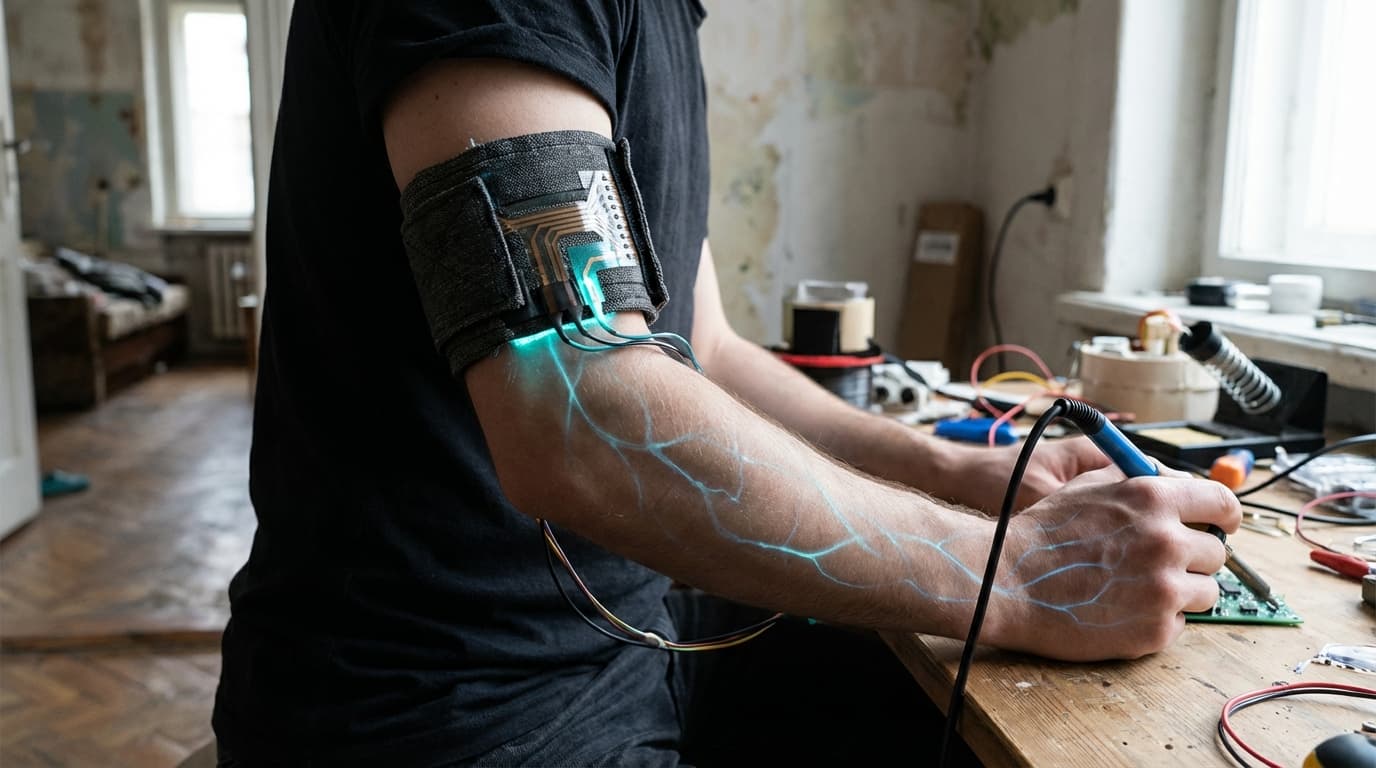
Bidirectional Peripheral Interfaces
Bidirectional peripheral interfaces are neural interfaces that target peripheral nerves (nerves outside the brain and spinal cord) using high-density cuff electrodes that wrap around nerves and regenerative interfaces that can integrate with nerve tissue, enabling both recording from nerves (to decode motor commands) and stimulation of nerves (to provide sensory feedback). These systems enable precise muscular control for advanced prosthetics by reading motor commands from nerves, and provide sensory feedback including touch and proprioception (sense of body position) to the user by stimulating sensory nerves, creating a bidirectional connection that restores both motor and sensory function.
This innovation addresses the limitation of current prosthetics, which typically only restore motor function without sensory feedback, making them less natural and intuitive to use. By providing bidirectional communication, these interfaces enable more natural prosthetic control and restore the sense of touch and body position. Companies and research institutions are developing these technologies.
The technology is particularly significant for advanced prosthetics, where restoring both motor and sensory function could dramatically improve quality of life for amputees. As the technology improves, it could enable prosthetics that feel and function more like natural limbs. However, ensuring long-term stability, managing signal quality, and achieving natural sensory perception remain challenges. The technology represents an important evolution in prosthetic interfaces, but requires continued development to achieve the performance and reliability needed for widespread use. Success could transform prosthetics by restoring both motor and sensory function, but the technology must overcome significant technical challenges and prove itself in long-term clinical use.
Research this in Signals
Signals turns a topic into a sourced research record you can inspect and rerun. Your first scan is free, and this one starts with Bidirectional Peripheral Interfaces already loaded, so edit it or scan as is.