






Improving Water Security
Water Security Technologies
Systems that harvest humidity and desalinate seawater using solar energy and advanced membranes
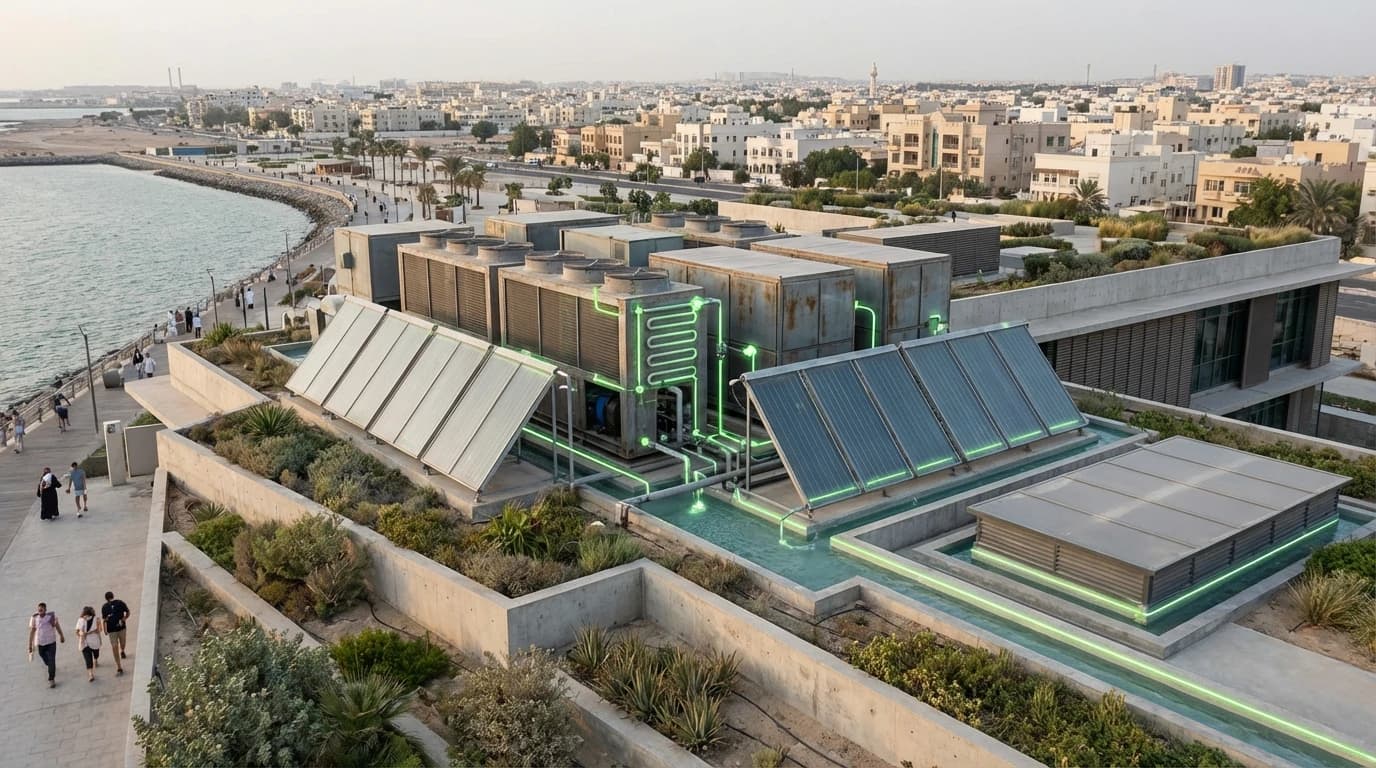
Water security stacks combine atmospheric water harvesters (AWH), solar-thermal desalination, advanced membranes, and real-time monitoring to deliver fresh water independent of unreliable rainfall. AWH systems use metal-organic frameworks and hygroscopic gels to capture humidity even in arid climates, releasing clean water using low-grade heat or photovoltaics. Solar desalination farms pair parabolic troughs or membrane distillation with thermal storage so brine can be treated at night, while graphene and biomimetic membranes cut energy use in conventional RO plants.
Cities deploy modular desal-Solar hybrids to support coastal aquifers, mining firms run containerized brine concentrators to recycle process water, and humanitarian agencies carry suitcase-sized AWH units to disaster zones. Agricultural regions integrate precision irrigation, soil-moisture sensing, and treated wastewater reuse to stabilize yields. Digital twins monitor aquifers and distribution networks, flagging leaks or contamination.
Technology readiness is TRL 6–7: costs, brine disposal, and maintenance still limit adoption. Governments offer green bonds and blended finance for resilient water infrastructure, while ESG investors scrutinize water footprints. As climate change intensifies droughts, water security technologies will become core to national resilience strategies.
TRL
6/9Demonstrated
Impact
5/5
Investment
4/5
Category
applications
Related Organizations
Manufactures Hydropanels that use solar energy to extract drinking water from the air, even in arid conditions.
Developer
Watergen
Israel · Company
Develops atmospheric water generation technology that captures humidity from the air to create fresh drinking water.
Developer
Develops solar-thermal desalination technology that purifies water using only solar energy without filters or chemicals.
Developer
Provides advanced water and wastewater treatment solutions, including carrier gas extraction and membrane technologies.
Developer
Swedish water innovation company developing scalable atmospheric water generation systems for industrial use.
Developer
Develops the WaterCube, an industrial-scale atmospheric water generator designed to solve global water scarcity.
Developer
Provides decentralized solar-powered water purification and desalination units for remote locations.
Developer
Social enterprise in Kenya using desiccant-based atmospheric water generators to provide water in arid regions.
Developer
NX Filtration
85%Netherlands · Company
Produces hollow fiber nanofiltration membranes for direct treatment of polluted water.
Developer
DuPont
80%United States · Company
Major chemical company producing reverse osmosis and nanofiltration membranes used globally in desalination.
Developer
What was expected
Published forecasts about this technology, graded against what happened in Hindsight.
Supporting Evidence
Evidence data is not available for this technology yet.
Research this in Signals
Scan Water Security Technologies for yourself.
Signals turns a topic into a sourced research record you can inspect and rerun. Your first scan is free, and this one starts with Water Security Technologies already loaded, so edit it or scan as is.