


Ocean Chemistry
This page is broader than it.
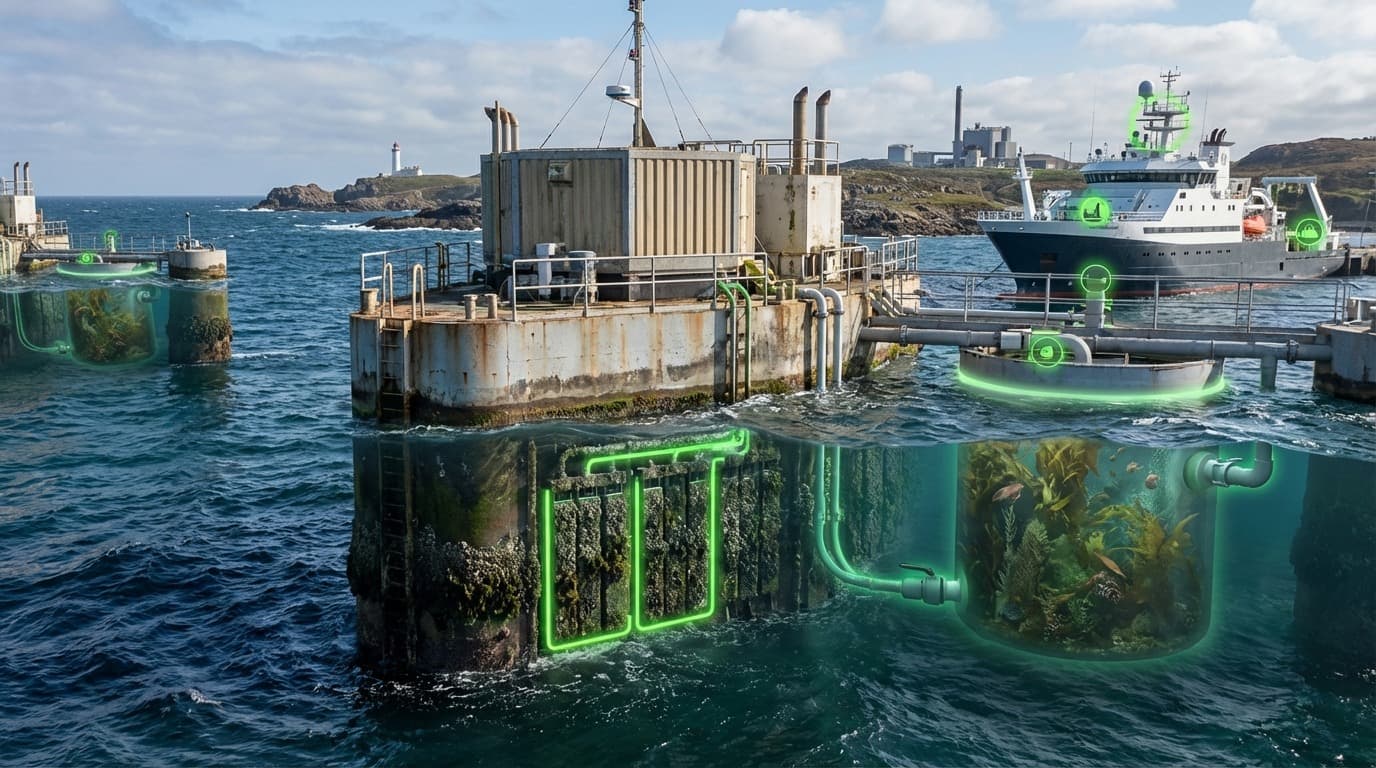
Ocean carbon-removal platforms range from electrochemical reactors that strip acidity from seawater to floating macroalgae farms designed for deep-ocean sinking. Electrolytic alkalinity enhancers pump seawater through modular skids, precipitating carbonate minerals and returning deacidified water to the ocean, boosting the natural uptake of CO₂. Engineered kelp farms leverage autonomous vessels, AI monitoring, and biodegradable tethers to grow biomass offshore before sinking it below the thermocline, locking carbon away for centuries.
Pilots in Iceland, Canada, and Australia co-locate electrochemical units with desalination plants, shipyards, or offshore wind substations to share infrastructure. Blue-carbon projects partner with coastal communities to restore mangroves and seagrass while deploying sensors to quantify sequestration. Oil and gas platforms nearing retirement retrofit decks for carbon-removal operations, using existing export pipelines for CO₂ or alkalinity reagents. Carbon-credit buyers seek high-durability removals, providing offtake revenue for early projects.
Technology readiness is TRL 3–4: environmental impact assessments, measurement/verification protocols, and maritime permits remain hurdles. Regulators demand strict monitoring to avoid ecological harm, and international treaties (London Convention) govern ocean dumping. Research alliances (Ocean Visions, Carbon to Sea) and philanthropies fund open data on alkalinity pathways. If science validates durability and co-benefits, ocean-based carbon removal could complement terrestrial approaches in the 2030s.
United States · Company
Develops Direct Ocean Capture (DOC) technology using electrodialysis to strip CO2 from seawater without adding chemicals.
Uses electrochemical membranes to separate acid from seawater, enhancing the ocean's natural alkalinity to absorb CO2.
Spun out of UCLA, Equatic develops electrochemical reactors that remove CO2 from seawater and produce hydrogen.
United States · Nonprofit
A network of research institutions accelerating the development and testing of ocean-based carbon removal solutions.
Adds safe, alkaline substances to the ocean to neutralize acidity and permanently sequester carbon.
Deploys olivine sand in coastal areas (Coastal Carbon Capture) to accelerate silicate weathering and increase alkalinity.
United States · Research Lab
World-renowned research organization conducting MRV and environmental impact studies for ocean alkalinity and iron fertilization.
A $50M philanthropic initiative focused specifically on accelerating the science of Ocean Alkalinity Enhancement (OAE).
Develops electrochemical technology to extract CO2 from seawater, aiming for integration with offshore wind.
Published forecasts about this technology, graded against what happened in Hindsight.
Ocean Chemistry
This page is broader than it.
Signals turns a topic into a sourced research record you can inspect and rerun. Your first scan is free, and this one starts with Ocean-Based Carbon Removal Hardware already loaded, so edit it or scan as is.