Blue Carbon Ecosystem Restoration
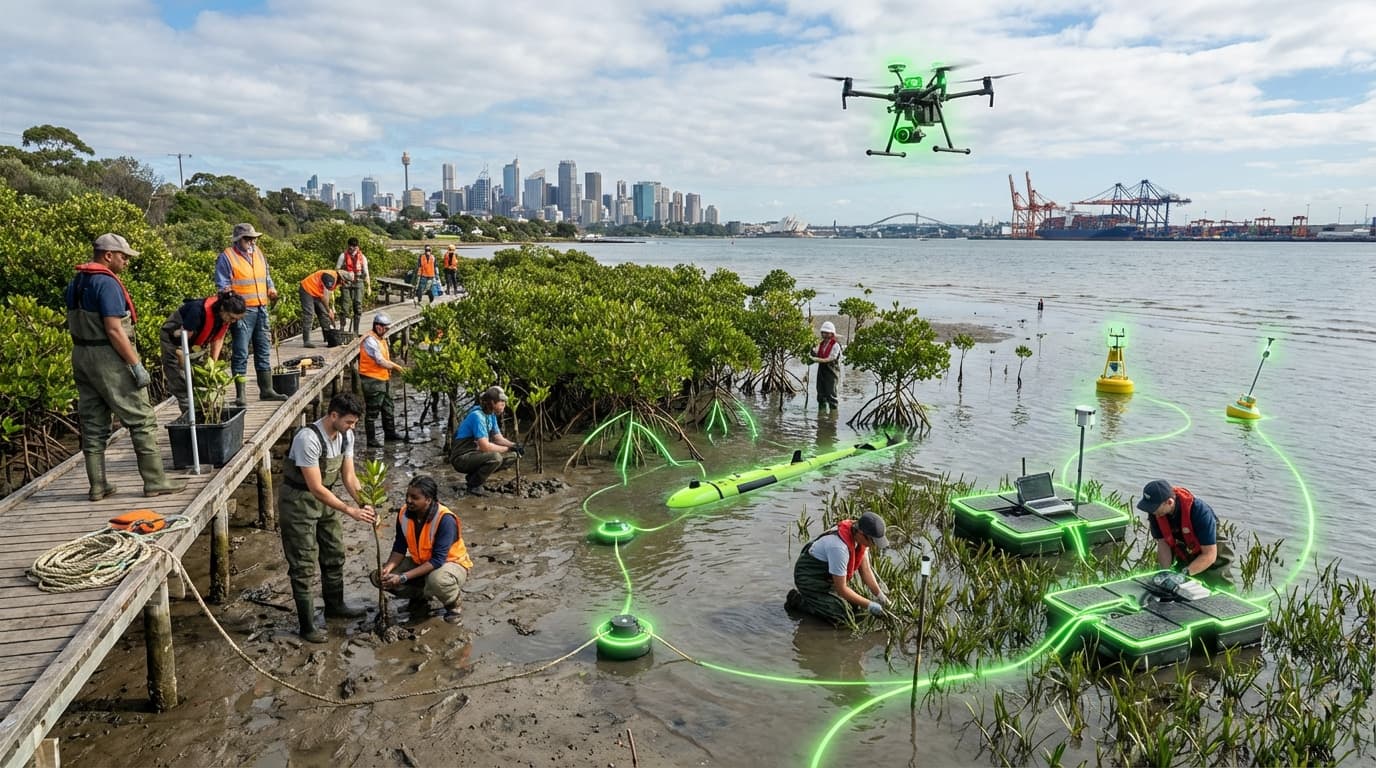
Blue carbon projects replant mangroves, seagrasses, and salt marshes that can store up to 10× more carbon per hectare than terrestrial forests while defending coasts from storms. Restoration teams use drones, biodegradable seed pods, and hydrodynamic modeling to reestablish tidal flows and sediment regimes. Acoustic sensors, eddy-covariance towers, and satellite SAR track biomass and soil carbon, feeding MRV platforms that underpin carbon-credit issuance.
Local cooperatives earn income by maintaining nurseries, patrolling protected zones, and harvesting sustainable products (honey, fish, eco-tourism). Insurance firms and port authorities invest because restored wetlands reduce storm-surge losses, and governments count blue carbon toward nationally determined contributions (NDCs). Blended-finance vehicles pool philanthropic grants, sovereign funds, and carbon buyers to cover upfront costs and ensure long-term stewardship.
Technology readiness is TRL 5: ecological practices are mature, but governance, land tenure, and MRV standardization need work. Organizations like Global Mangrove Alliance, Verra, and Plan Vivo are creating methodologies for permanence and leakage. As shipping, aviation, and corporate buyers seek high-quality nature credits, blue carbon restoration will become a cornerstone of coastal resilience strategies.
Related Organizations
United States · Consortium
A global program working to mitigate climate change through the restoration and sustainable use of coastal and marine ecosystems.
Austria · Startup
Focuses on high-impact mangrove restoration projects in Kenya and other regions, utilizing technology to track carbon sequestration.
United States · Nonprofit
Develops marine permaculture arrays to restore seaweed forests and sequester carbon in the deep ocean.
United States · Nonprofit
Advocates for and implements Community-Based Ecological Mangrove Restoration (CBEMR) techniques worldwide.
United States · Nonprofit
A program by Sustainable Surf that funds and manages projects to restore kelp forests, mangroves, and seagrass meadows globally.
United States · Nonprofit
A non-profit research institute using sensor technology to map seagrass meadows and tiger shark habitats for blue carbon valuation.
Norway · Startup
Restores kelp forests by removing overgrazing sea urchins and ranching them for food, facilitating natural ecosystem recovery.
The organization that manages the Verified Carbon Standard (VCS), the world's most widely used voluntary GHG program.
Collects invasive Sargassum seaweed and processes it into agricultural products, preventing it from rotting and releasing methane.

Provides independent carbon ratings using machine learning and lidar data to assess the quality and permanence of nature-based offset projects.
Supporting Evidence
Research this in Signals
Signals turns a topic into a sourced research record you can inspect and rerun. Your first scan is free, and this one starts with Blue Carbon Ecosystem Restoration already loaded, so edit it or scan as is.