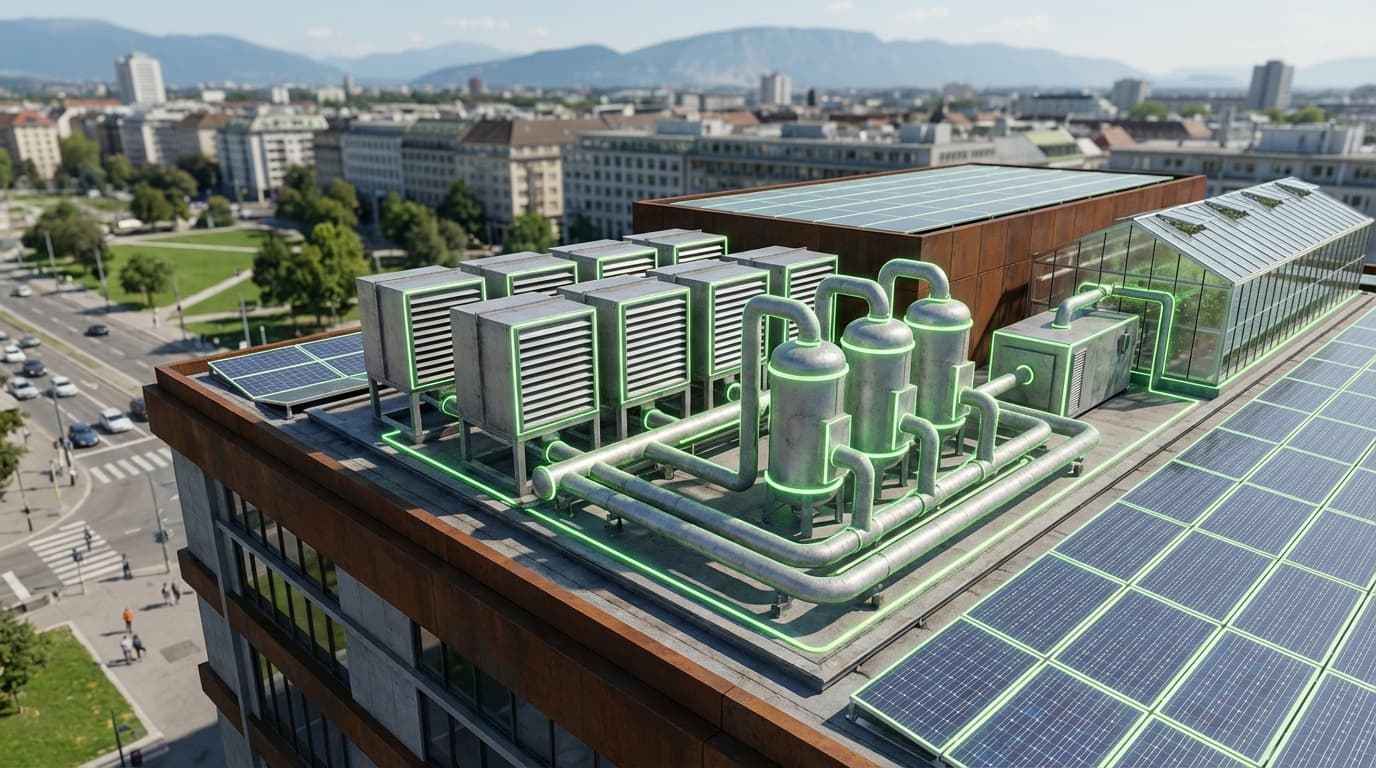
Direct Air Capture & Utilization
Direct air capture (DAC) systems draw ambient air through contactors coated with solid sorbents, ion-exchange resins, or electro-swing materials that selectively bind CO₂. Modular skids powered by low-carbon electricity or waste heat regenerate the sorbent, yielding pure CO₂ streams. Instead of simply compressing for storage, utilization pathways route the captured carbon into methanol, sustainable aviation fuel (SAF), synthetic polymers, or carbonates for building materials, creating co-located carbon-to-value plants.
Developers like Climeworks, Carbon Engineering/Occidental, Heirloom, and AirCapture partner with fuel startups (Twelve, Dimensional Energy), chemical majors, and beverage bottlers to offtake CO₂. Industrial clusters integrate DAC units with hydrogen electrolyzers to make e-methanol or SAF, while concrete producers mineralize CO₂ into precast products. Corporates purchase high-quality removal credits through marketplaces such as Frontier and Microsoft’s carbon program, underwriting early deployments.
TRL 6 technologies are scaling but still face high energy intensity and cost ($600–1,000+/ton). Breakthroughs in sorbent durability, heat integration, and automation plus abundant cheap renewables are critical. Policy levers—US 45Q tax credits, EU Carbon Removal Certification, Japan’s GX League—are emerging to close the financing gap. As costs fall and supply chains mature, DAC + utilization hubs could anchor regional carbon management strategies, providing both removals and circular carbon feedstocks.
Related Organizations

Operator of the world's largest commercial DAC plants (Orca, Mammoth) using solid sorbent technology.

Developers of liquid solvent-based DAC technology, acquired by Occidental Petroleum (Oxy).

Carbon transformation company using CO2 electrolysis to produce E-Jet fuel and materials.

Developing electric swing adsorption (ESA) technology to capture carbon with significantly less energy.

Creates carbon-negative alcohols and fuels by converting captured CO2 using renewable electricity.

Global Thermostat
United States · Company
Develops amine-based solid sorbent DAC technology designed for modular deployment.

Uses limestone (calcium carbonate) looping to capture CO2 from the air, aiming for low-cost, scalable removal.

Uses an electrochemical process to separate CO2 from air, aiming for high energy efficiency.

Hybrid DAC technology that produces water as a byproduct rather than consuming it.

Provides the geological storage solution for DAC plants by dissolving CO2 in water and injecting it into basaltic rock for mineralization.

Recycles carbon from industrial off-gases into sustainable fuels and chemicals using biological catalysts.

Retrofits cooling towers with CO2 capture technology and is developing modular solid sorbent systems.
Supporting Evidence
Research this in Signals
Signals turns a topic into a sourced research record you can inspect and rerun. Your first scan is free, and this one starts with Direct Air Capture & Utilization already loaded, so edit it or scan as is.