

Earth Engineering
This page is a narrower case of it.
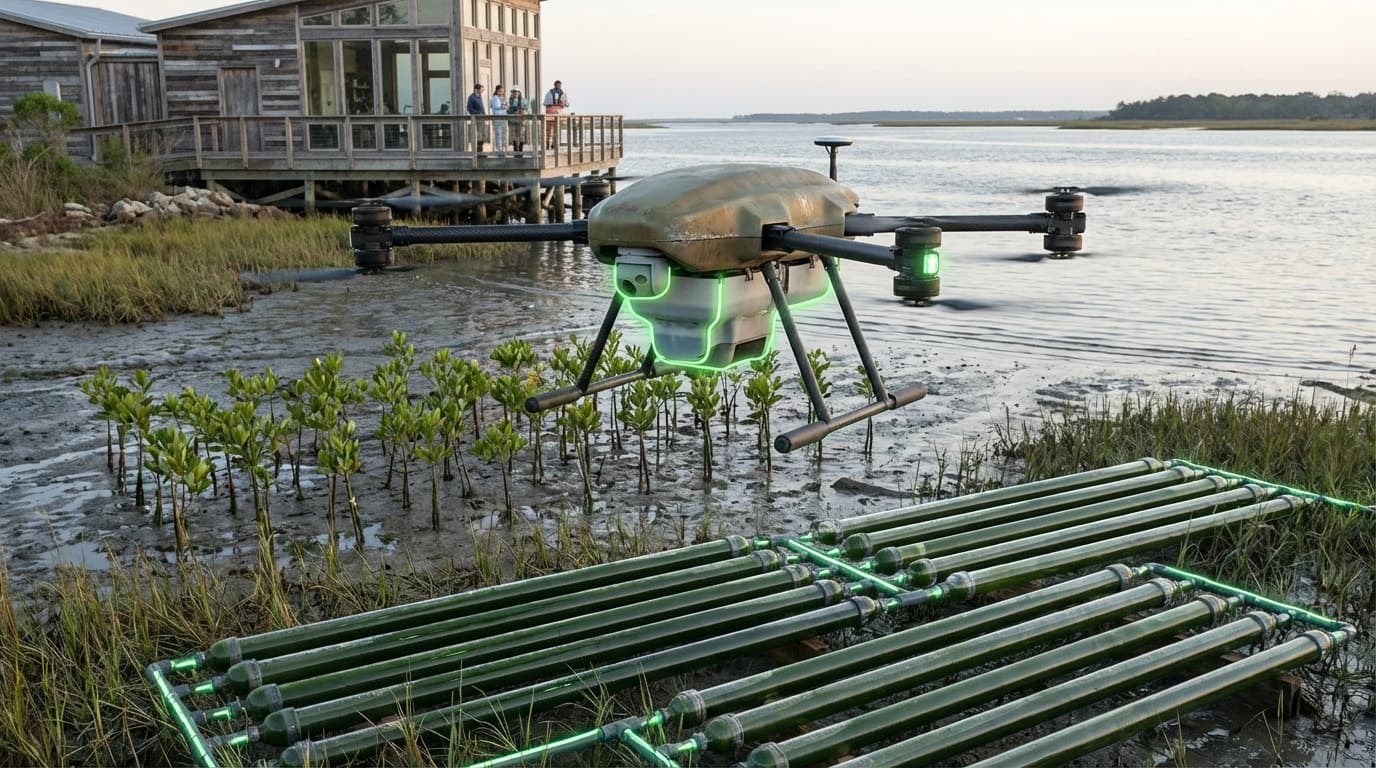
Precision carbon-removal platforms pair remote sensing, AI planning, and robotics to accelerate reforestation and ecosystem repair. Drone swarms map soil moisture, biodiversity, and erosion, then fire seed pods or seedballs optimized for local conditions, planting tens of thousands of trees per day on steep or inaccessible terrain. Bioengineered algae strains, enhanced kelp, and microbial inoculants improve carbon uptake rates and soil health, while LoRa sensors monitor growth, soil carbon, and survival to feed MRV systems.
Companies like Dendra, Flash Forest, DroneSeed, and Living Carbon work with indigenous communities and landowners to restore fire-scarred forests, mangroves, and grasslands. Agricultural cooperatives deploy precision amendments to rebuild soil carbon while boosting yields. Carbon-credit buyers seek high-quality, data-rich projects that prove permanence and co-benefits, channeling finance into restoration corridors.
Technology readiness is TRL 6: drones, genomics, and MRV tools are proven, but scaling requires nurseries, seed supply, permitting, and long-term stewardship. Standardized protocols and community governance are essential to ensure projects respect land rights and biodiversity. As carbon markets tighten quality criteria and governments fund nature-based solutions, precision restoration will move from niche to mainstream climate infrastructure.

Dendra Systems
United Kingdom · Startup
Combines AI and drone technology to restore ecosystems at scale, offering aerial seeding and biodiversity monitoring.
Flash Forest
Canada · Startup
A reforestation startup using heavy-lift drones to fire seed pods into the soil, aiming to plant 1 billion trees by 2028.
A biotechnology company engineering trees to capture and store more carbon using enhanced photosynthesis.
Australia · Startup
Uses octocopter drones and biotechnology-enhanced seed pods to plant trees at a rate of 40,000 per day.
United States · Company
Provides post-wildfire reforestation services, utilizing drone swarms (via acquisition of DroneSeed) to replant burned areas.
Netherlands · Company
A technology-driven reforestation company using autonomous planting, drones, and proprietary 'Cocoon' technology to restore degraded land.
Uses satellite imagery, remote sensing, and AI to validate and monitor forest carbon projects, creating digital representations of forest carbon stocks.
United States · Startup
Focuses on native forest restoration, providing solar-powered seed banks and forestry software to scale projects globally.
Published forecasts about this technology, graded against what happened in Hindsight.
Earth Engineering
This page is a narrower case of it.
Signals turns a topic into a sourced research record you can inspect and rerun. Your first scan is free, and this one starts with Precision Carbon Removal & Restoration already loaded, so edit it or scan as is.