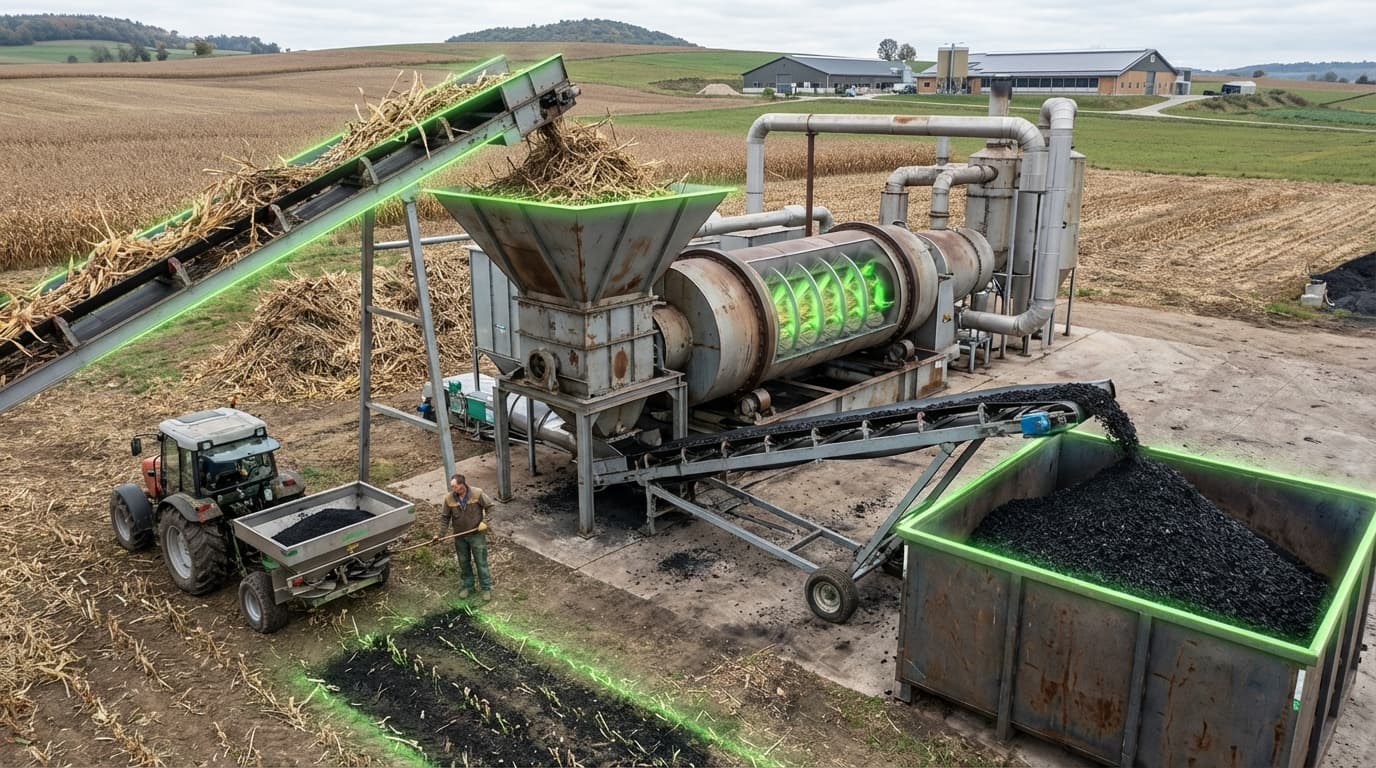
Biochar Carbon Sequestration
Biochar facilities pyrolyze crop residues, forestry slash, and organic waste in low-oxygen reactors, producing a stable carbon matrix that can persist in soils for centuries. The process co-generates syngas or bio-oil for heat and power, improving project economics. Modular kilns near farms reduce feedstock transport, while centralized plants integrate with biomass power stations or waste-management sites. Quality control (surface area, pH, contaminants) determines optimal uses—soil amendment, livestock feed additives, or filtration media.
Farmers apply biochar to boost water retention, nutrient efficiency, and microbial activity, reducing fertilizer needs and increasing yields. Municipalities mix it into green infrastructure to filter runoff, and construction firms explore biochar-enhanced concrete. Carbon-removal marketplaces issue credits after MRV platforms verify feedstock provenance, kiln performance, and application data, with projects like Charm Industrial, Carbon Cycle, and Carbofex leading the charge.
Biochar is TRL 7–8, but scaling hinges on feedstock logistics, permitting, and consistent standards (EBC, Puro). Policymakers can accelerate adoption via waste-diversion mandates, soil-health incentives, and carbon farming payments. As corporations seek durable, nature-based removals, biochar will supply a growing share of high-integrity credits.
Related Organizations
United States · Nonprofit
A global platform for fostering stakeholder collaboration, good industry practices, and environmental and ethical standards for biochar.
Finland · Company
The world's first B2B marketplace, standard, and registry focused entirely on carbon removal.
United States · Company
Produces biochar soil conditioners from wood waste to improve soil health and sequester carbon.
Finland · Company
Operates biochar plants that co-generate district heating and sell carbon removal credits.
Bolivia · Company
Large-scale biochar producer in Bolivia utilizing forestry residues to prevent wildfires and improve soil.
France · Startup
Deploys biochar models in tropical developing countries to improve agriculture and sequester carbon.
United States · Company
Partners with existing biomass power plants to modify operations for biochar production.
Germany · Company
Manufacturer of carbonization systems for upcycling biomass residues into biochar.
Canada · Company
Develops torrefaction technology to produce biocoal and biochar from biomass.
Supporting Evidence
Research this in Signals
Signals turns a topic into a sourced research record you can inspect and rerun. Your first scan is free, and this one starts with Biochar Carbon Sequestration already loaded, so edit it or scan as is.