






Ultra-High-Voltage Direct Current and Macro Grids
Long-Distance HVDC Corridors
High-voltage DC transmission lines moving renewable power across continents with minimal loss
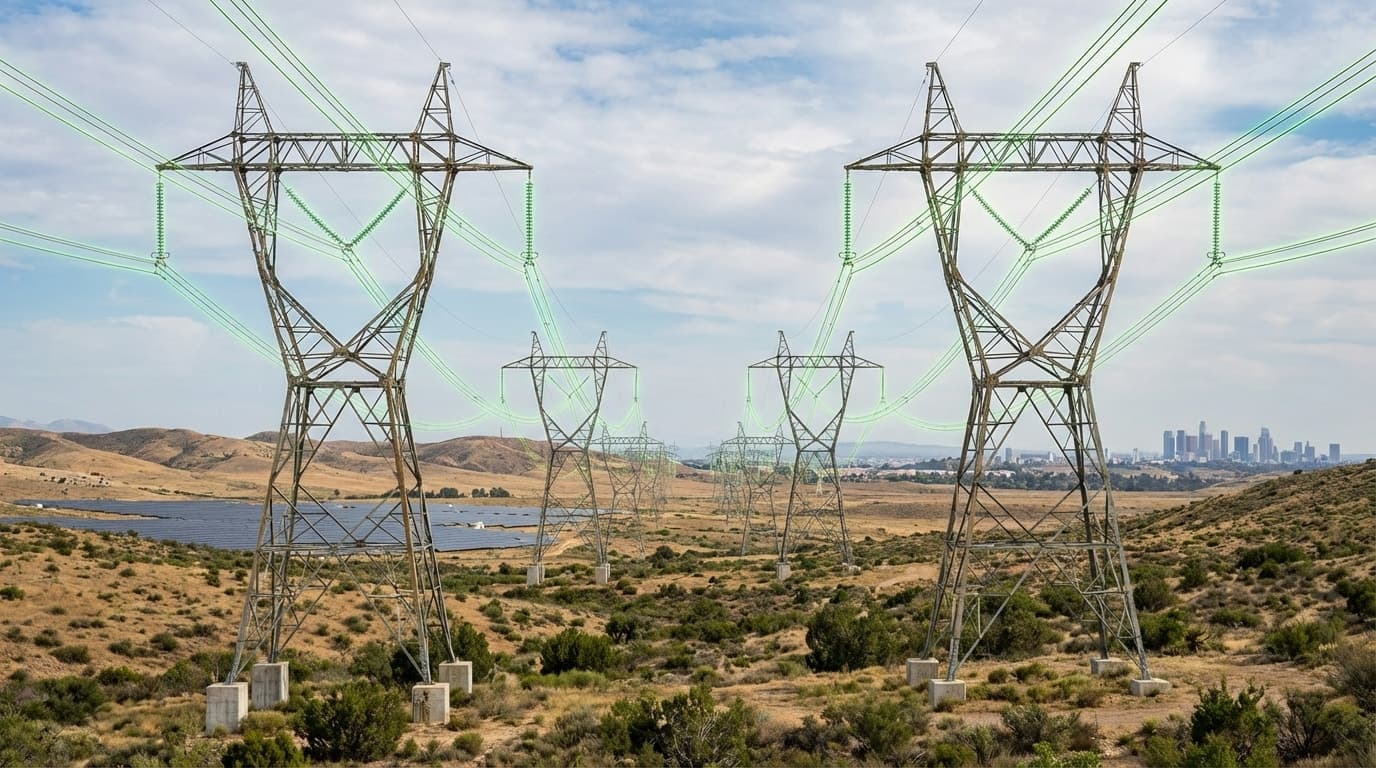
High-voltage direct current (HVDC) corridors transmit bulk power thousands of kilometers with losses under 3% per 1,000 km, making them ideal for connecting remote wind, solar, and hydro resources to load centers. Modern voltage-source converters (VSC) allow multi-terminal networks, black-start capability, and easier integration with weak grids. Developers deploy overhead ±800 kV lines, underground cables along railways, and subsea links like North Sea Wind Power Hub, SunZia, and China’s West-to-East Ultra HVDC to balance regions and share reserves.
As renewable penetration climbs, HVDC backbones reduce curtailment, unlock cross-border electricity trade, and support future “supergrids” that span continents. They also enable co-location of energy-intensive industries (green hydrogen, data centers) near cheap generation while delivering surplus to cities. Grid operators use HVDC to stabilize frequency, prevent cascading outages, and integrate asynchronous grids (e.g., Texas to Eastern Interconnect).
The technology is TRL 7–8 but constrained by permitting, social acceptance, and manufacturing bottlenecks for converter stations and high-voltage cables. Policy tools—streamlined siting processes, cost-allocation frameworks, and public-private partnerships—are critical. The EU, US, India, and China are investing billions into new corridors, and companies like Hitachi Energy, Siemens Energy, and Prysmian are expanding factories. As governments push for net-zero, HVDC superhighways will become as essential as highways and fiber networks.
TRL
7/9Operational
Impact
5/5
Investment
5/5
Category
hardware
Related Organizations
A global leader in HVDC technology, specifically HVDC Light (VSC), supplying converter stations for major interconnectors worldwide.
Developer
Provides HVDC Plus technology (VSC) and transformers for ultra-high-voltage transmission projects globally.
Developer
State Grid Corporation of China (SGCC)
China · Company
The world's largest utility, pioneering Ultra-High Voltage DC (UHVDC) lines (±800kV and ±1100kV) to transport renewables from inland China to coastal cities.
Deployer
The energy portfolio of GE (formerly GE Digital), offering Asset Performance Management (APM) software powered by AI.
Developer
French cable manufacturer supplying cabling for projects like the EuroAsia Interconnector.
Developer
Specializes in high-voltage cable systems, including the 525 kV XLPE DC cables used in modern HVDC corridors like the German SuedLink.
Developer
The world's largest cable manufacturer, supplying submarine and land cables for major projects like the Viking Link and NeuConnect.
Developer
Developing the Morocco-UK Power Project, planning 3,800km of subsea HVDC cables to supply solar/wind from the Sahara to Britain.
Deployer
Elia Group
Belgium · Company
Belgian TSO developing the Princess Elisabeth Island, an artificial energy island connecting offshore wind via HVDC.
Deployer
Pattern Energy
85%United States · Company
Developer of the SunZia Wind and Transmission project, which includes a 550-mile HVDC line to transport New Mexico wind power to Arizona/California.
Deployer
Developing superconducting transmission technology for offshore grids to reduce losses and footprint compared to traditional HVDC.
Researcher
What was expected
Published forecasts about this technology, graded against what happened in Hindsight.
Ultra-High-Voltage Power Lines
This page is broader than it.
Supporting Evidence
Evidence data is not available for this technology yet.
Research this in Signals
Scan Long-Distance HVDC Corridors for yourself.
Signals turns a topic into a sourced research record you can inspect and rerun. Your first scan is free, and this one starts with Long-Distance HVDC Corridors already loaded, so edit it or scan as is.