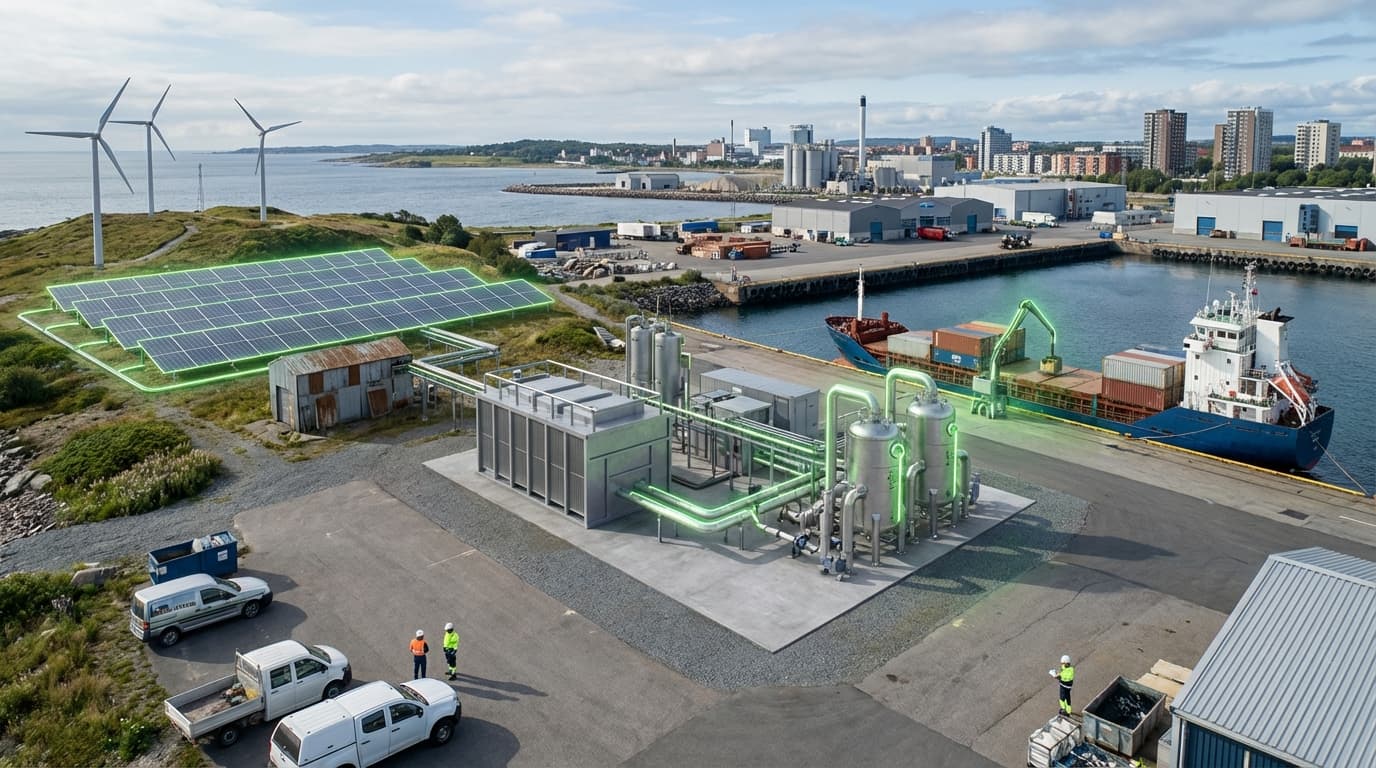
Synthetic Fuel (E-Fuel) Production
Power-to-liquid plants pair green hydrogen with biogenic or captured CO₂ to synthesize e-methanol, e-kerosene, and e-diesel. Front-end units include electrolyzers, CO₂ capture/purification, and nitrogen separation; downstream, Fischer-Tropsch or methanol-to-jet reactors produce drop-in fuels that meet ASTM specs. Developers site plants in Patagonia, Iceland, Morocco, and Australia where wind/solar capacity factors are high, then ship fuels to aviation and maritime hubs. Thermal storage and smart power contracts keep electrolyzers running when renewables fluctuate.
Airlines, shipping lines, and chemical companies sign offtake agreements spanning a decade or more, while governments offer tax credits (US 45V/SAF), CfDs, and delegated mandates to close the cost gap with fossil fuels. Some plants integrate DAC or BECCS to deliver carbon-negative fuels, bundling removal credits with fuel sales. Others produce e-methanol for green shipping corridors and chemical feedstocks.
Technology is TRL 6–7: system integration, fuel certification, and logistics remain complex, and electrolyzer/CO₂ supply chains must scale drastically. Harmonized sustainability criteria (EU RFNBO rules, ICAO CORSIA) and infrastructure upgrades at ports and airports are critical. As carbon pricing tightens and SAF mandates ramp, synthetic fuels will become a primary pathway for decarbonizing long-haul transport.
Related Organizations

Develops e-fuel projects globally, converting hydrogen and recycled CO2 into methanol and gasoline.

Produces ultra-low carbon Electrofuels for heavy transport and chemical applications.

Consortium aiming to industrialize Power-to-Liquid production for sustainable aviation fuel in Norway.
Carbon transformation company using CO2 electrolysis to produce E-Jet fuel and materials.
Developing commercial-scale power-to-liquid facilities to produce e-kerosene and e-diesel.
Industrial SME focused on producing e-methanol and sustainable aviation fuels.

Develops technology to filter CO2 from the air and convert it into zero-net-carbon gasoline and jet fuel.

Develops high-temperature solid oxide electrolyzers (SOEC) crucial for efficient e-fuel production.
Switzerland · Startup
Produces solar fuels by using high-temperature solar heat to drive the thermochemical reactor.

Chemical engineering company providing solid oxide electrolyzers and synthesis technologies for e-fuels.
Supporting Evidence
Research this in Signals
Signals turns a topic into a sourced research record you can inspect and rerun. Your first scan is free, and this one starts with Synthetic Fuel (E-Fuel) Production already loaded, so edit it or scan as is.