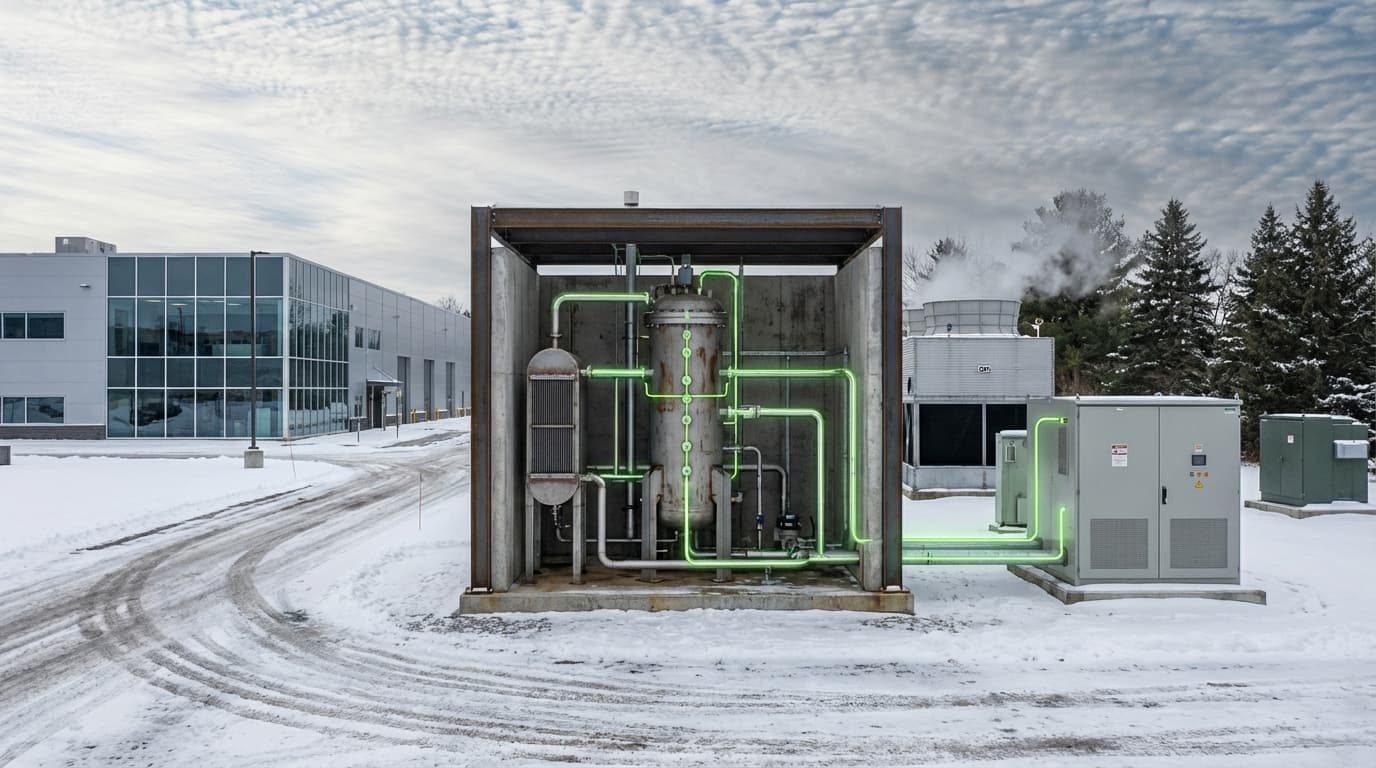
Modular Nuclear Systems
Small modular reactors (SMRs) and microreactors shrink pressurized water, molten salt, and high-temperature gas designs into factory-built modules that can be shipped by rail or truck. Standardized fabrication, passive safety systems, and walk-away cooling reduce construction risk and staffing needs compared to gigawatt-scale plants. Vendors such as Rolls-Royce SMR, NuScale, GE‑Hitachi’s BWRX‑300, and X‑energy’s Xe‑100 target 50–300 MW units, while microreactor startups like Oklo and Radiant pursue 1–10 MW systems for remote bases or mining sites.
For grids, SMRs promise dispatchable, low-carbon power that can pair with renewables, provide steam for industrial clusters, or keep islanded microgrids running during extreme weather. Industrial customers see value in co-locating SMRs for hydrogen production, desalination, or district heating, reducing reliance on volatile gas markets. Because modules are built in controlled factories, developers can iterate designs, train operators in simulators, and scale deployments in phases, smoothing financing.
Most designs sit at TRL 4–6: NRC approvals, supply-chain qualification, and first-of-a-kind demonstrations remain hurdles. Licensing modernization, advanced fuel availability (HALEU), and waste management frameworks will determine how fast SMRs scale. Governments in Canada, the UK, US, and Japan are offering cost-share programs, streamlined regulation, and guaranteed offtake to move prototypes into the 2030s commercial window. Success would give decarbonization planners another firm-power lever beyond gas with CCS.
Related Organizations

Developer of a small modular reactor (SMR) technology designed to provide scalable, safe, and reliable carbon-free nuclear energy.
Nuclear innovation company developing the Natrium reactor, a sodium-fast reactor combined with a molten salt energy storage system.

Focuses on the delivery of a clean, affordable, and safe energy solution using fluoride salt-cooled high-temperature reactor technology.
Rolls-Royce SMR
United Kingdom · Company
A dedicated business established to deploy a fleet of Small Modular Reactors (SMRs) in the UK and globally.

Developer of the Xe-100 high-temperature gas-cooled small modular reactor and TRISO-X fuel.

Danish startup developing Compact Molten Salt Reactors (CMSR) designed to be installed on floating power barges.

Developing a thorium molten salt reactor that fits inside a 40-foot shipping container.
Supporting Evidence
Research this in Signals
Signals turns a topic into a sourced research record you can inspect and rerun. Your first scan is free, and this one starts with Modular Nuclear Systems already loaded, so edit it or scan as is.