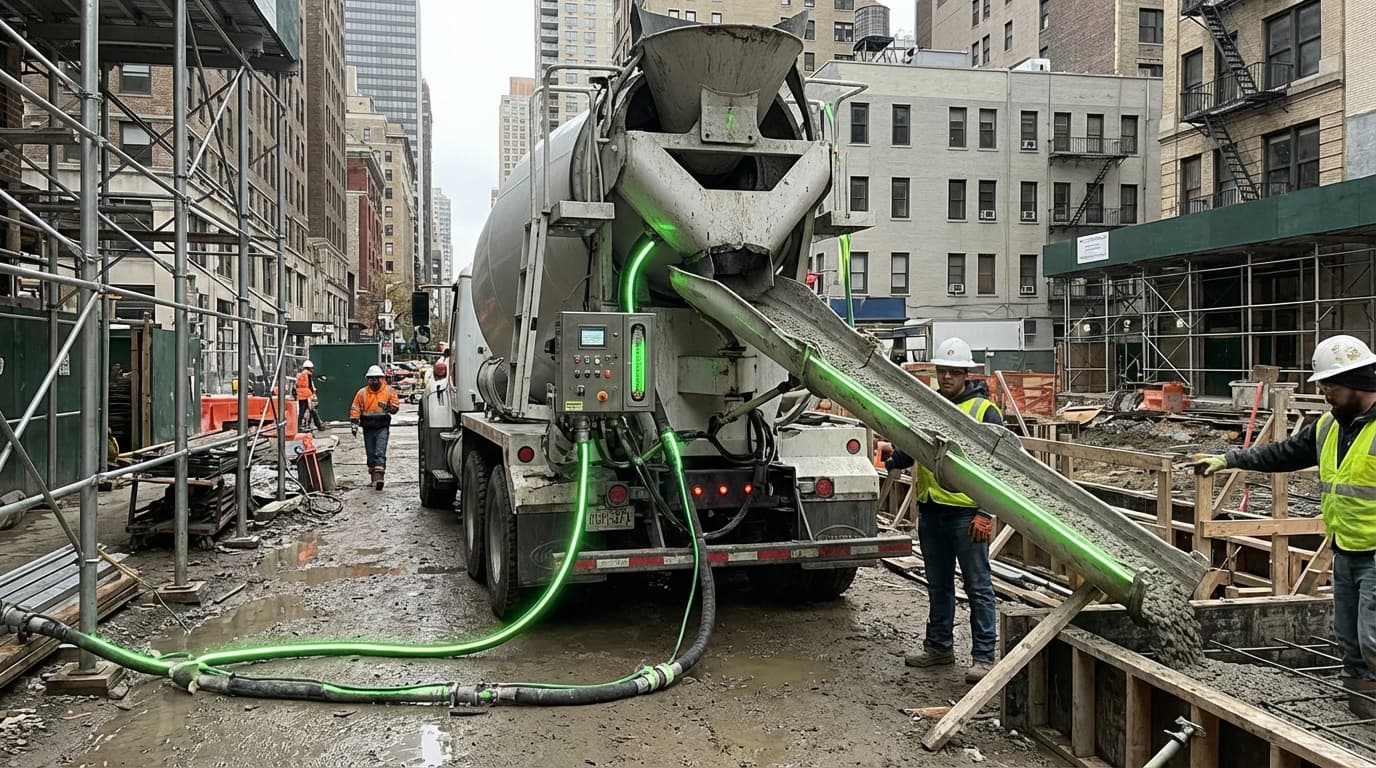
Concrete Carbon Curing
Carbon-curing systems inject captured CO₂ into ready-mix concrete or precast products during mixing and curing. The CO₂ reacts with calcium ions to form nano-scale calcium carbonate, locking carbon into the matrix while improving compressive strength so cement content can drop 5–10%. Modular dosing skids integrate with batch plants, and sensors verify injection volumes for carbon accounting. Some processes cure blocks in CO₂-rich chambers, mineralizing industrial emissions at scale.
Contractors adopt carbon-cured concrete to meet embodied carbon targets, win green building credits, and reduce cement costs. Cities like New York, Austin, and Singapore specify low-carbon mixes in procurement, while infrastructure owners integrate carbon-curing into toll roads, data centers, and wind-turbine foundations. Carbon utilization companies co-locate with cement plants to mineralize flue gas, bundling carbon-removal credits with material sales.
The technology is TRL 8 but needs broader standards, inspector education, and CO₂ supply logistics. ASTM/ACI test methods are being updated, and carbon registries develop methodologies for utilization projects. As embodied carbon regulations tighten, CO₂-curing will become a mainstream decarbonization lever for the construction sector.
Related Organizations

Develops technology to inject captured CO2 into fresh concrete, where it mineralizes and strengthens the material.

Produces sustainable cement and cures concrete with CO2 instead of water, permanently sequestering the gas.

Develops carbon-negative concrete solutions by using steel slag and curing with CO2, avoiding cement entirely.
United States · Startup
Spin-out from UCLA that produces ultra-low carbon concrete by curing cement alternatives with dilute CO2 streams.
Canada · Startup
Mechanically and chemically activates industrial residues with CO2 to create supplementary cementitious materials.

Captures CO2 from cement kilns and mineralizes it into a secondary cementitious material, reducing the carbon footprint of concrete.
Switzerland · Startup
Develops technology to permanently store CO2 in demolished concrete, effectively recycling it into a carbon sink.

Captures CO2 and converts it into limestone aggregate for concrete, mimicking the natural biomineralization process of shellfish.
One of the world's largest building materials companies.
Supporting Evidence
Research this in Signals
Signals turns a topic into a sourced research record you can inspect and rerun. Your first scan is free, and this one starts with Concrete Carbon Curing already loaded, so edit it or scan as is.