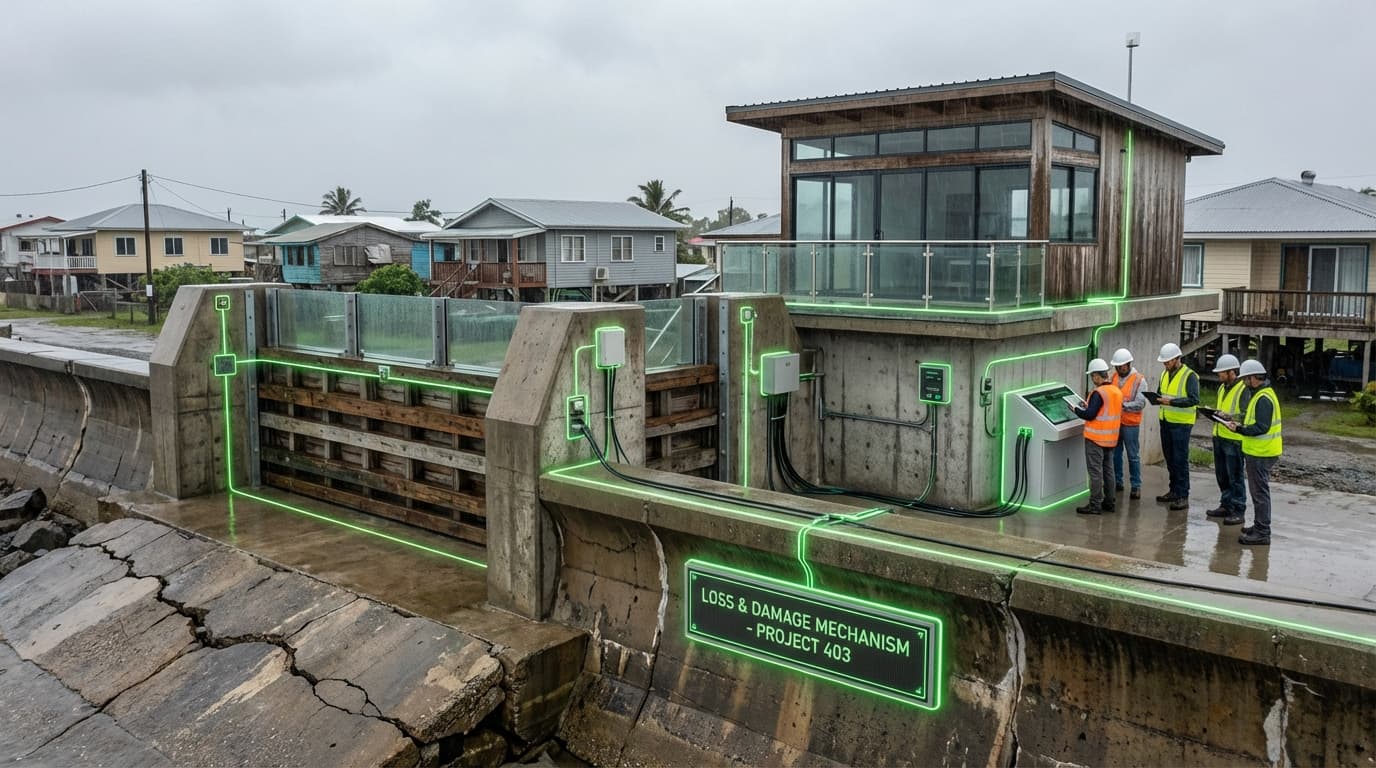
Loss & Damage and Climate Reparations Mechanisms
Loss and damage frameworks aim to compensate communities for climate impacts that mitigation and adaptation cannot avert—vanishing coastlines, desertified farmland, cultural heritage loss. Proposed architectures include UN-administered funds financed by carbon taxes or windfall profits, regional insurance pools for small island states, and legal pathways for reparations claims tied to historical emissions. Governance models emphasize direct access for frontline communities, transparent disbursement, and participatory oversight boards that include youth and indigenous leaders.
Innovations span parametric insurance that pays out when cyclones exceed thresholds, resilience bonds linked to GDP, and debt-for-climate swaps that free fiscal space for recovery. Blockchain registries track pledges and payouts, while satellite evidence and AI damage assessments accelerate claims processing. Strategic litigation in national courts and international tribunals is setting precedents for corporate liability, nudging polluters to contribute voluntarily before forced settlements emerge.
These mechanisms are TRL 2–3: early pilots exist (V20’s Loss and Damage Fund, Bridgetown Initiative proposals), but scale and political agreement lag. As climate losses soar, aligning finance ministries, humanitarian agencies, and civil society around operational models will be crucial to maintain global solidarity.
Related Organizations
Germany · Consortium
The UN body overseeing the operationalization of the Loss and Damage Fund established at COP27.
United States · Government Agency
Selected as the interim host for the Loss and Damage Fund, managing the financial architecture.
Consortium
A dedicated cooperation initiative of economies systematically vulnerable to climate change, advocating for financial protection.
South Africa · Government Agency
A specialized agency of the African Union providing parametric insurance against extreme weather events.
KY · Nonprofit
The Caribbean Catastrophe Risk Insurance Facility, providing parametric insurance for hurricanes and earthquakes.
Germany · Consortium
A joint initiative by the G7 and V20 to increase financial protection for vulnerable countries.
Germany · Nonprofit
A global network of NGOs that coordinates advocacy for the establishment and funding of loss and damage mechanisms.

An insurtech company offering parametric insurance against climate risks using satellite data.

International Institute for Environment and Development (IIED)
United Kingdom · Research Lab
A policy research organization that develops frameworks and evidence for loss and damage financing.
Germany · Nonprofit
A political foundation that produces extensive analysis and advocacy on climate finance and loss & damage.

One of the world's largest reinsurers, actively developing public-private partnerships for climate risk transfer.
Supporting Evidence
Research this in Signals
Signals turns a topic into a sourced research record you can inspect and rerun. Your first scan is free, and this one starts with Loss & Damage and Climate Reparations Mechanisms already loaded, so edit it or scan as is.