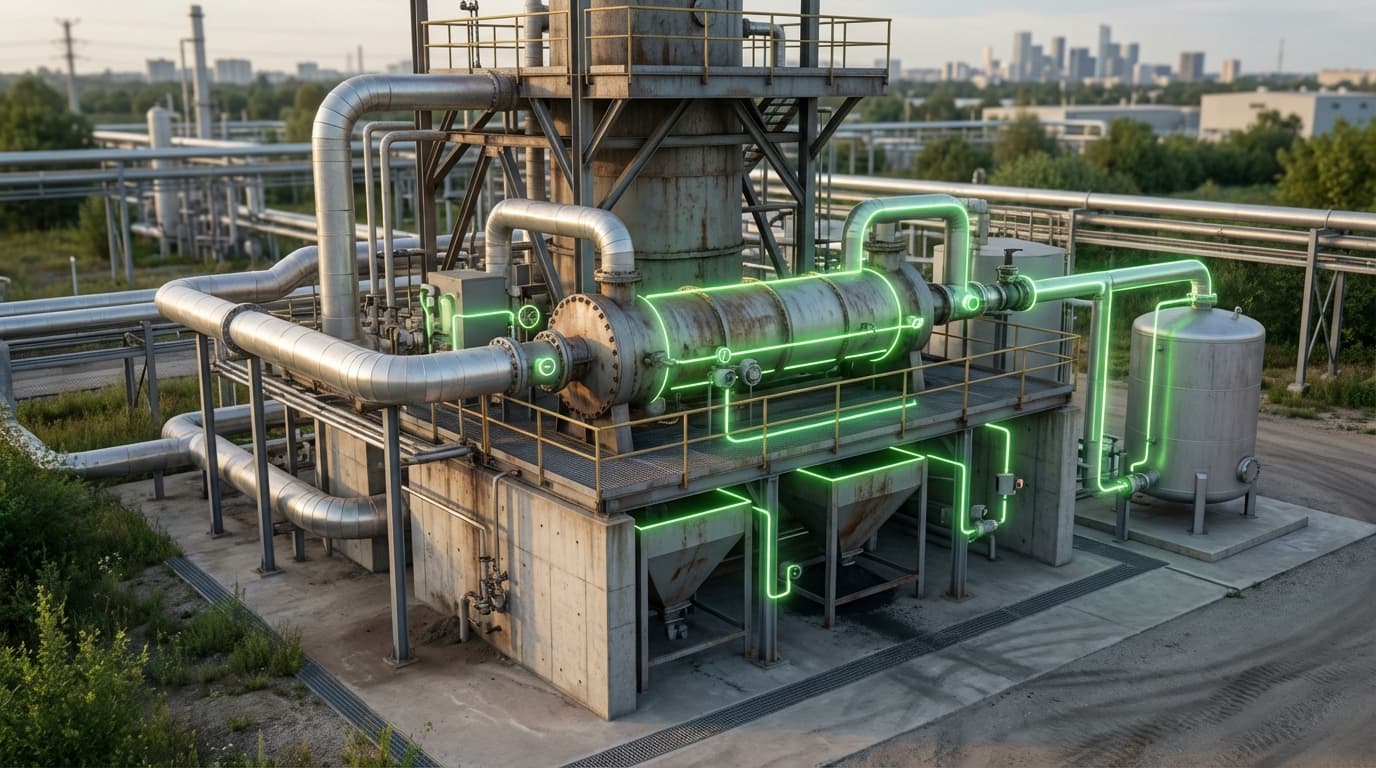
Methane Pyrolysis
Methane pyrolysis splits natural gas (or biomethane) into hydrogen and solid carbon without producing CO₂. Plasma torches, molten metal baths, and catalytic fluidized beds strip carbon atoms, yielding H₂ that can fuel industry while capturing carbon as graphite, carbon black, or advanced materials. Because carbon leaves as a solid, downstream handling is simpler than CO₂ pipelines, and geothermal or renewable electricity can power the reactors for low lifecycle emissions.
Refiners and ammonia producers view pyrolysis as a bridge technology to decarbonize hydrogen until renewable H₂ is abundant, while utilities consider blending pyrolytic hydrogen into gas networks. Carbon co-products serve tire manufacturers, battery anode suppliers, or soil amendments, adding revenue streams. Projects from Monolith, Hazer, and BASF are building commercial plants with long-term offtake agreements for both hydrogen and carbon solids.
Technology is TRL 5–6: scaling reactors, managing impurities, and stabilizing carbon markets are key challenges. Regulatory acceptance depends on methane supply cleanliness (low upstream leaks) and robust MRV. Incentives like US IRA’s 45V credit and EU CBAM exemptions could accelerate adoption if emissions intensity meets strict thresholds. Methane pyrolysis offers a pragmatic path to lower-carbon hydrogen in regions with existing gas infrastructure.
Related Organizations
United States · Company
Uses renewable electricity to convert natural gas into clean hydrogen and carbon black via plasma pyrolysis.
Canada · Company
Uses microwave energy to heat methane in the absence of oxygen to produce hydrogen and solid carbon.
Australia · Company
Develops a process using iron ore as a catalyst to convert biogas or natural gas into hydrogen and graphite.
United States · Company
Develops distributed pyrolysis units that strip carbon from natural gas at the point of use (e.g., utility boilers).
Canada · Company
Uses pulsed methane pyrolysis (PMP) to convert natural gas into hydrogen and solid carbon.

German research university contributing to atmospheric and ecosystem research.
United States · Company
Produces graphite and hydrogen from methane using a thermal decomposition process to decarbonize heavy industry.
Chemical giant producing Elastopave, a polyurethane binder system for stable, water-permeable stone surfaces.

Dutch organization for applied scientific research, actively investigating molten metal pyrolysis for industrial hydrogen.
Supporting Evidence
Research this in Signals
Signals turns a topic into a sourced research record you can inspect and rerun. Your first scan is free, and this one starts with Methane Pyrolysis already loaded, so edit it or scan as is.