In-Space Resource Utilization (ISRU)
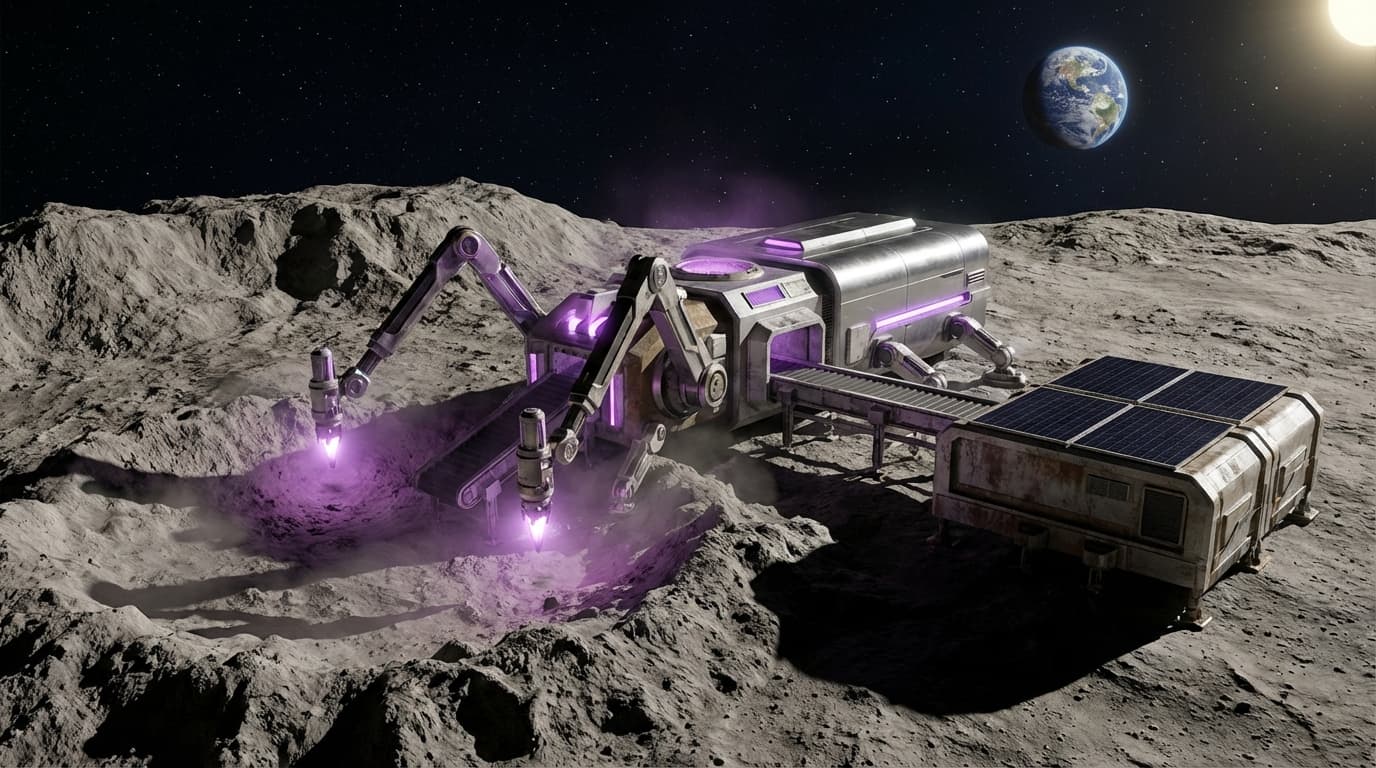
In-space resource utilization (ISRU) encompasses technologies for extracting and processing resources from space environments including the Moon, asteroids, and other celestial bodies. These systems can convert lunar regolith into oxygen for life support and rocket propellant, extract metals for construction, and process water and other volatiles. The category also includes asteroid prospecting and sampling systems that characterize resources for future extraction. ISRU technologies enable the production of consumables and structural materials in space rather than transporting everything from Earth.
This innovation addresses the fundamental economic challenge of space exploration, where transporting materials from Earth is extremely expensive. By manufacturing materials in space from local resources, ISRU can dramatically reduce the cost and complexity of space operations, enabling sustainable presence and deeper exploration. The technology is essential for long-term space settlement and for enabling missions that would be impractical if all materials must come from Earth.
The technology is becoming increasingly important as space agencies plan for sustained lunar presence and deeper space exploration. As ISRU capabilities are demonstrated and mature, they could transform space economics, making space operations more sustainable and enabling new mission concepts. However, ISRU faces significant technical challenges including the difficulty of operating in space environments, the complexity of processing raw materials, and the need to demonstrate economic viability. The technology represents a critical capability for the future of space exploration, but significant development and demonstration work remains before it becomes operational.
Related Organizations

A startup actively launching missions (Brokkr-1, Brokkr-2) to prospect and refine platinum-group metals from asteroids.

Blue Origin
United States · Company
Aerospace manufacturer developing the 'Blue Alchemist' technology to produce solar cells and transmission wire from lunar regolith simulants.

Hosts the Center for Space Resources, a leading academic hub for ISRU research and education.

Innovation center focused exclusively on space resources utilization.

Honeybee Robotics
United States · Company
Develops advanced robotic systems for planetary exploration, specifically drilling and sampling tools essential for extracting subsurface ice and regolith.

Private lunar exploration company focusing on transportation and resource exploration to establish a lunar economy.

Developing technology to extract oxygen and metals from lunar regolith using a molten regolith electrolysis reactor.

Construction technology company using 3D printing robotics, software, and advanced materials.
Develops autonomous lunar rovers designed for resource prospecting and environmental monitoring.

Developing 'capture bag' technology originally for asteroid mining, now applied to capturing orbital debris.

Developing a swarm of AI-powered industrial robots for mining on Earth, with the explicit goal of expanding to the Moon and Mars.

Developing the Dream Chaser spaceplane and LIFE habitats to support commercial space activities including manufacturing.
Supporting Evidence
Research this in Signals
Signals turns a topic into a sourced research record you can inspect and rerun. Your first scan is free, and this one starts with In-Space Resource Utilization (ISRU) already loaded, so edit it or scan as is.