In-Situ Resource Utilization (ISRU)
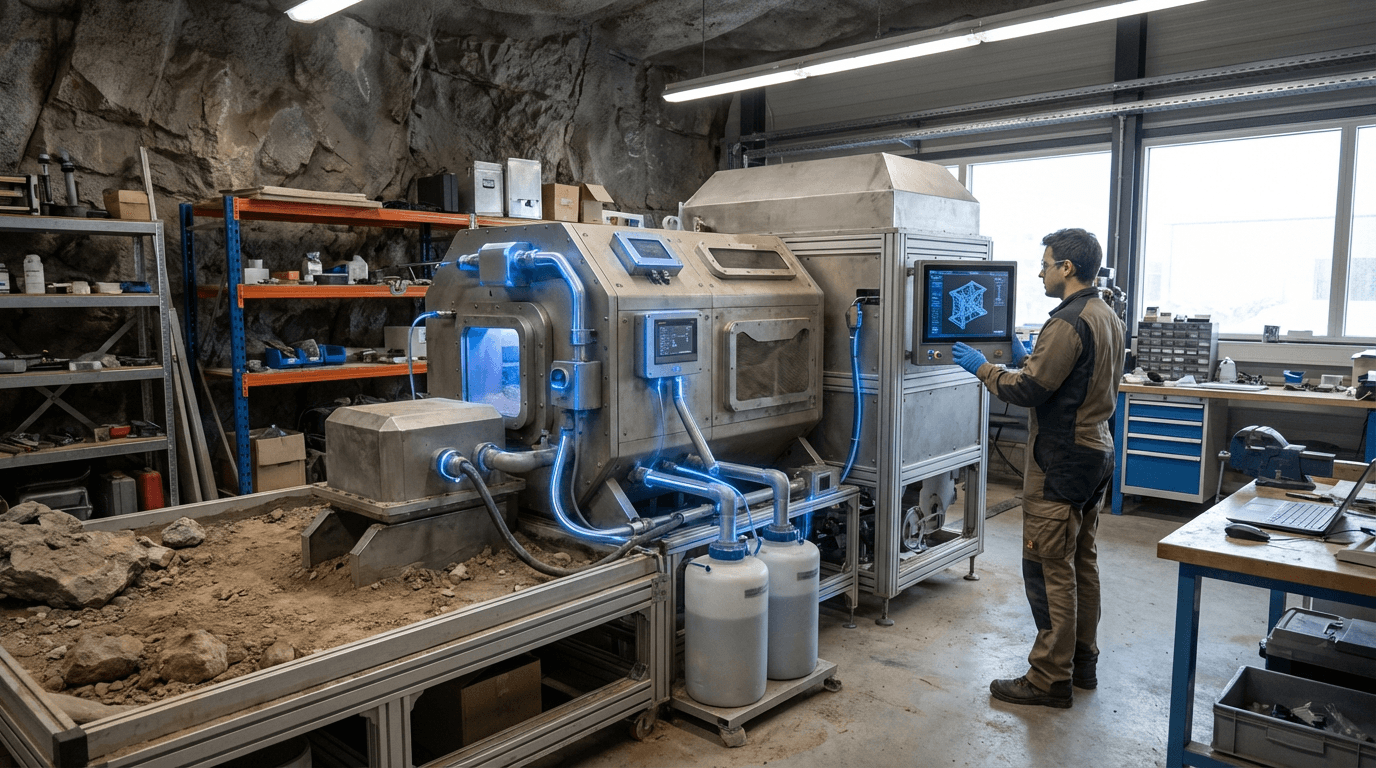
In-Situ Resource Utilization represents a fundamental shift in how humanity approaches space exploration and settlement, moving away from the prohibitively expensive model of transporting all necessary materials from Earth. At its core, ISRU encompasses a suite of technologies designed to extract and process resources found on celestial bodies—including the Moon, Mars, and asteroids—into usable products such as water, oxygen, rocket propellant, and construction materials. The technical mechanisms vary depending on the target resource and location, but commonly involve processes like regolith excavation, thermal extraction of water ice from permanently shadowed craters, electrolysis to split water into hydrogen and oxygen for propellant production, and sintering or 3D printing techniques that transform raw regolith into structural components. On Mars, atmospheric processing systems can capture carbon dioxide and convert it into methane fuel through the Sabatier reaction, while oxygen can be extracted directly from the iron oxide-rich Martian soil through reduction processes. These technologies rely on robust automation, as most operations must function in extreme environments with minimal human intervention.
The economic and logistical barriers to establishing permanent human presence beyond Earth have long centered on the astronomical costs of launching materials from our planet's deep gravity well. ISRU directly addresses this challenge by dramatically reducing the mass that must be transported from Earth, potentially cutting mission costs by orders of magnitude. For deep space exploration, the ability to manufacture propellant at destination points transforms mission architecture, enabling refueling depots that make journeys to Mars and beyond feasible with current rocket technology. Beyond propulsion, ISRU enables the production of breathable air, drinkable water, radiation shielding, and habitat construction materials—all critical for sustaining human life in hostile extraterrestrial environments. This capability fundamentally changes the economics of space settlement, shifting from a model of complete Earth dependence to one of increasing self-sufficiency, where off-world colonies can bootstrap their own industrial capacity and reduce their reliance on expensive supply chains stretching across millions of kilometers.
While ISRU remains largely in the demonstration phase, significant progress has been made in recent years. NASA's MOXIE experiment aboard the Perseverance rover has successfully produced oxygen from the Martian atmosphere, validating key technologies for future human missions. Lunar ISRU concepts are advancing rapidly, with multiple space agencies and private companies developing systems to extract water ice from polar craters and process it into rocket propellant, potentially supporting a cislunar economy within the next decade. Early commercial ventures are exploring asteroid mining for both Earth-return scenarios and in-space manufacturing. As these technologies mature and costs decline, ISRU becomes increasingly central to humanity's long-term survival strategy. By enabling the establishment of self-sustaining settlements on multiple worlds, these capabilities create civilizational redundancy—ensuring that catastrophic events on Earth, whether natural or human-caused, cannot extinguish human consciousness and culture. This aligns directly with long-horizon resilience thinking, where the distribution of human civilization across multiple planetary bodies represents perhaps the ultimate insurance policy for our species' continuity across deep time.
Related Organizations

The lead US agency office responsible for early detection of NEOs and leading missions like DART (Double Asteroid Redirection Test).

Honeybee Robotics
United States · Company
Develops advanced robotic systems for planetary exploration, specifically drilling and sampling tools essential for extracting subsurface ice and regolith.

Blue Origin
United States · Company
Aerospace manufacturer developing the 'Blue Alchemist' technology to produce solar cells and transmission wire from lunar regolith simulants.

Academic institution with a dedicated center focused on the technical and economic aspects of space mining.

Private lunar exploration company focusing on transportation and resource exploration to establish a lunar economy.

Leads the EAGLE-1 mission and the SAGA program to build a European quantum communication infrastructure in space.

Construction technology company using 3D printing robotics, software, and advanced materials.
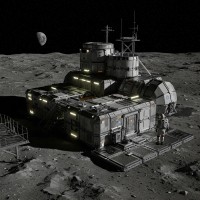
Develops autonomous lunar rovers designed for resource prospecting and environmental monitoring.

Developing a swarm of AI-powered industrial robots for mining on Earth, with the explicit goal of expanding to the Moon and Mars.

Provides in-space 3D printing and bioprinting capabilities, having acquired Made In Space and Techshot.
Supporting Evidence
Research this in Signals
Signals turns a topic into a sourced research record you can inspect and rerun. Your first scan is free, and this one starts with In-Situ Resource Utilization (ISRU) already loaded, so edit it or scan as is.