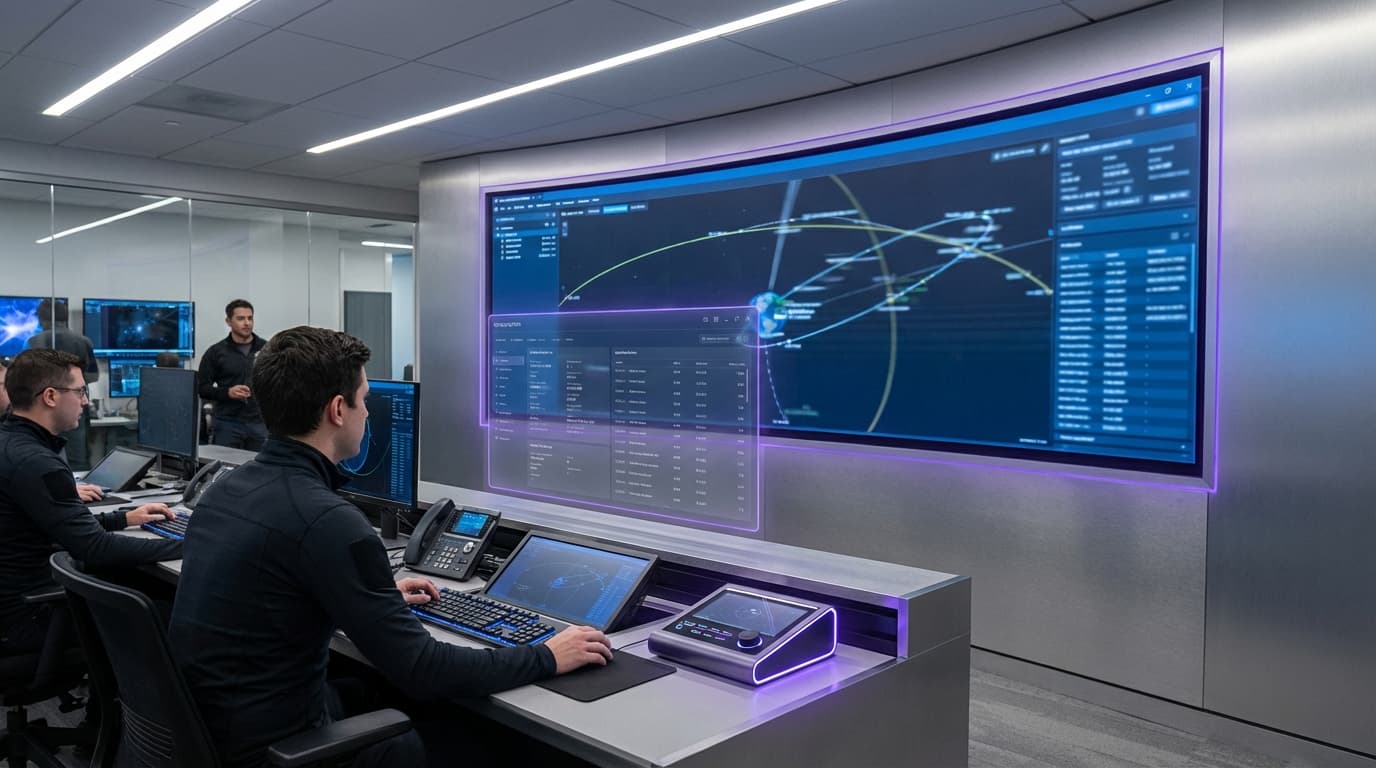
Collision Avoidance Algorithms
Collision avoidance algorithms analyze space situational awareness (SSA) data to predict potential collisions between satellites and space debris, automatically calculating avoidance maneuvers and coordinating with other operators to prevent accidents. As mega-constellations deploy thousands of satellites, these systems have become essential for managing orbital traffic, automatically assessing collision risks, recommending delta-v burns for avoidance, and negotiating coordinated maneuvers with other satellite operators.
This innovation addresses the growing challenge of space traffic management, where the increasing number of satellites and debris objects makes collision risk a critical concern. Manual collision assessment and avoidance is becoming impractical as the number of objects grows, requiring automated systems that can process vast amounts of data and make decisions quickly. Regulatory bodies are increasingly requiring automated flight safety systems as a condition of launch licenses.
The technology is essential for safe operation of large satellite constellations and for preventing the Kessler Syndrome scenario where collisions create cascading debris that makes space unusable. As space becomes more crowded, these systems become critical infrastructure for space safety. However, ensuring these systems are reliable, can coordinate effectively between operators, and don't create conflicts or unnecessary maneuvers remains challenging. The technology represents an important step toward sustainable space operations, but requires continued development and coordination between operators and regulators.
Related Organizations

Develops the Pathfinder platform, which automates satellite collision avoidance by analyzing conjunction data and generating optimal maneuver plans.

Operates a global network of phased-array radars to track LEO objects and debris.

Provides commercial space operations center services and high-accuracy cataloging.
Provides AI-based space traffic management software that automates collision avoidance maneuvers and risk prediction.

Builds space simulation and analytics platforms for training and mission planning.

AI-powered space debris monitoring and collision avoidance platform.
Provides electric propulsion systems integrated with mission planning software for autonomous route optimization and collision avoidance.

Share My Space
France · Startup
Provides collision risk management services based on independent optical data and proprietary risk assessment algorithms.

Building a space-based surveillance platform and associated software for orbital insights and collision prediction.
Develops optimization algorithms for real-time conjunction assessment and maneuver planning.
Supporting Evidence
Research this in Signals
Signals turns a topic into a sourced research record you can inspect and rerun. Your first scan is free, and this one starts with Collision Avoidance Algorithms already loaded, so edit it or scan as is.