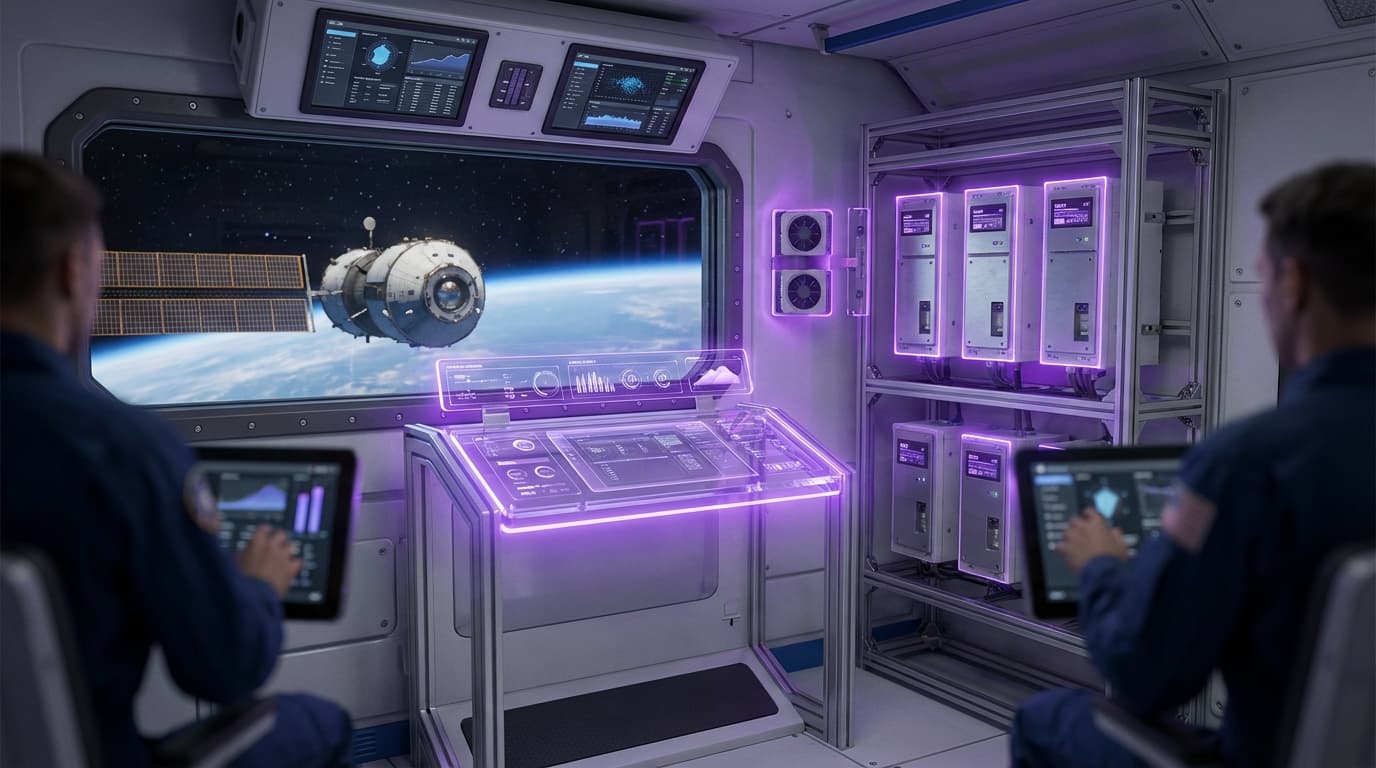
Autonomous Mission Controllers
Autonomous mission controllers are AI systems that manage spacecraft operations including navigation, fault detection, health monitoring, and mission replanning with minimal ground intervention. These systems use onboard large language models and AI reasoning to interpret anomalies, diagnose problems, and adapt mission plans in real-time, enabling spacecraft to operate effectively even when communication with Earth is delayed or unavailable.
This innovation addresses the fundamental challenge of operating spacecraft at great distances or in challenging environments where real-time ground control is impossible. By enabling autonomous decision-making, these systems allow missions to continue effectively even when communication is sparse, delayed, or interrupted. The technology is essential for deep-space missions, lunar far-side operations, and outer planet exploration where communication delays can be hours.
The technology is becoming increasingly sophisticated as AI capabilities improve, with modern systems able to handle complex situations and make decisions that previously required human operators. As space missions become more ambitious and operate further from Earth, autonomous controllers become essential for mission success. However, ensuring these systems are safe, reliable, and can handle unexpected situations remains a critical challenge that requires careful design, testing, and validation.
Related Organizations

Develops 'Mila', an onboard AI software for autonomous satellite operations and anomaly detection.

Provides smart AI solutions for space usage, specifically hardware acceleration.

A company specializing in autonomous systems and advanced data processing for space missions.

Developing the ROKS (Responsive Operations for Key Services) mission to demonstrate CubeSat QKD.

Specializes in space situational awareness and autonomous navigation using onboard hardware.

Offers a software platform for satellites that includes 'TrueTwin' simulation and onboard autonomy for flight operations.


Provides on-board processing hardware and software for Earth observation satellites.

Developing multi-sensor satellites combining SAR and Optical/Hyperspectral data.
Supporting Evidence
Research this in Signals
Signals turns a topic into a sourced research record you can inspect and rerun. Your first scan is free, and this one starts with Autonomous Mission Controllers already loaded, so edit it or scan as is.