









Space Traffic Management
This page is a narrower case of it.
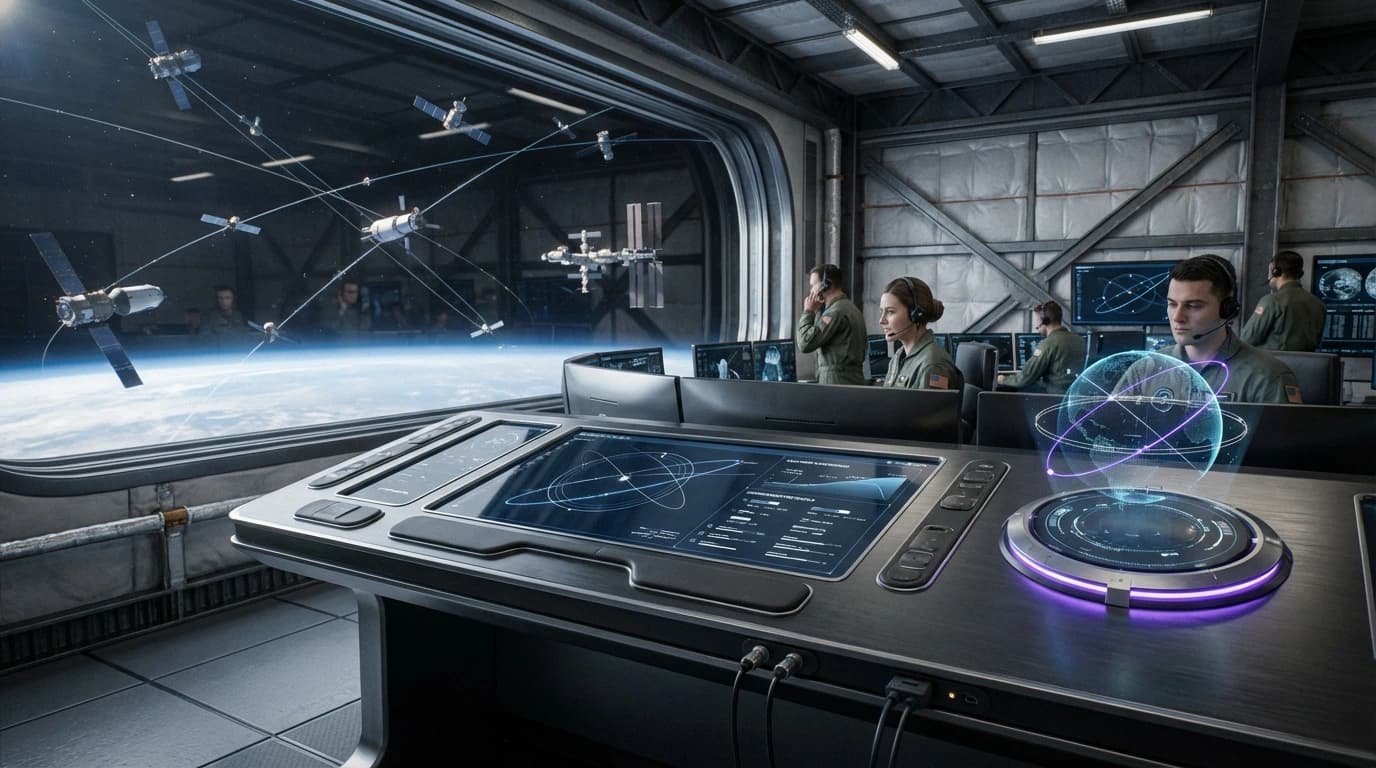
Space traffic management governance encompasses policy frameworks and multilateral agreements that define how satellite operators share positional data, coordinate collision avoidance maneuvers, and resolve conflicts when multiple operators need to maneuver simultaneously. These governance structures establish norms, rules, and procedures for managing space traffic as the number of objects in orbit increases dramatically, creating the coordination mechanisms needed to prevent accidents and conflicts. Effective governance is essential to prevent Kessler Syndrome scenarios where cascading collisions could make certain orbits unusable.
This innovation addresses the critical challenge of managing space traffic as the number of satellites and debris objects grows exponentially, where lack of coordination could lead to collisions, conflicts, and potentially catastrophic cascading failures. By establishing governance frameworks, these systems enable operators to coordinate effectively, share information, and prevent accidents. International organizations, space agencies, and commercial operators are working to develop these frameworks.
The technology is essential for ensuring the long-term sustainability of space operations, where effective traffic management becomes critical as space becomes more crowded. As mega-constellations deploy and space becomes more commercialized, governance frameworks become increasingly important. However, developing effective governance is challenging due to the need for international cooperation, questions about data sharing and privacy, and balancing competing interests. The technology represents an important area of policy and technical development, but requires international cooperation and consensus. Success will depend on establishing clear rules, effective coordination mechanisms, and ensuring compliance. The frameworks developed will be crucial for determining whether space remains safe and accessible as it becomes more crowded, or whether lack of coordination leads to conflicts and accidents.
Part of NOAA/Dept of Commerce, tasked with developing the Traffic Coordination System for Space (TraCSS) for civil STM.
A private foundation dedicated to the secure and sustainable use of space.
An international organization of satellite operators sharing data to improve flight safety and space traffic management.
A consortium of EU member states providing collision avoidance services.
Operates a global network of phased-array radars to track LEO objects and debris.
Provides commercial space operations center services and high-accuracy cataloging.
Develops the Pathfinder platform, which automates satellite collision avoidance by analyzing conjunction data and generating optimal maneuver plans.
Deploying a constellation of satellites to monitor space traffic from space.
Builds space simulation and analytics platforms for training and mission planning.
AI-powered space debris monitoring and collision avoidance platform.
Published forecasts about this technology, graded against what happened in Hindsight.
Space Traffic Management
This page is a narrower case of it.
Signals turns a topic into a sourced research record you can inspect and rerun. Your first scan is free, and this one starts with Space Traffic Management Governance already loaded, so edit it or scan as is.