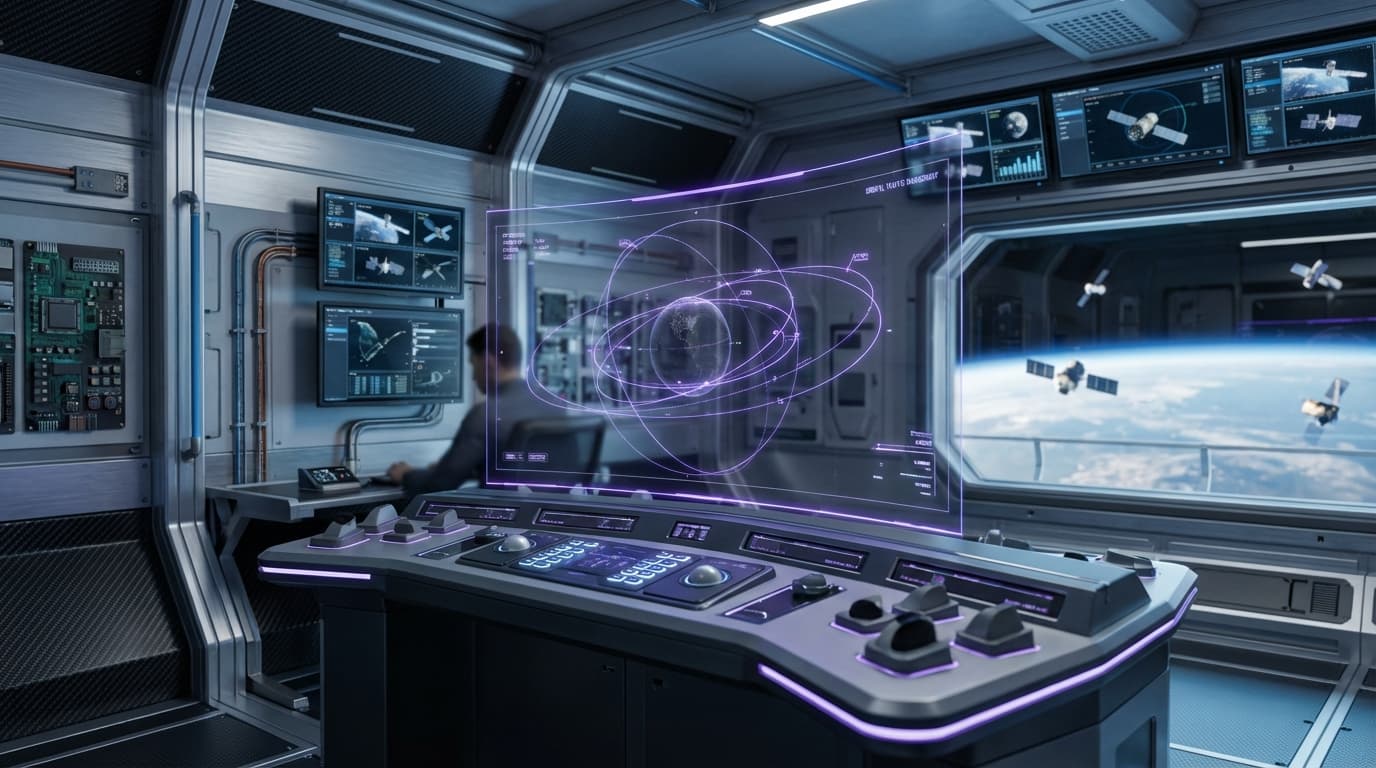
Orbital Traffic Management Systems
Orbital traffic management systems use advanced predictive algorithms to analyze space situational awareness data from multiple sources including ground radar, optical telescopes, and space-based sensors to predict potential collisions and coordinate avoidance maneuvers. These systems facilitate automated negotiation between satellite operators, calculating optimal avoidance maneuvers and coordinating timing to prevent conflicts, ensuring safety in increasingly crowded orbital environments.
This innovation addresses the growing challenge of space traffic management as the number of satellites and debris objects in orbit increases exponentially. With mega-constellations deploying thousands of satellites, manual collision assessment and coordination becomes impractical, requiring automated systems that can process vast amounts of data and coordinate between multiple operators. Regulatory bodies are increasingly requiring these systems as space becomes more crowded.
The technology is essential for safe operation of large satellite constellations and for preventing cascading collisions that could make space unusable. As space becomes more commercialized and crowded, these systems become critical infrastructure for space safety. However, ensuring effective coordination between operators, maintaining data accuracy, and preventing conflicts or unnecessary maneuvers remains challenging. The technology represents an important step toward sustainable space operations, but requires continued development and international coordination.
Related Organizations

Part of NOAA/Dept of Commerce, tasked with developing the Traffic Coordination System for Space (TraCSS) for civil STM.

Develops the Hifly satellite control system and other ground segment automation software for major institutional and commercial missions.

An international organization of satellite operators sharing data to improve flight safety and space traffic management.

The EU agency that manages the Galileo and EGNOS satellite navigation programs.

A technology company specializing in directed-energy weapons, unmanned systems, and satellite communications.

Developed 'Wayfinder', an open-access visualization and data engine for space traffic and debris tracking.


Develops OrbitX, a next-generation satellite operations and ground control software suite.

Manufactures clamshell domes used to house optical sensors for Space Situational Awareness networks.
Supporting Evidence
Research this in Signals
Signals turns a topic into a sourced research record you can inspect and rerun. Your first scan is free, and this one starts with Orbital Traffic Management Systems already loaded, so edit it or scan as is.