








AI Space Robots
This page is a narrower case of it.
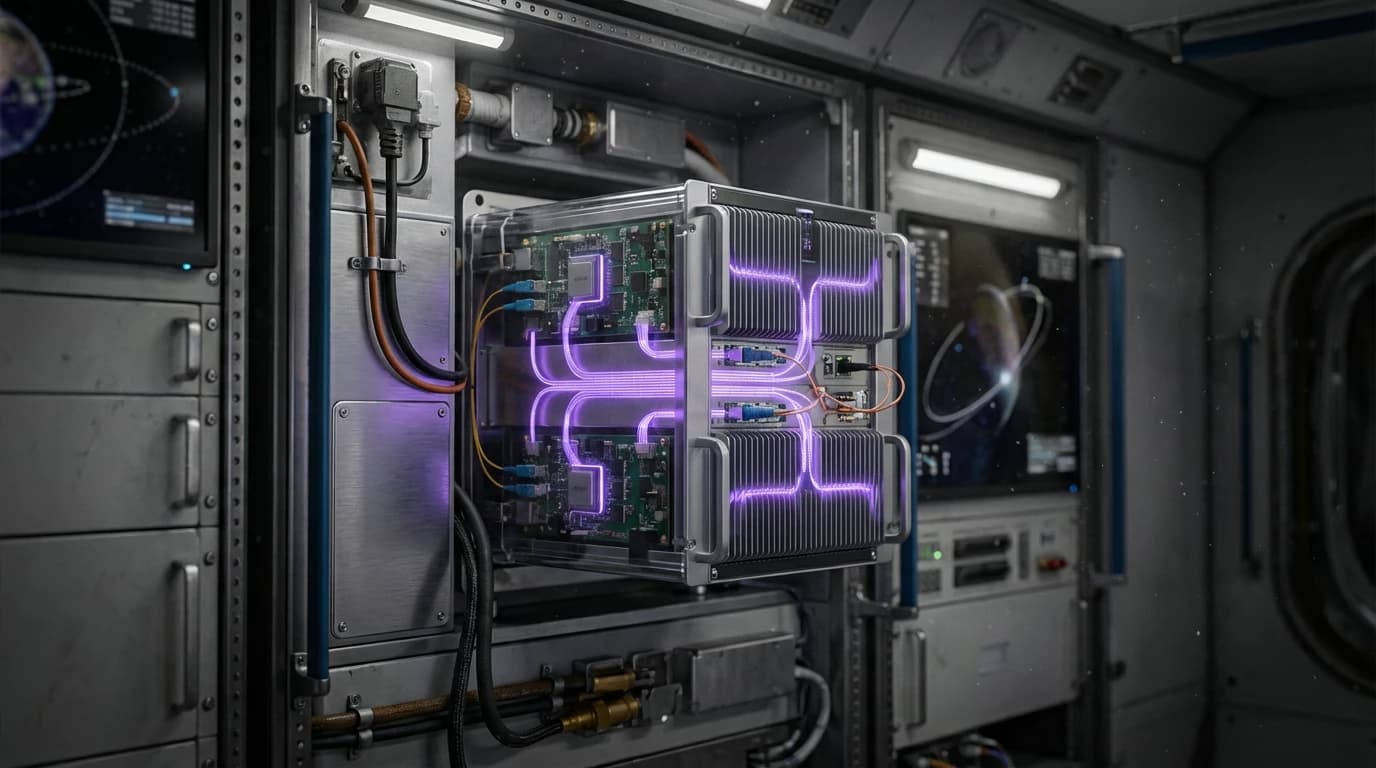
Spacecraft autonomy systems integrate multiple AI capabilities including vision-based navigation, resource management, fault detection and recovery, and onboard mission planning, enabling spacecraft to operate independently with minimal ground contact. These systems allow probes, rovers, and other spacecraft to navigate, make decisions, respond to anomalies, and conduct science operations autonomously, which is essential for missions where communication delays make real-time control impossible.
This innovation addresses the fundamental challenge of operating spacecraft at great distances or in challenging communication environments, where light-speed delays make real-time control impractical. By enabling autonomous operation, these systems allow missions to continue effectively even with sparse or delayed ground contact. The technology is essential for Mars missions (where communication delays are minutes), lunar far-side operations (where direct communication is impossible), and outer planet missions (where delays are hours).
The technology is becoming increasingly sophisticated, with modern rovers and probes demonstrating significant autonomous capabilities. As AI improves, these systems can handle more complex situations, make better decisions, and enable more ambitious missions. The technology is essential for enabling sustainable exploration where ground teams cannot constantly monitor and control every aspect of operations. However, ensuring autonomous systems are safe, reliable, and can handle unexpected situations remains a critical challenge that requires careful design and testing.
Developed and operates the EMIT (Earth Surface Mineral Dust Source Investigation) hyperspectral instrument on the ISS.
Develops 'Mila', an onboard AI software for autonomous satellite operations and anomaly detection.
A company specializing in autonomous systems and advanced data processing for space missions.
Offers a software platform for satellites that includes 'TrueTwin' simulation and onboard autonomy for flight operations.
Develops CNTIENT, an AI-driven platform for satellite constellation management and tasking.
Provides smart AI solutions for space usage, specifically hardware acceleration.
Developing the ROKS (Responsive Operations for Key Services) mission to demonstrate CubeSat QKD.
Developed KubOS, an open-source flight software framework that simplifies the development of autonomous satellite functions.
Provides on-board processing hardware and software for Earth observation satellites.
Develops high-precision optical payloads including hyperspectral imagers for CubeSats.
Published forecasts about this technology, graded against what happened in Hindsight.
AI Space Robots
This page is a narrower case of it.
Signals turns a topic into a sourced research record you can inspect and rerun. Your first scan is free, and this one starts with Spacecraft Autonomy Systems already loaded, so edit it or scan as is.