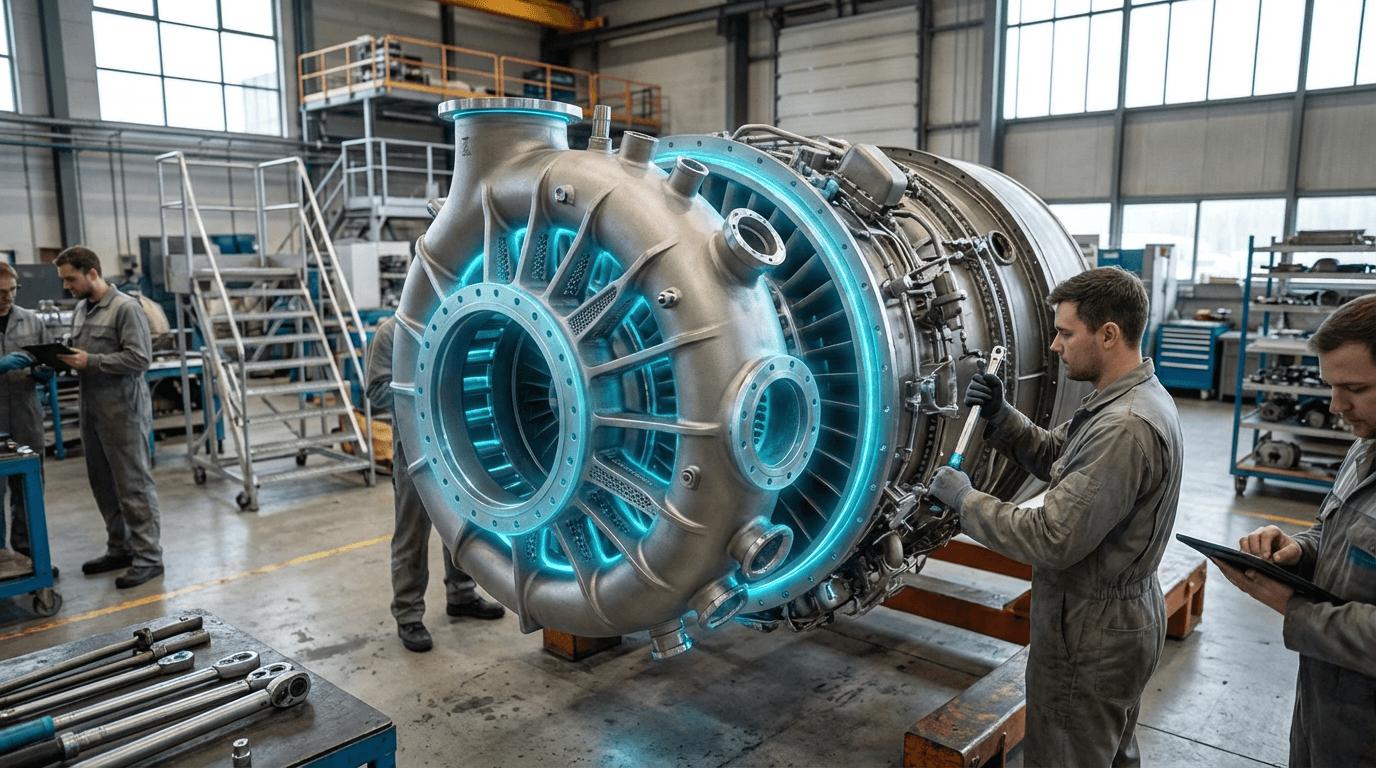
Additive Manufacturing for Certified Flight Hardware
Additive manufacturing, commonly known as 3D printing, represents a fundamental shift in how aerospace components are designed and produced. Unlike traditional subtractive methods that machine parts from solid blocks of metal, additive processes build components layer by layer from metal powder or wire feedstock, typically using laser or electron beam energy sources. This approach enables engineers to create geometries that would be impossible or prohibitively expensive through conventional manufacturing—internal lattice structures for weight reduction, integrated cooling channels within turbine blades, and consolidated assemblies that replace dozens of fastened parts with a single printed component. The technology is particularly well-suited to high-value aerospace materials like titanium alloys, nickel superalloys, and aluminum variants, where the ability to use only the material needed for the final part geometry offers significant cost advantages despite the slower build speeds compared to traditional methods.
The aerospace industry faces persistent pressure to reduce aircraft weight, improve fuel efficiency, and accelerate development cycles for new platforms. Additive manufacturing addresses these challenges by enabling topology optimization—a computational design approach that removes material from non-load-bearing areas while maintaining structural integrity. Research suggests that additively manufactured brackets and structural fittings can achieve weight reductions of twenty to forty percent compared to machined equivalents, translating directly into fuel savings over an aircraft's operational lifetime. Beyond weight reduction, the technology allows for part consolidation, reducing the total component count in complex assemblies and eliminating potential failure points at joints and fasteners. For maintenance and repair operations, additive manufacturing offers the possibility of producing replacement parts on-demand, potentially reducing inventory costs and aircraft downtime. However, the path to widespread adoption faces significant regulatory hurdles. Aviation certification authorities require extensive documentation proving that each manufacturing process produces parts with consistent, predictable material properties across different production runs, machines, and facilities.
Early commercial deployments have focused on non-critical interior components and secondary structures, allowing manufacturers to gain experience while minimizing certification complexity. Industry analysts note growing confidence in the technology as aerospace primes establish dedicated additive manufacturing facilities with rigorous process controls and quality assurance protocols. The development of standardized inspection techniques—including advanced computed tomography scanning and ultrasonic testing adapted for complex geometries—is gradually addressing concerns about internal defects and material consistency. As qualification databases expand and regulatory frameworks mature, additive manufacturing is positioned to move beyond niche applications toward primary structural components and propulsion system parts. This progression aligns with broader aerospace trends toward digital manufacturing, distributed production networks, and the integration of design and manufacturing processes that can respond more rapidly to evolving performance requirements and market demands.
Related Organizations

US transportation agency regulating civil aviation and commercial space transportation.


A Tier 1 additive manufacturer dedicated specifically to aerospace and defense flight hardware.

Uses Rapid Plasma Deposition (RPD) to manufacture aerospace-grade titanium components.

Aerostructures supplier specializing in CFRP and thermoplastic components.


Developing air supply systems and thermal management for hydrogen fuel cells.

Developing the Flying Fuel Cell (FFC) and liquid hydrogen fuel systems.

Safran
France · Company
Manufacturer of the FELIN future soldier system for the French Army, which includes physiological monitoring capabilities.

Manufacturer of metal 3D printers featuring the Assure quality control system for layer-by-layer tracking.
Supporting Evidence
Research this in Signals
Signals turns a topic into a sourced research record you can inspect and rerun. Your first scan is free, and this one starts with Additive Manufacturing for Certified Flight Hardware already loaded, so edit it or scan as is.