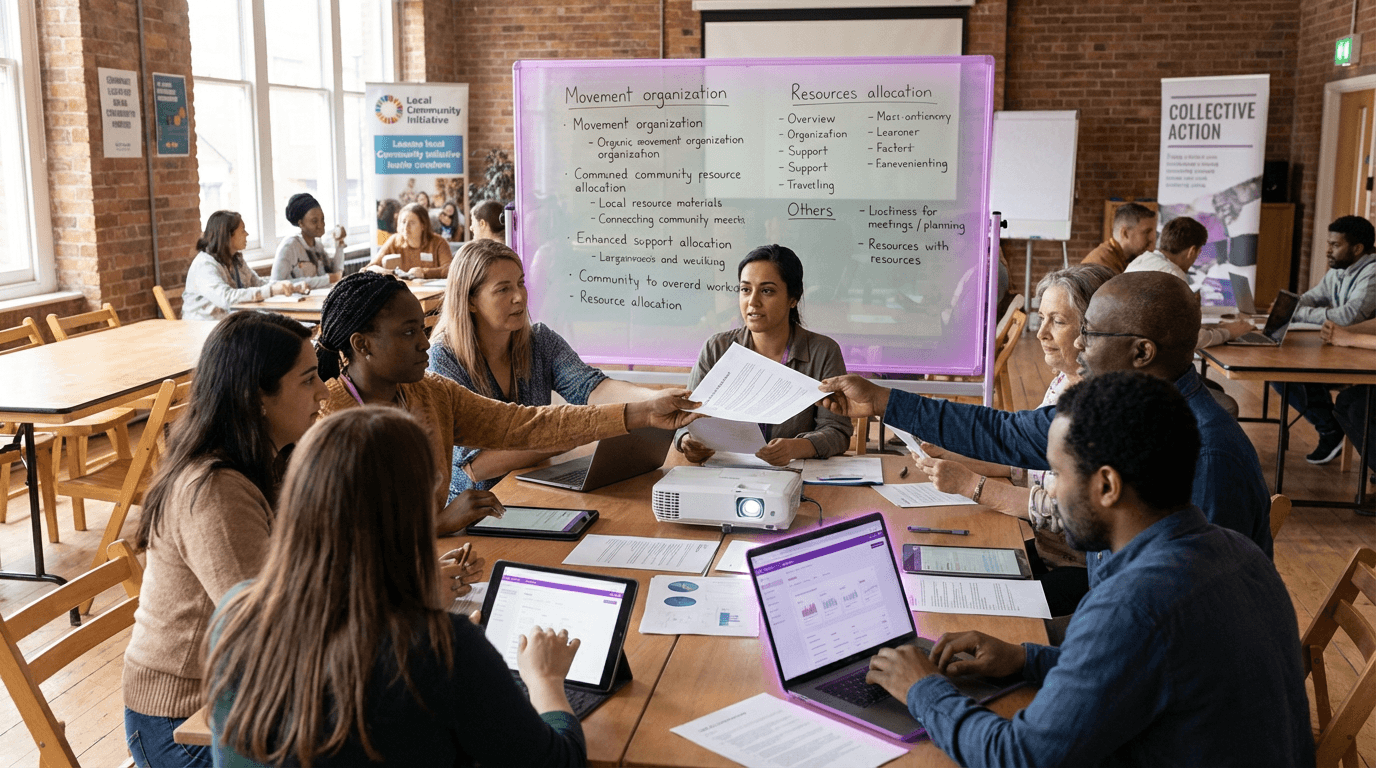
Philanthropy Embedded in Movements
The traditional model of philanthropy has long operated through a clear institutional hierarchy, where foundations, nonprofit organizations, and charitable entities function as intermediaries between donors and the communities they aim to serve. This separation creates what many critics describe as a fundamental power imbalance: those with resources make decisions about funding priorities, grant structures, and accountability measures, while movements and grassroots organizers must adapt their work to fit institutional requirements. The core challenge this embedded approach addresses is the misalignment between philanthropic decision-making processes and the actual needs, rhythms, and strategies of social movements. Traditional grantmaking cycles, reporting requirements, and strategic frameworks often reflect the perspectives and timelines of institutional funders rather than the communities driving change on the ground. This disconnect can result in funding that arrives too late, supports the wrong priorities, or comes with restrictions that limit a movement's ability to respond dynamically to emerging opportunities or crises.
Movement-embedded philanthropy fundamentally reimagines the relationship between resources and organizing by integrating funding mechanisms directly into movement structures themselves. Rather than external institutions determining which initiatives deserve support, this approach places decision-making power within the movements, often through participatory grantmaking processes, community-controlled funds, or mutual aid networks that distribute resources according to movement-defined priorities. These structures operate through various mechanisms: some movements establish their own funding collectives where members contribute and collectively decide on resource allocation; others create rapid-response funds that can deploy resources quickly during critical moments of organizing; still others build solidarity economies where resources circulate within networks of aligned organizations and activists. This integration allows funding to flow more responsively, supporting emergent strategies and grassroots leadership without requiring movements to conform to external institutional frameworks or compromise their autonomy.
This shift is already visible in various contexts, from mutual aid networks that emerged during the COVID-19 pandemic to community-controlled reparations funds and movement-aligned donor collaboratives that cede decision-making power to frontline organizers. The approach reflects broader trends toward decentralization, participatory governance, and the redistribution of power within social change ecosystems. As movements increasingly recognize the ways traditional philanthropy can inadvertently constrain or co-opt their work, embedded funding structures offer an alternative that aligns resources more closely with movement values and strategies. This evolution raises important questions about accountability, sustainability, and scale—how can movement-embedded philanthropy maintain financial responsibility while preserving flexibility, and can these models mobilize resources at levels comparable to traditional institutions? The answers will likely shape how future generations understand the relationship between money, power, and social transformation.
Related Organizations
A youth-led fund where young feminist activists from the Global South decide where the money goes through a participatory voting process.

A legal and financial toolbox for grassroots groups, enabling mutual aid networks to collect and spend money transparently.

A foundation that funds grassroots organizing led by women, youth, and Indigenous Peoples in the Global South.

A global fund dedicated to significantly increasing the resources available to Black feminist movements.

A philanthropic intermediary that hosts multiple donor collaboratives focused on social justice, policing, and disability rights.
Solidaire Network
United States · Nonprofit
A community of donors mobilizing critical resources to the frontlines of social justice movements.
A feminist fund that protects, strengthens, and sustains women and transgender human rights defenders at critical moments.
A global champion for the human rights of women and girls that utilizes flexible, general support funding.

A multiracial membership community of young people (18-35) with wealth and/or class privilege committed to the equitable distribution of wealth.

Tides
United States · Nonprofit
A philanthropic partner and fiscal sponsor that hosts hundreds of pooled funds and collective action initiatives.