Collective Prioritization Engines
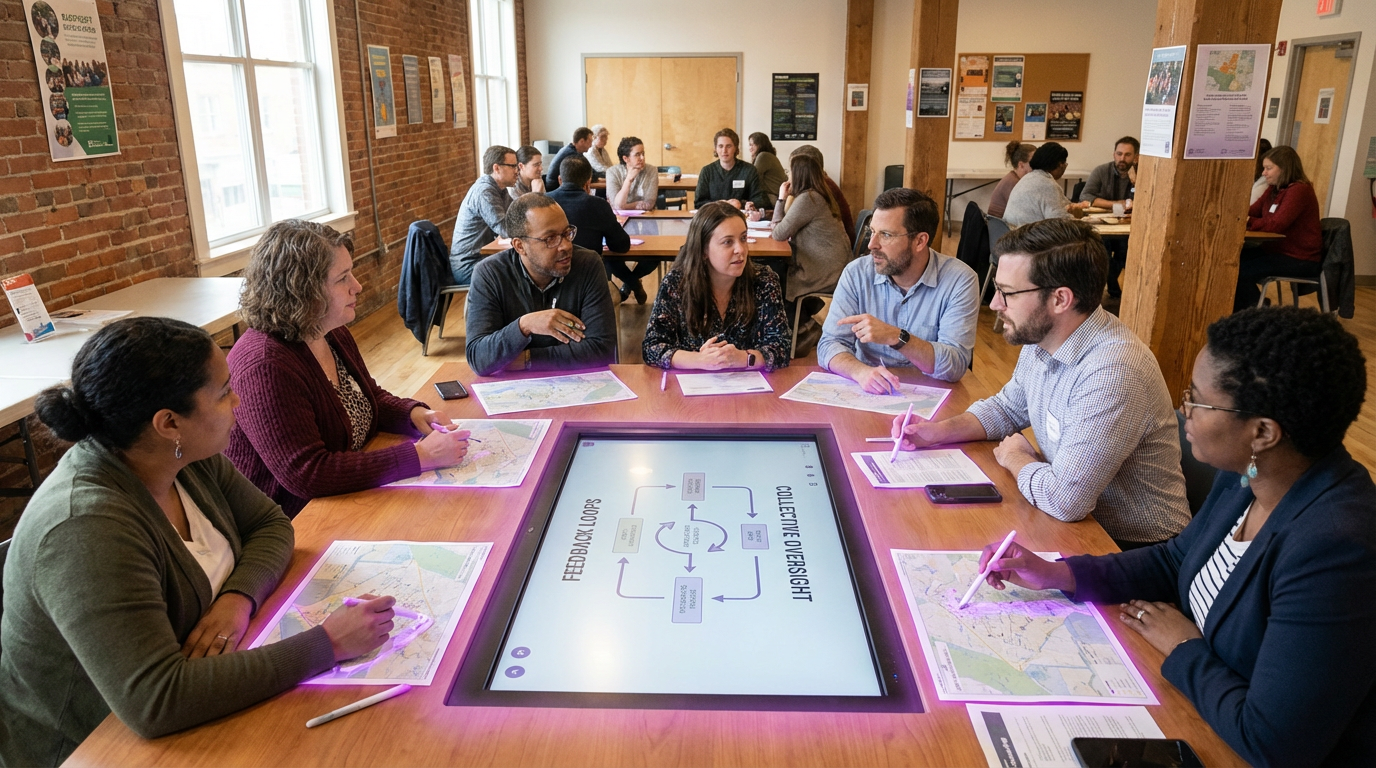
Collective prioritization engines represent a technological approach to democratizing resource allocation by systematically gathering and synthesizing community input on funding decisions. These systems employ various mechanisms—including quadratic voting, ranked-choice preferences, liquid democracy models, and deliberative polling interfaces—to capture what communities value most when allocating philanthropic capital or public resources. The underlying architecture typically combines digital platforms for preference collection with algorithms that aggregate individual inputs into collective signals. Some systems weight votes by stake or expertise, while others operate on one-person-one-vote principles. The technical challenge lies in designing aggregation methods that can handle diverse preference intensities, prevent gaming or manipulation, and scale from neighborhood-level decisions to regional or national resource allocation. These engines often integrate with blockchain-based voting systems for transparency or use machine learning to identify patterns in community priorities across demographic groups.
The fundamental problem these systems address is the historical disconnect between philanthropic decision-making and the communities meant to benefit from those resources. Traditional grantmaking has typically concentrated power in the hands of foundation boards, program officers, or wealthy donors who may lack direct knowledge of community needs. Collective prioritization engines attempt to redistribute epistemic authority by treating community members as experts on their own priorities. This shift enables participatory budgeting at scales previously impossible without digital infrastructure, allowing thousands or even millions of stakeholders to influence how resources flow. The technology also promises to surface needs that might be invisible to traditional philanthropic gatekeepers, particularly those affecting marginalized populations. However, these systems introduce new tensions around representation and voice-weighting: Should long-time residents have more influence than newcomers? How should systems account for those without digital access? Can algorithmic aggregation truly capture the nuanced trade-offs communities face, or does it flatten complex deliberation into simplified rankings? These questions become especially acute when majority preferences conflict with minority needs or when urgent but unpopular interventions require funding.
Early implementations of collective prioritization engines have emerged in participatory budgeting initiatives across cities like New York, Paris, and Porto Alegre, where residents vote on how to allocate portions of municipal budgets. In the philanthropic sector, platforms like Grantoo and Neighborly have experimented with community-directed giving, while decentralized autonomous organizations (DAOs) in the cryptocurrency space have pioneered on-chain voting mechanisms for treasury allocation. Research from participatory budgeting programs suggests these systems can increase civic engagement and shift funding toward infrastructure and services that traditional planning processes overlook. Yet adoption remains uneven, with persistent challenges around digital literacy, voter turnout, and ensuring that participation doesn't simply amplify existing power structures. Looking forward, collective prioritization engines are likely to become more sophisticated, incorporating deliberative features that allow communities to discuss trade-offs before voting, AI-assisted translation to bridge language barriers, and hybrid models that combine community input with expert analysis. As philanthropic institutions face growing pressure to share power and as digital tools make mass participation more feasible, these engines represent an important experiment in reimagining how societies decide what deserves support—though their ultimate impact will depend on whether they genuinely redistribute decision-making authority or merely create the appearance of participation.
Related Organizations

A free open-source participatory democracy framework for cities and organizations.

An open-source system for gathering open-ended feedback and using machine learning to surface consensus across divided groups.

A non-profit foundation researching and advocating for Data Coalitions and new political economies of data.

A laboratory for digital governance that builds standards and infrastructure for online communities.


Provides tools to build and manage Decentralized Autonomous Organizations (DAOs) on the blockchain.
MolochDAO
United States · Consortium
A DAO framework focused on grant-giving and solving coordination failures in funding Ethereum infrastructure.
A nonprofit that empowers people to decide together how to spend public money.

Global hub for participatory democracy that provides resources and digital tool guides for PB implementation.

Building censorship-resistant digital democracy tools, including quadratic voting implementations on blockchain.