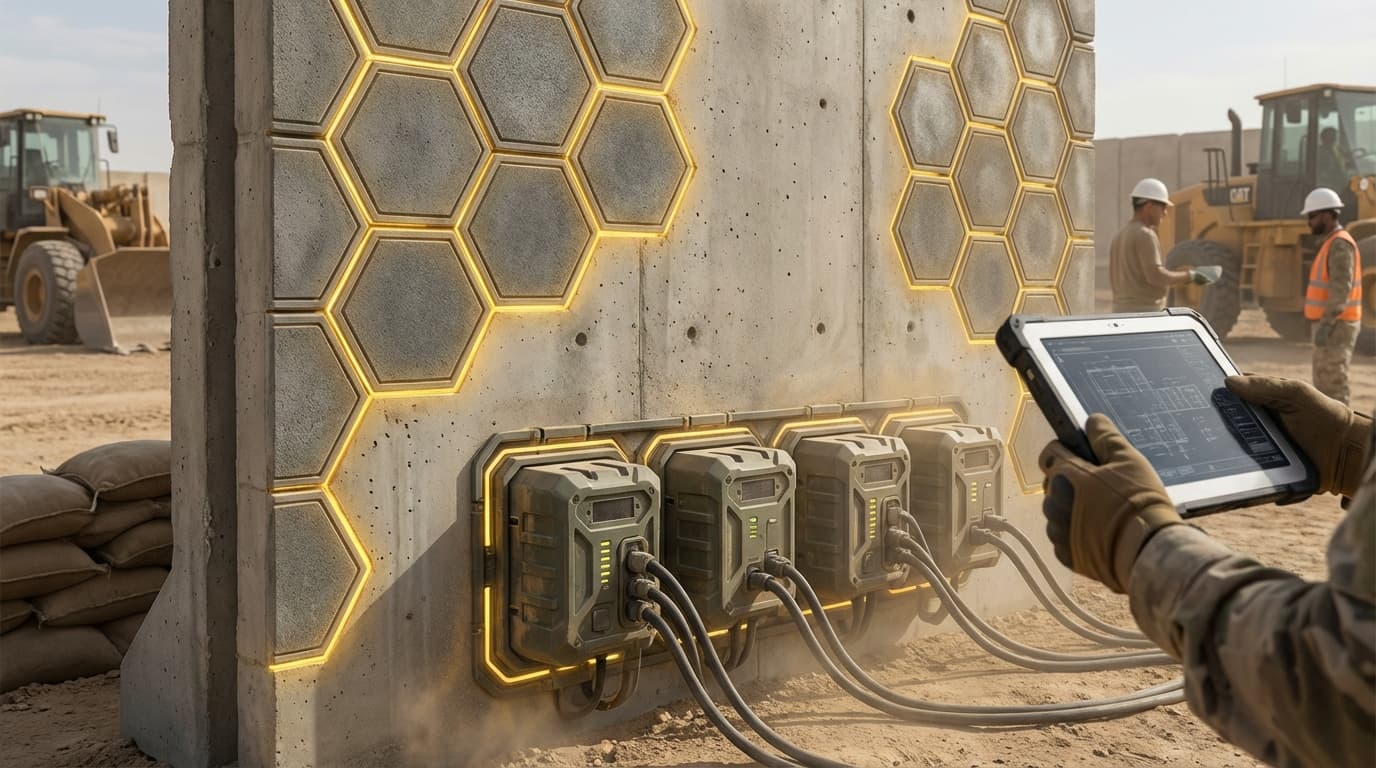
Hardened Infrastructure & Materials
Hardened infrastructure and materials are protective systems designed to withstand attacks, including blast-resistant metamaterials (engineered materials with properties not found in nature that can absorb or deflect explosions), self-healing composites (materials that can repair damage automatically), and EMP-shielded enclosures (structures protected against electromagnetic pulse attacks that can disable electronics) designed to protect critical assets (important facilities and equipment). Includes deployable microgrid energy units (small, independent power systems) to ensure resilient field operations (operations that can continue despite attacks) in contested environments (areas where infrastructure may be attacked), creating infrastructure that can survive and continue operating despite various types of attacks, making defense systems more resilient and ensuring critical capabilities remain available even under attack.
This innovation addresses the vulnerability of infrastructure to attacks, where traditional structures can be easily damaged. By using advanced materials and resilient designs, these systems can survive attacks. Defense contractors and materials companies are developing these technologies.
The technology is particularly significant for protecting critical infrastructure, where resilience is essential for defense capabilities. As threats evolve, hardened infrastructure becomes increasingly important. However, ensuring effectiveness, managing costs, and achieving practical deployment remain challenges. The technology represents an important evolution in infrastructure protection, but requires continued development to achieve the performance needed for widespread use. Success could protect critical assets, but the technology must prove its effectiveness and manage costs. Hardened infrastructure is an active area of development with significant defense interest.
Related Organizations

Conducts R&D in blast-resistant construction, force protection materials, and resilient energy installations.

Produces Dyneema, an ultra-high-molecular-weight polyethylene fiber used for ballistic protection in infrastructure and armor.

Multinational conglomerate operating in aerospace and building technologies.

Engineers functional materials that can block, absorb, or enhance electromagnetic waves for shielding applications.

Implements energy resiliency projects and microgrids for US federal and military facilities.

Develops directed energy protection and hardening technologies for defense systems.
Supporting Evidence
Research this in Signals
Signals turns a topic into a sourced research record you can inspect and rerun. Your first scan is free, and this one starts with Hardened Infrastructure & Materials already loaded, so edit it or scan as is.