Envisioning is an emerging technology research institute and advisory.

LinkedInInstagramGitHub

2011 — 2026

research
  • Reports
  • Newsletter
  • Methodology
  • Origins
  • Vocab
services
  • Research Sessions
  • Signals Workspace
  • Bespoke Projects
  • Use Cases
  • Signal Scanfree
  • Readinessfree
impact
  • ANBIMAFuture of Brazilian Capital Markets
  • IEEECharting the Energy Transition
  • Horizon 2045Future of Human and Planetary Security
  • WKOTechnology Scanning for Austria
audiences
  • Innovation
  • Strategy
  • Consultants
  • Foresight
  • Associations
  • Governments
resources
  • Pricing
  • Partners
  • How We Work
  • Data Visualization
  • Multi-Model Method
  • FAQ
  • Security & Privacy
about
  • Manifesto
  • Community
  • Events
  • Support
  • Contact
  • Login
ResearchServicesPricingPartnersAbout
  1. Home
  2. Research
  3. Aegis
  4. Undersea Sensor Grids & Seabed Infrastructure

Undersea Sensor Grids & Seabed Infrastructure

Networked seabed sensors for continuous underwater surveillance and submarine tracking
Back to AegisView interactive version

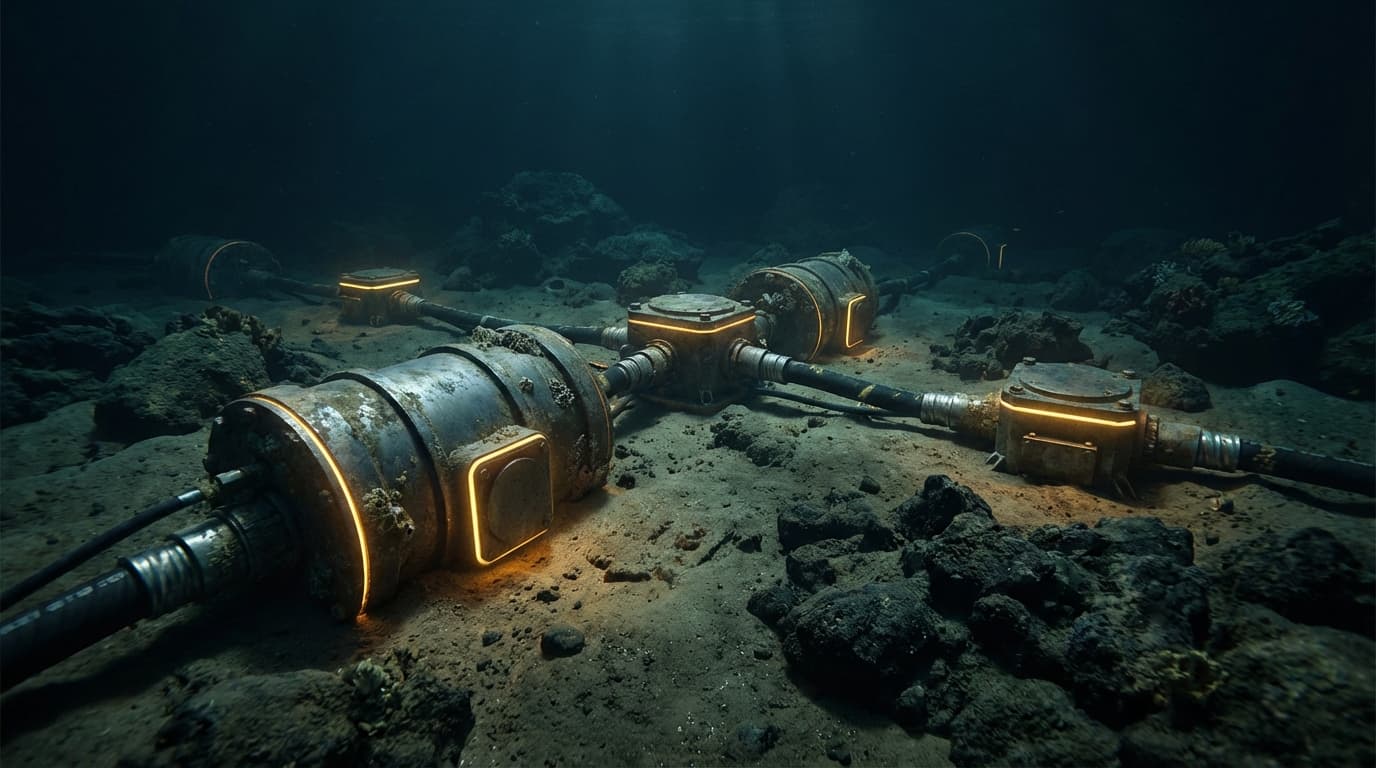
Undersea sensor grids and seabed infrastructure are distributed networks of acoustic (sound-detecting), magnetic (detecting magnetic fields), and pressure sensors (detecting water pressure changes) deployed on the seabed (ocean floor) and critical undersea routes (important underwater pathways), networked via fiber (fiber optic cables), optical (light-based communication), or acoustic links (sound-based communication) to create comprehensive underwater surveillance systems. These grids provide persistent maritime domain awareness (continuous monitoring of ocean areas), enabling submarine tracking (detecting and following submarines), undersea cable protection (monitoring communication cables for tampering), and monitoring of strategic chokepoints (important narrow passages), creating underwater surveillance networks that can detect and track underwater threats, making the ocean more transparent and enabling better defense of maritime interests.

This innovation addresses the challenge of underwater surveillance, where the ocean is difficult to monitor. By deploying sensor networks, these systems can provide persistent underwater awareness. Defense contractors and ocean technology companies are developing these systems.

The technology is particularly significant for maritime defense, where underwater awareness is essential. As underwater threats grow, sensor grids become increasingly important. However, ensuring reliability, managing deployment, and maintaining networks remain challenges. The technology represents an important evolution in maritime surveillance, but requires continued development to achieve the coverage and reliability needed for comprehensive monitoring. Success could provide persistent underwater awareness, but the technology must prove its effectiveness and manage deployment costs. Undersea sensor grids are an active area of development with significant defense interest.

TRL
7/9Operational
Impact
5/5
Investment
4/5
Category
hardware

Related Organizations

Kongsberg Maritime logo
Kongsberg Maritime

Norway · Company

95%

Delivers 'Vessel Insight' and digital twin technologies that capture sensor data from ships to monitor fuel consumption and emissions.

Developer
Thales Group logo
Thales Group

France · Company

95%

Multinational company designing and building electrical systems and providing services for the aerospace, defence, transportation and security markets.

Developer
Teledyne Marine logo
Teledyne Marine

United States · Company

92%

Develops high-precision acoustic positioning systems, primarily for underwater applications but with industrial crossover.
Developer
Kraken Robotics logo
Kraken Robotics

Canada · Company

90%

Marine technology company providing ultra-high resolution seabed imaging.
Developer
Naval Group logo
Naval Group

France · Company

90%

European leader in naval defense.

Developer
Liquid Robotics logo
Liquid Robotics

United States · Company

88%

A Boeing company that designs and manufactures the Wave Glider.

Developer
Saab logo
Saab

Sweden · Company

88%

Defense company producing the Barracuda advanced camouflage systems.

Developer
Huntington Ingalls Industries (HII) logo
Huntington Ingalls Industries (HII)

United States · Company

85%

America's largest military shipbuilding company.

Developer
Terradepth logo
Terradepth

United States · Startup

80%

Ocean data as a service company.

Developer

Supporting Evidence

Evidence data is not available for this technology yet.

Connections

Applications
Applications
Underwater Detection Systems

Sonar arrays and autonomous platforms that monitor coastal waters and maritime infrastructure

TRL
7/9
Impact
4/5
Investment
4/5
Applications
Applications
Border Surveillance Networks

Integrated sensor systems and AI analytics for monitoring national borders and frontiers

TRL
8/9
Impact
5/5
Investment
4/5
hardware
hardware
Next-Gen Sensing & ISR Hardware

Adaptive radar and multi-spectrum satellites for resilient global surveillance

TRL
6/9
Impact
5/5
Investment
4/5
Applications
Applications
Border & Maritime Domain Awareness

Persistent surveillance combining aerial platforms and autonomous vessels to monitor borders and maritime zones

TRL
8/9
Impact
4/5
Investment
4/5
hardware
hardware
Autonomous Defense Platforms

Uncrewed vehicles with sensor fusion and mission autonomy for independent defense operations

TRL
7/9
Impact
5/5
Investment
5/5
software
software
Autonomous Threat Detection

AI-driven systems analyzing sensor data to identify security threats before they escalate

TRL
6/9
Impact
5/5
Investment
4/5

Book a research session

Bring this signal into a focused decision sprint with analyst-led framing and synthesis.
Research Sessions