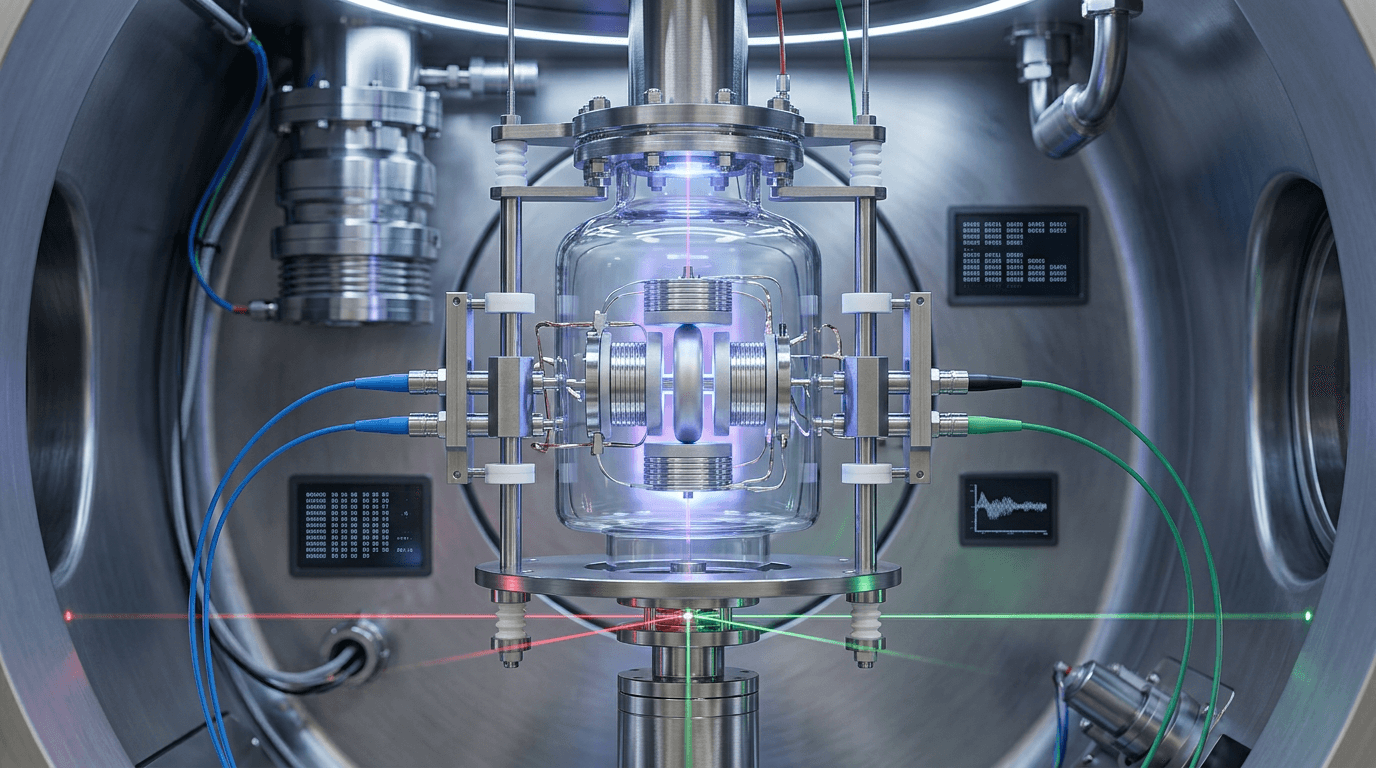
Woodward Thruster
The Mach Effect thruster, developed by physicist James Woodward (California State Fullerton), exploits predicted transient mass fluctuations in accelerating dielectric materials. Based on Mach's principle (inertia from universal mass distribution) and general relativity, the device uses piezoelectric crystals driven at resonance with electrical energy input.
Theoretical Foundation
Woodward claims measurable thrust without propellant expulsion through asymmetric mass fluctuation cycles. NASA's Space Technology Mission Directorate funded testing. Experiments report small thrust levels (micronewtons), though replication remains challenging. Unlike EmDrive, Mach Effect has theoretical grounding in established physics—transient Machian effects are predicted by some GR interpretations suggesting mass-energy equivalence variations during acceleration.
Critical Assessment
Skeptics note thrust measurements are at noise floor and may represent thermal or electromagnetic artifacts. However, peer-reviewed publications and NASA interest distinguish Mach Effect thrusters from purely speculative reactionless drives. The technology represents legitimate fringe physics—testable predictions from unconventional but not impossible theory, bridging established general relativity with experimental propellantless propulsion claims.
Research this in Signals
Signals turns a topic into a sourced research record you can inspect and rerun. Your first scan is free, and this one starts with Woodward Thruster already loaded, so edit it or scan as is.