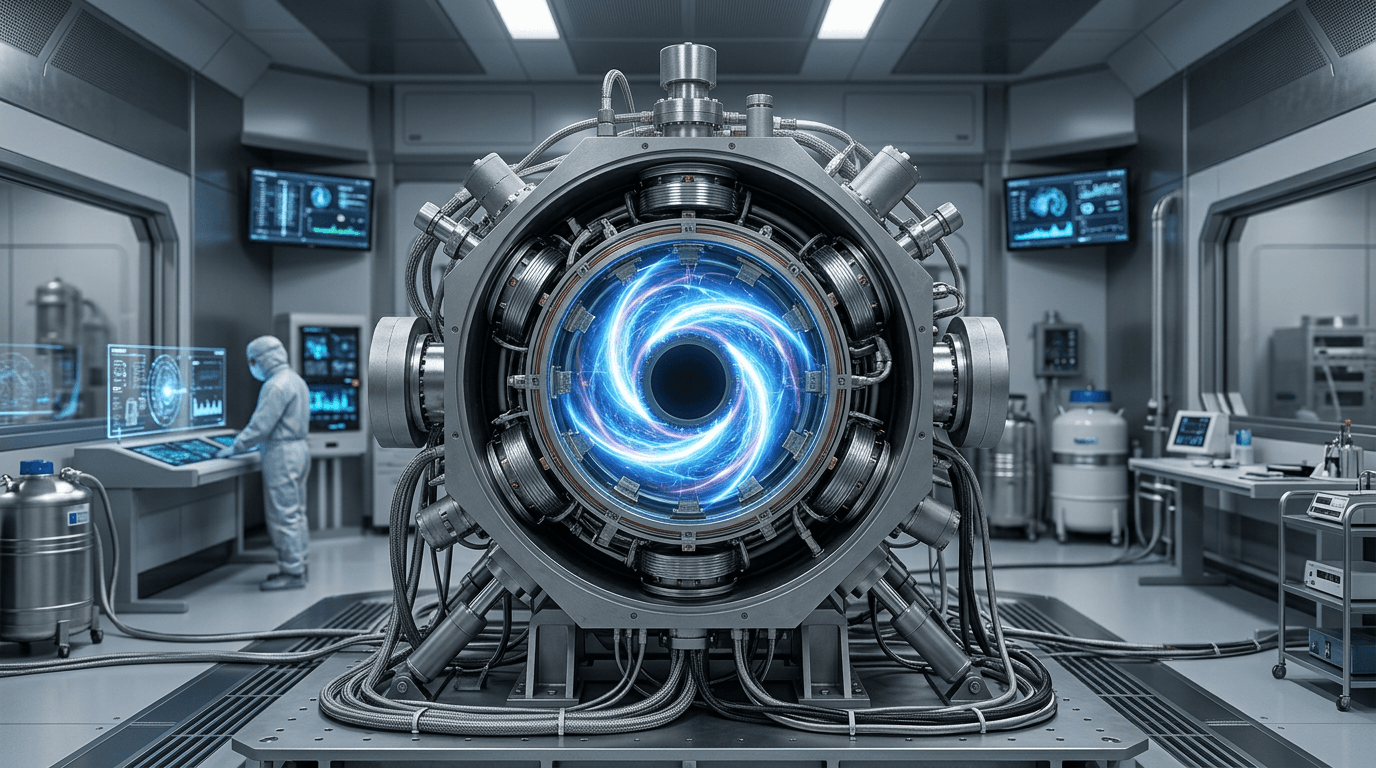
Inertial Field Coupling
Inertial field coupling represents speculative approaches to propulsion by directly manipulating the inertial properties of matter through electromagnetic field interactions. These systems propose modifying effective mass or inertia to enable propellantless acceleration without violating conservation laws.
Theoretical Foundations
Theoretical foundations draw from stochastic electrodynamics (Haisch-Rueda-Puthoff theory) suggesting that inertia arises from electromagnetic interaction with quantum vacuum fluctuations. If inertia has electromagnetic origins, engineered fields might modulate inertial properties, enabling thrust generation through mass modification rather than momentum exchange.
Proposed Mechanisms
Proposed mechanisms include: high-frequency electromagnetic fields creating 'vacuum coherence' regions with reduced inertia; rotating superconducting systems generating gravitomagnetic coupling effects; asymmetric capacitor configurations modulating vacuum impedance; and field-induced changes in effective particle mass.
Technical Approaches and Challenges
Technical approaches involve: precision electromagnetic field generation at specific frequencies; superconducting materials for field enhancement; asymmetric electrode geometries for directional effects; and vacuum chamber isolation to minimize environmental interference.
Energy considerations present challenges: field intensities required for measurable inertial effects may exceed practical power levels; vacuum engineering requires extreme precision; and momentum conservation must be maintained through careful field design.
Experimental challenges include: measuring extremely small changes in effective mass; isolating inertial effects from electromagnetic artifacts; achieving sufficient field intensities without material breakdown; and scaling quantum effects to macroscopic applications.
Current Research and Applications
Current research explores: high-frequency electromagnetic field effects on matter; superconducting systems for field enhancement; theoretical modeling of vacuum-inertia coupling; and experimental verification of inertial field interactions.
Practical applications would include: propellantless spacecraft propulsion; inertial dampening systems for high-acceleration missions; and fundamental physics research into the nature of inertia.
If achievable, inertial field coupling would revolutionize propulsion by eliminating reaction mass requirements while maintaining conservation laws. However, fundamental physics constraints and experimental difficulties make practical implementation highly speculative.
Research this in Signals
Signals turns a topic into a sourced research record you can inspect and rerun. Your first scan is free, and this one starts with Inertial Field Coupling already loaded, so edit it or scan as is.