Gravitational Waves
Gravitational wave communications proposes using modulated g-waves for information transmission—potentially enabling communication through matter and across cosmic distances. Unlike LIGO's kilometer-scale interferometers detecting astrophysical events, the concept requires compact (~30 cm) receivers using 'spacetime sculpting'—waveguide techniques to concentrate and lens gravitational waves.
Proposed Mechanisms
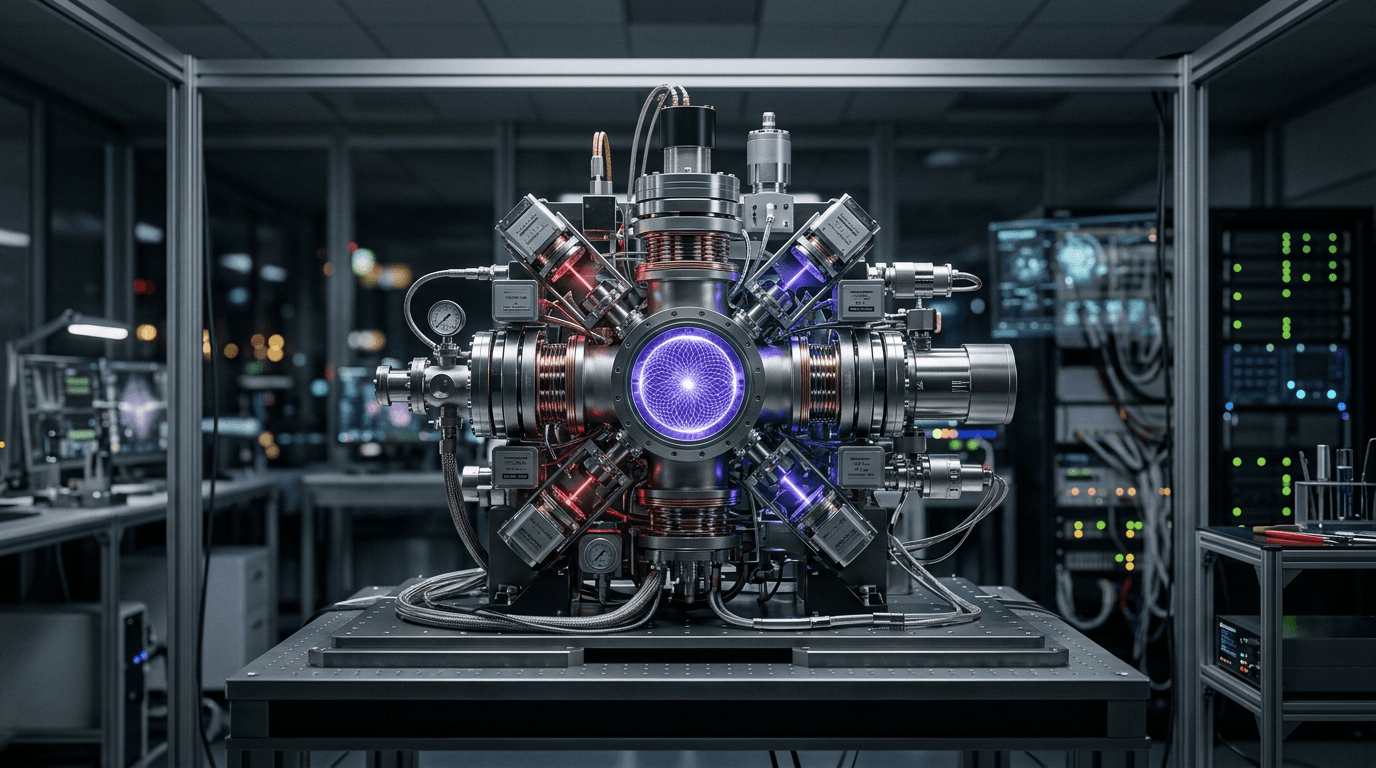
Transmission would involve modulating accelerations or vibrations to generate controlled g-wave patterns. Detection exploits interference principles with miniaturized interferometry or resonant-mass detectors. Proponents claim to be 'sculpting spacetime' in laboratory experiments, building custom compact interferometers to demonstrate feasibility.
Critical Assessment
Gravitational waves are confirmed phenomena (LIGO detections), but generating controllable g-waves requires extraordinary mass-energy manipulation. Known sources—binary black holes, neutron star mergers—involve cosmic-scale energies. Laboratory g-wave generation would produce undetectably weak signals with current technology. Claimed compact receivers face fundamental sensitivity limits—reducing baseline decreases phase shift detection. The concept represents speculative extension of confirmed gravitational physics into engineering applications requiring technology generations beyond current capabilities.
Research this in Signals
Signals turns a topic into a sourced research record you can inspect and rerun. Your first scan is free, and this one starts with Gravitational Waves already loaded, so edit it or scan as is.