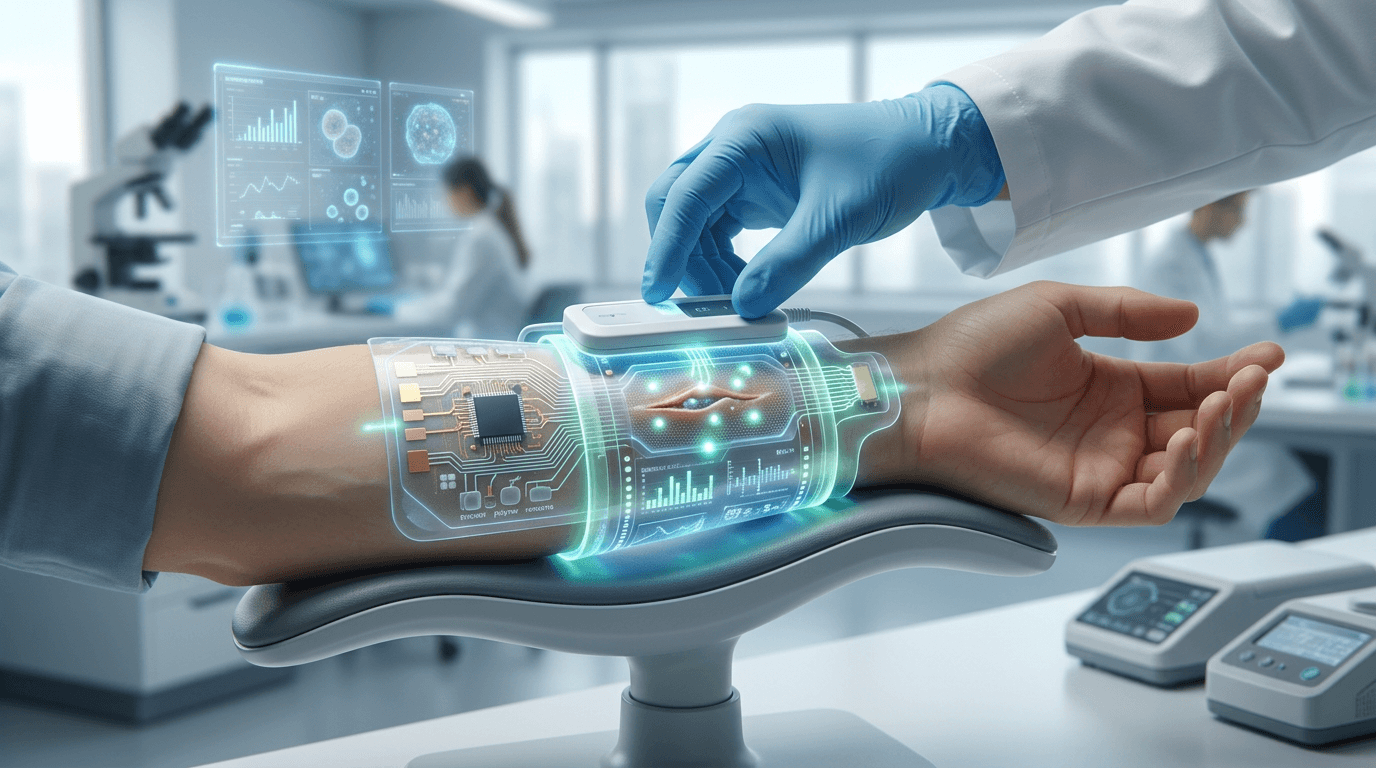
Electroceuticals
Electroceuticals represent a new class of therapeutic interventions that treat disease by modulating bioelectric signals in tissues rather than using pharmaceutical drugs or genetic therapies. Developed from Michael Levin's bioelectric signaling research, electroceuticals work by normalizing voltage patterns in cells and tissues to restore healthy function, prevent disease development, and trigger regenerative responses—all without modifying genes or killing cells.
Therapeutic Paradigm Shift
Electroceuticals represent a fundamental shift in medical approach from biochemical to bioelectrical intervention. Traditional medicine focuses on: targeting specific molecular pathways with drugs; eliminating diseased cells through surgery or cytotoxic agents; correcting genetic defects through gene therapy; and treating symptoms rather than underlying pattern disruptions. Electroceuticals instead: normalize bioelectric patterns that coordinate cellular behavior; work with cellular intelligence rather than micromanaging molecular details; address disease at the tissue organization level rather than individual cell level; and restore healthy function by correcting information flow rather than killing aberrant cells.
Cancer Prevention and Normalization
The most developed electroceutical application targets cancer through voltage normalization. Research demonstrated that: pre-cancerous cells exhibit characteristic voltage depolarization before genetic or morphological changes; artificially depolarizing normal cells can induce tumor-like behavior; re-polarizing depolarized cells prevents tumor development without cytotoxic intervention; and normalizing voltage patterns can force cancer cells back into healthy tissue integration. This approach treats cancer as a bioelectric disease of tissue organization rather than purely genetic disease.
Mechanism of Action
Electroceuticals work by modulating ion channel activity to change membrane voltage, which in turn affects: gap junction connectivity determining which cells communicate; gene expression patterns regulating cell behavior; cellular differentiation and identity; tissue-level coordination and morphogenetic field integrity; and cellular responses to positional information. The voltage changes act as master regulators controlling downstream genetic and biochemical processes without directly modifying DNA.
Ion Channel Targeting
Electroceutical interventions target specific ion channels and pumps including: V-ATPase (proton pumps) controlling intracellular pH and voltage; H⁺/K⁺-ATPase regulating potassium gradients critical for development; voltage-gated sodium channels affecting membrane excitability; potassium channels controlling cell proliferation and differentiation; and gap junctions mediating electrical communication between cells. Each target offers different therapeutic leverage points.
Delivery Methods
Electroceuticals can be delivered through various modalities including: small molecule drugs targeting specific ion channels (existing drugs repurposed); optogenetic interventions using light-activated channels (research phase); electromagnetic field stimulation affecting voltage-sensitive channels; direct electrical stimulation for accessible tissues; and future nanotechnology-based voltage manipulation for targeted delivery. Each method has different advantages for specific applications.
Regenerative Medicine Applications
Beyond cancer, electroceuticals show promise for triggering regeneration including: limb and digit regeneration by maintaining regeneration-permissive voltage patterns; spinal cord injury repair through bioelectric stimulation promoting neural regeneration; wound healing acceleration via voltage optimization; organ repair and regeneration by restoring developmental bioelectric patterns; and age-related decline reversal by maintaining youthful voltage signatures. The approach harnesses endogenous regenerative capacity rather than introducing stem cells or growth factors.
Developmental Disorder Prevention
Bioelectric interventions can prevent or correct birth defects by normalizing voltage during development. Applications include: craniofacial defect correction through voltage normalization during embryogenesis; neural tube defect prevention by maintaining proper bioelectric patterns; organ position and size control via voltage cues; and teratogen-induced defect prevention by buffering voltage disruptions. This offers prenatal intervention beyond genetic screening.
Experimental Evidence
Electroceutical efficacy is supported by extensive experimental validation including: prevention of tumor formation in frog tadpole tumor models through voltage normalization; induction of limb regeneration in normally non-regenerating amphibian species; correction of craniofacial defects in frog embryos using ion channel drugs; enhancement of wound healing in mammalian models through electrical stimulation; and improved functional recovery in spinal cord injury models. Results span diverse species and tissue types.
Advantages Over Conventional Therapies
Electroceuticals offer several potential advantages including: non-cytotoxic mechanisms preserving healthy tissue; tissue-level intervention addressing underlying organization rather than individual cell defects; rapid reversibility if intervention proves problematic; repurposing existing ion channel drugs for new applications; reduced side effects by targeting bioelectric patterns rather than metabolic pathways; and compatibility with cellular intelligence allowing cells to execute appropriate responses. The approach works with biology rather than against it.
Translation to Clinical Application
Several electroceutical approaches are advancing toward human medicine including: repurposed ion channel drugs (already FDA-approved) being tested for cancer prevention; electrical stimulation devices for wound healing and regeneration enhancement; optogenetic approaches for precise voltage control in accessible tissues; and bioelectric diagnostic tools for early disease detection via voltage pattern analysis. Translation is accelerated by drug repurposing and existing electrical medicine infrastructure.
Challenges and Limitations
Electroceutical development faces several challenges including: complexity of bioelectric networks making predictions difficult; species differences in bioelectric patterns complicating translation; delivery challenges for internal tissues; potential off-target effects from ion channel manipulation; insufficient understanding of optimal voltage patterns for all tissues; and need for patient-specific optimization. Current research addresses these through improved modeling and delivery technologies.
Combination with Other Modalities
Electroceuticals may prove most effective combined with other approaches including: conventional chemotherapy with reduced dosage enhanced by voltage normalization; immunotherapy augmented by bioelectric immune cell priming; stem cell therapy guided by bioelectric pattern restoration; surgical intervention enhanced by bioelectric wound healing optimization; and genetic therapies supported by bioelectric pattern maintenance. Integration leverages multiple therapeutic mechanisms.
Economic and Accessibility Considerations
Electroceuticals offer potential economic advantages including: drug repurposing reducing development costs and timeline; electrical devices providing reusable intervention platforms; reduced healthcare costs from disease prevention rather than late-stage treatment; accessibility in resource-limited settings through simple electrical devices; and patient empowerment through non-invasive self-administered therapies. These factors could democratize advanced regenerative medicine.
Regulatory and Clinical Trial Considerations
Electroceutical development must navigate: regulatory frameworks designed for pharmaceutical drugs rather than bioelectric interventions; clinical trial design for preventive rather than curative treatments; biomarker development for bioelectric assessment; safety evaluation for long-term voltage manipulation; and ethical considerations for enhancement applications beyond disease treatment. The field is establishing appropriate regulatory pathways.
Theoretical Implications
Electroceuticals validate bioelectric theory demonstrating that: voltage patterns control tissue organization independent of genetic sequences; cellular collectives process bioelectric information to make morphological decisions; disease can result from corrupted bioelectric information rather than purely genetic damage; and therapeutic intervention at the electrical level can override genetic or molecular defects. This supports information-based views of biology.
Future Directions
Electroceutical research is expanding toward: personalized voltage pattern optimization based on individual bioelectric profiling; closed-loop devices monitoring and adjusting voltage in real-time; cognitive prosthetics interfacing with tissue bioelectric networks; enhancement applications improving regeneration beyond baseline; and combination therapies integrating bioelectric, genetic, and pharmaceutical approaches for optimal outcomes.
Significance
Electroceuticals represent a paradigm shift in medicine from chemical to electrical intervention, from cell killing to pattern restoration, and from genetic determinism to bioelectric control. By normalizing voltage patterns that orchestrate tissue behavior, electroceuticals offer new approaches to cancer, regeneration, and developmental disorders that work with cellular intelligence rather than micromanaging molecular details. They exemplify translation of fundamental bioelectric discoveries into practical therapeutic applications, potentially transforming medicine by adding electrical modulation to the therapeutic toolkit alongside pharmaceuticals and genetic interventions.
Research this in Signals
Signals turns a topic into a sourced research record you can inspect and rerun. Your first scan is free, and this one starts with Electroceuticals already loaded, so edit it or scan as is.