Woonprotest (Housing Activism)
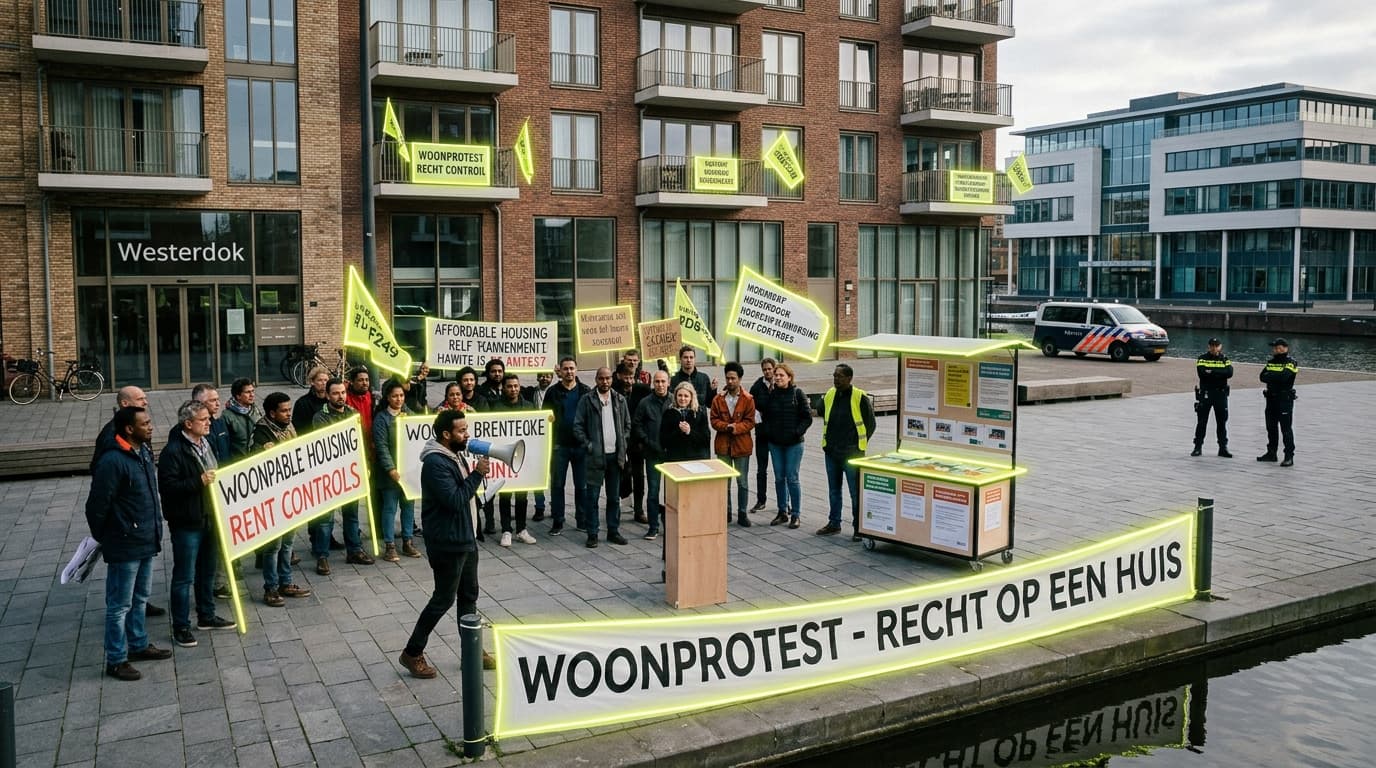
Housing activism across the Benelux region signals a fundamental shift in how housing is understood—not merely as a market commodity but as a social right under threat from financialization and investor-driven development models. Movements like Woonprotest in the Netherlands, alongside parallel tenant coalitions in Belgium and Luxembourg, have transformed housing affordability from a technical policy issue into a central political battleground. These mobilizations respond to a confluence of pressures: stagnant wage growth paired with rapid rent increases, the conversion of social housing stock to market-rate units, and the growing presence of institutional investors and short-term rental platforms reshaping urban housing markets. The 2021 Woonprotest in Amsterdam, which drew over 15,000 participants, marked a turning point where housing scarcity became impossible for policymakers to ignore, forcing the issue onto electoral agendas and prompting emergency measures in several cities. Unlike traditional NIMBY movements that resist development altogether, these activists typically support increased housing supply while demanding fundamental changes to ownership structures, rent controls, and tenant protections.
The mechanics of these movements reveal both their strategic sophistication and their inherent tensions. Organizers have successfully framed housing as a generational justice issue, uniting young professionals priced out of ownership with long-term tenants facing displacement, though these coalitions sometimes fracture over competing priorities. Campaigns have achieved tangible policy wins: Amsterdam's restrictions on converting rental units to owner-occupied housing, Brussels' tightening of short-term rental regulations, and national-level debates over rent caps and investor taxation. However, the movements face the challenge of translating protest energy into sustained policy engagement, particularly when proposed solutions—such as large-scale social housing construction—require years to materialize. Early evidence suggests that cities with active housing movements see faster adoption of tenant-friendly policies, but also encounter resistance from property owners and concerns about investment flight. The question remains whether activism can maintain momentum through the slow work of institutional reform or whether it will cycle between crisis-driven mobilization and dormancy.
The implications for housing governance are profound and multidirectional. In optimistic scenarios, sustained activism creates political space for ambitious interventions—public land banking, community land trusts, and robust rent regulation—that were previously dismissed as politically infeasible. It may also force developers and investors to adopt more community-oriented models to maintain social license. Conversely, poorly channeled activism risks deepening polarization, where any development becomes suspect and incremental progress stalls amid maximalist demands. Policymakers must monitor whether movements evolve toward constructive coalition-building with progressive developers and housing agencies, or harden into oppositional stances that inadvertently constrain supply. Key indicators include the emergence of tenant unions with negotiating capacity, the success of pilot cooperative housing models, and whether electoral gains translate into durable policy frameworks. The trajectory of housing activism will likely determine whether the Benelux region develops a new social contract around housing or remains locked in cycles of crisis and inadequate response.
Related Organizations

Union for people in precarious housing situations (anti-squat, temporary rental).

The Dutch Union of Tenants, advocating for policies that enforce mixed neighborhoods and prevent the segregation of low-income tenants.

A coalition movement organizing mass demonstrations against the housing crisis in the Netherlands.

Umbrella organization for tenant unions (Huurdersbonden) in Flanders.

Association for the protection of tenants in Luxembourg.

Organization providing free information and support to tenants and owner-occupiers in Amsterdam.

Tenants' union in Brussels providing legal aid and political advocacy.

Federation of environmental associations in Flanders.