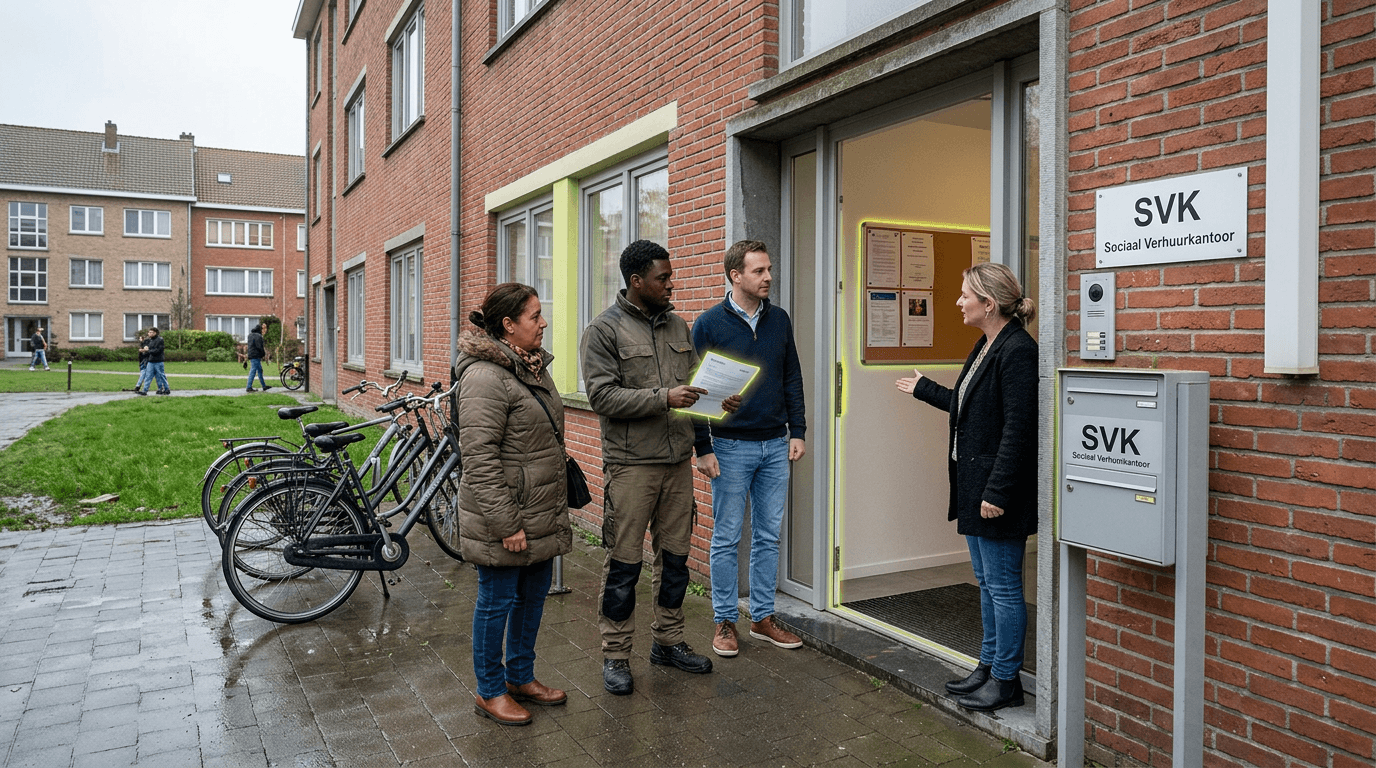
SVK / Sociaal Verhuurkantoor (Social Rental Agencies)
Sociaal Verhuurkantoren (Social Rental Agencies, or SVKs) represent a distinctive intermediary model in Belgium's housing system, addressing the persistent shortage of affordable rental units without relying on new construction or direct government ownership. The core challenge these agencies tackle is the mismatch between abundant private rental stock—much of it underutilized or held by small landlords wary of tenant management—and the urgent need for affordable housing among low-income households. Traditional social housing construction faces long timelines, high capital costs, and frequent local opposition, while purely market-driven rentals remain inaccessible to vulnerable populations. SVKs bridge this gap by leasing properties from private owners at negotiated rates, assuming vacancy risk and tenant management responsibilities, then subletting units to income-qualified tenants at regulated social rates. This triangular arrangement transforms private assets into social housing supply through contractual intermediation rather than regulatory mandate or public acquisition.
The model operates through a structured value exchange: private landlords receive guaranteed rental income, professional property maintenance, and relief from tenant screening and conflict resolution, while accepting below-market returns in exchange for reduced risk and administrative burden. SVKs, typically nonprofit entities receiving public subsidies, cover the gap between market lease costs and social rents through a combination of municipal funding, regional grants, and operational efficiencies. Early evidence from Brussels and Flanders indicates the approach can mobilize private stock relatively quickly—within months rather than the years required for new construction—and has proven particularly effective in neighborhoods where private rental vacancy rates are elevated but social housing waiting lists remain long. However, the model's scalability depends on sustaining landlord participation, which requires stable subsidy flows and effective property management to prevent quality deterioration. Behavioral patterns suggest landlords are most responsive when vacancy risks are rising or regulatory pressures around tenant protections are increasing, making the SVK option comparatively attractive.
The strategic implications center on whether intermediary models can meaningfully expand affordable supply in tight housing markets without triggering unintended consequences. For policymakers, SVKs offer a faster, less capital-intensive alternative to construction programs, but their long-term viability hinges on the sustainability of subsidy arrangements and the willingness of private landlords to participate at scale. If subsidy gaps widen due to rising market rents, the model may struggle to recruit sufficient properties. Conversely, if regulatory environments become more tenant-favorable, more landlords may seek the stability SVKs provide. Key monitoring points include the rate of landlord enrollment, tenant turnover and satisfaction metrics, the financial stability of SVK organizations under varying market conditions, and whether the model can extend beyond urban cores into suburban or rural areas where private rental stock characteristics differ. The signal also raises questions about whether intermediation strategies might eventually displace direct public investment in housing, shifting risk and responsibility in ways that could undermine long-term affordability commitments.