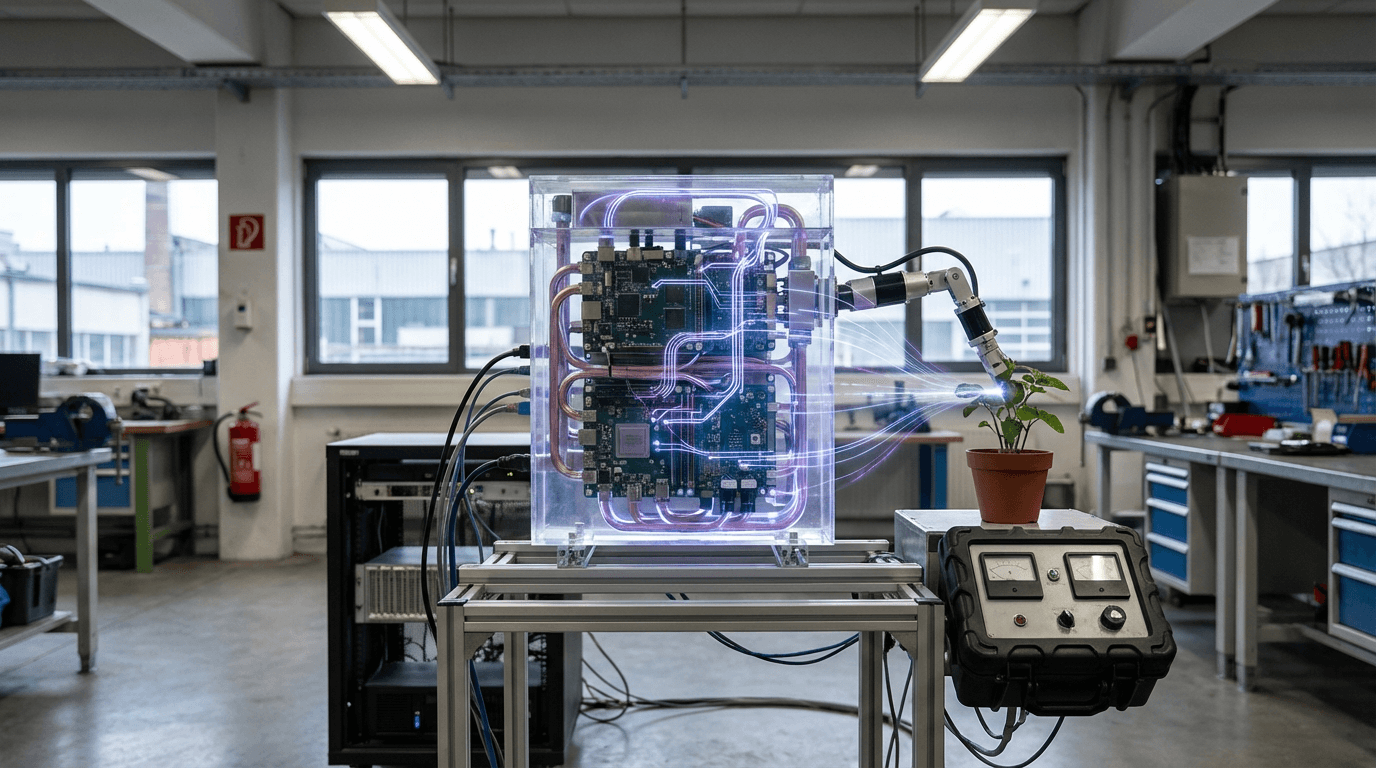
Synthetic Consciousness Runtimes
Synthetic consciousness runtimes are experimental architectures that attempt to create AI systems with consciousness-like properties by integrating theories from cognitive science, including global workspace theory (where information becomes globally accessible through attention), self-monitoring mechanisms, and motivational systems that drive goal-directed behavior. These systems seek to move beyond reactive AI to create agents with persistent awareness, self-modeling, and intrinsic motivation.
This innovation explores the most speculative frontier of AI research, attempting to understand and potentially recreate aspects of consciousness in artificial systems. The approach integrates multiple cognitive mechanisms—attention, memory, self-awareness, motivation—to create systems that might exhibit consciousness-like properties. Research institutions are investigating these concepts, though the field remains highly experimental and controversial, with fundamental questions about the nature of consciousness and whether it can be artificially created remaining unresolved.
The technology represents a long-term research direction rather than a near-term practical application, exploring fundamental questions about the nature of mind, consciousness, and intelligence. While practical applications may be decades away if they materialize at all, research in this area could yield insights into creating more sophisticated, autonomous AI systems. However, the field faces profound philosophical, scientific, and technical challenges, and it remains unclear whether consciousness can be engineered or whether synthetic systems could ever truly be conscious.
Related Organizations
Canada · Company
Developing the 'Genius' platform based on Active Inference and the Free Energy Principle to create adaptive, autonomous intelligent agents.
Czech Republic · Research Lab
Research and development company focusing on general artificial intelligence, specifically the 'Badger' architecture for lifelong learning and adaptation.
United Kingdom · University
Interdisciplinary research center at the University of Sussex investigating the biological basis of consciousness and its application to machines.
United States · Company
Developing AI based on the Thousand Brains Theory of the neocortex, focusing on sensorimotor modeling and biological intelligence.
United States · Nonprofit
Non-profit research group mapping the computational properties of conscious experience (qualia) to inform future AI safety and design.

Decentralized AI marketplace and developer of OpenCog Hyperon, a cognitive architecture for AGI.
France · Company
Developing 'Organic AI' chips and software that mimic cortical function, focusing on explainability and low energy consumption.
Germany · Consortium
International association dedicated to promoting mathematical approaches to the study of consciousness.

World-leading deep learning research institute, with specific research tracks led by Yoshua Bengio on 'Consciousness Priors' in AI.

Developing 'Natural Intelligence' for machines by reverse-engineering insect brains to create autonomous decision-making software.
Supporting Evidence
Research this in Signals
Signals turns a topic into a sourced research record you can inspect and rerun. Your first scan is free, and this one starts with Synthetic Consciousness Runtimes already loaded, so edit it or scan as is.