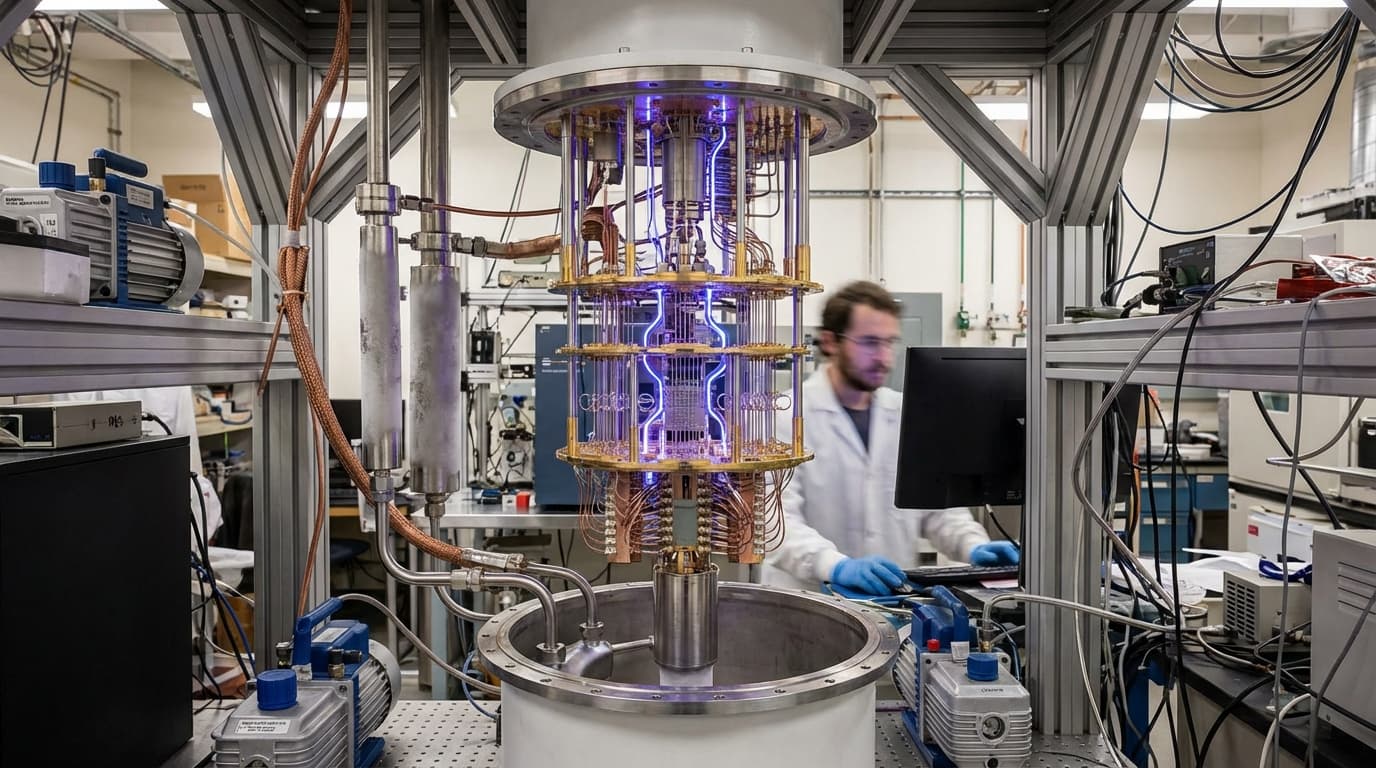
Cryogenic AI Processors
Cryogenic AI processors operate at extremely low temperatures (typically near absolute zero, using liquid helium cooling) where certain materials become superconducting, exhibiting zero electrical resistance. These systems can achieve picosecond switching speeds and near-zero power dissipation for logic operations, enabling ultra-fast, ultra-efficient computation. Both cryogenic CMOS (operating conventional silicon at low temperatures) and superconducting logic (using materials like Josephson junctions) are being explored.
This innovation addresses the need for ultra-low-latency, ultra-efficient processing in applications where speed and power efficiency are critical, such as real-time sensor fusion, encryption, and quantum-classical hybrid systems. The extreme cooling requirements make these systems impractical for most applications, but they offer unique advantages for specialized use cases. Defense laboratories and research institutions are investigating these technologies, particularly for space applications and systems requiring the lowest possible latency.
The technology is particularly significant for applications where microseconds matter and power efficiency is critical, such as satellite systems, quantum computing interfaces, and real-time defense systems. However, the practical challenges of maintaining cryogenic temperatures, the cost and complexity of cooling systems, and the limited range of applications make this technology niche. It's unlikely to become mainstream but could be essential for specific high-performance, specialized applications where its unique advantages justify the complexity and cost.
Related Organizations
United States · Company
Developer of Digital-RF and superconducting microelectronics using Rapid Single Flux Quantum (RSFQ) logic.
United States · Research Lab
Operates a dedicated superconducting electronics foundry and researches cryogenic computing architectures.
Japan · University
Leading research institution for Adiabatic Quantum-Flux-Parametron (AQFP) logic, a superconducting reversible logic family.
United States · Government Agency
Develops standards and prototypes for superconducting neuromorphic hardware.
United States · Company
Participant in IARPA's C3 (Cryogenic Computing Complexity) program.
United States · Startup
Develops digital superconducting chips for quantum control and classical co-processing.

Conducts advanced research into cryogenic CMOS and quantum computing interconnects.

Major defense contractor developing Reciprocal Quantum Logic (RQL) for cryogenic computing.

Developing Electronic Design Automation (EDA) tools specifically for superconducting electronics.

Researching superconducting nanowire electronics for neuromorphic applications.
Supporting Evidence
Research this in Signals
Signals turns a topic into a sourced research record you can inspect and rerun. Your first scan is free, and this one starts with Cryogenic AI Processors already loaded, so edit it or scan as is.