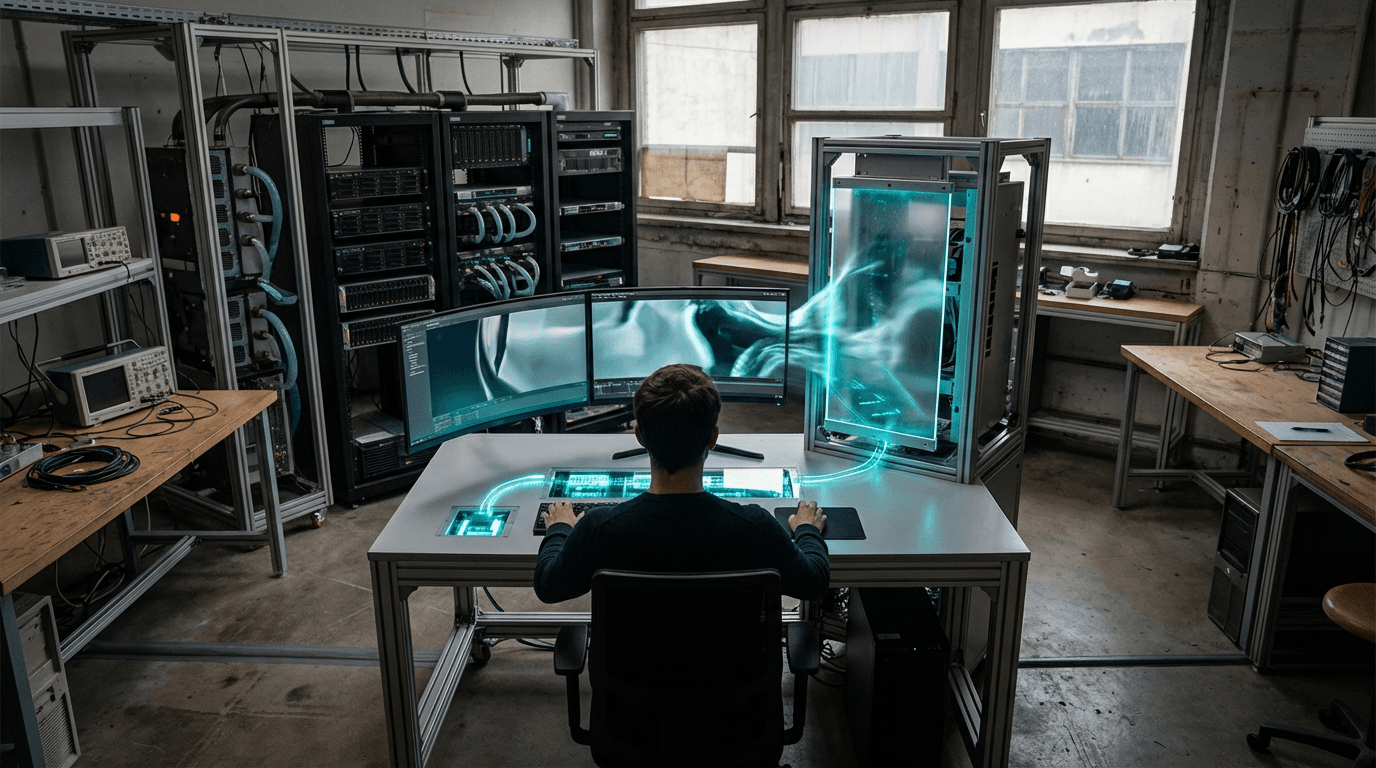
Generative Video Models
Generative video models represent a breakthrough in artificial intelligence that enables the creation of high-quality video content directly from text descriptions. These systems utilize advanced deep learning architectures, particularly diffusion models and transformer networks, that have been trained on vast datasets of video content paired with descriptive text. The underlying mechanism involves learning the complex relationships between language and visual motion, allowing the AI to understand not just what objects should appear in a scene, but how they should move, interact, and evolve over time. Unlike earlier video generation approaches that relied on rigid templates or frame-by-frame manipulation, these models can synthesize entirely new sequences with coherent motion, realistic lighting, and temporal consistency across frames. The technology builds upon the same foundational principles that enabled text-to-image generation, but extends them into the temporal dimension, requiring significantly more computational resources and sophisticated training techniques to maintain visual coherence across multiple frames.
The entertainment and streaming industries face persistent challenges around content production costs, time constraints, and the creative bottlenecks inherent in traditional video creation pipelines. Generative video models address these pain points by dramatically accelerating pre-visualization workflows, allowing directors and producers to rapidly prototype scenes and test creative concepts before committing to expensive production schedules. For streaming platforms and content creators, this technology enables the rapid generation of stock footage, background elements, and supplementary content that would traditionally require costly shoots or licensing fees. The capability to generate custom video content on demand also opens new possibilities for personalized streaming experiences, where narrative elements could be dynamically adjusted based on viewer preferences. Animation studios are exploring these models as tools to accelerate storyboarding and rough animation phases, while advertising agencies see potential for creating multiple campaign variations quickly and cost-effectively, enabling more agile creative testing and iteration.
Early deployments of generative video models have already begun appearing in professional creative workflows, with several major technology companies releasing experimental platforms that demonstrate the technology's potential. Production studios are conducting pilot programs to integrate these tools into their pre-production processes, particularly for concept development and pitch presentations. The technology currently excels at generating short clips ranging from a few seconds to under a minute, with ongoing research focused on extending duration while maintaining quality and narrative coherence. Industry analysts note that as these models continue to improve, they are likely to become standard tools in the content creator's toolkit, similar to how digital editing software transformed post-production decades ago. The trajectory suggests a future where the barrier between imagination and visual realization continues to diminish, enabling smaller creative teams to produce content that previously required substantial resources. However, this evolution also raises important questions about authenticity, copyright, and the role of human creativity in an increasingly AI-assisted production landscape, challenges that the industry is actively working to address through new frameworks and standards.
Related Organizations

OpenAI
United States · Company
Creator of GPT-4o, a natively multimodal model capable of reasoning across audio, vision, and text in real-time.

Applied AI research company shaping the next era of art, entertainment and human creativity.

Developers of the Gemini family of models, which are trained from the start to be multimodal across text, images, video, and audio.

An AI video generation platform that includes a feature to automatically generate sound effects that match the action in the generated video.

Software giant and founder of the Content Authenticity Initiative (CAI).

Parent company of TikTok, possessing the industry-standard algorithmic recommendation engine for short-form video.

A major competitor to TikTok in China, operating a massive short-video platform driven entirely by algorithmic feeds.

Creators of Dream Machine, a high-quality video generation model, and 3D capture technology.

Open source generative AI company, creators of Stable Audio.

Developed the 'Xiaomanlv' autonomous delivery robot for last-mile logistics.

Deep learning startup building perceptual foundation models for video generation.
Supporting Evidence
Research this in Signals
Signals turns a topic into a sourced research record you can inspect and rerun. Your first scan is free, and this one starts with Generative Video Models already loaded, so edit it or scan as is.