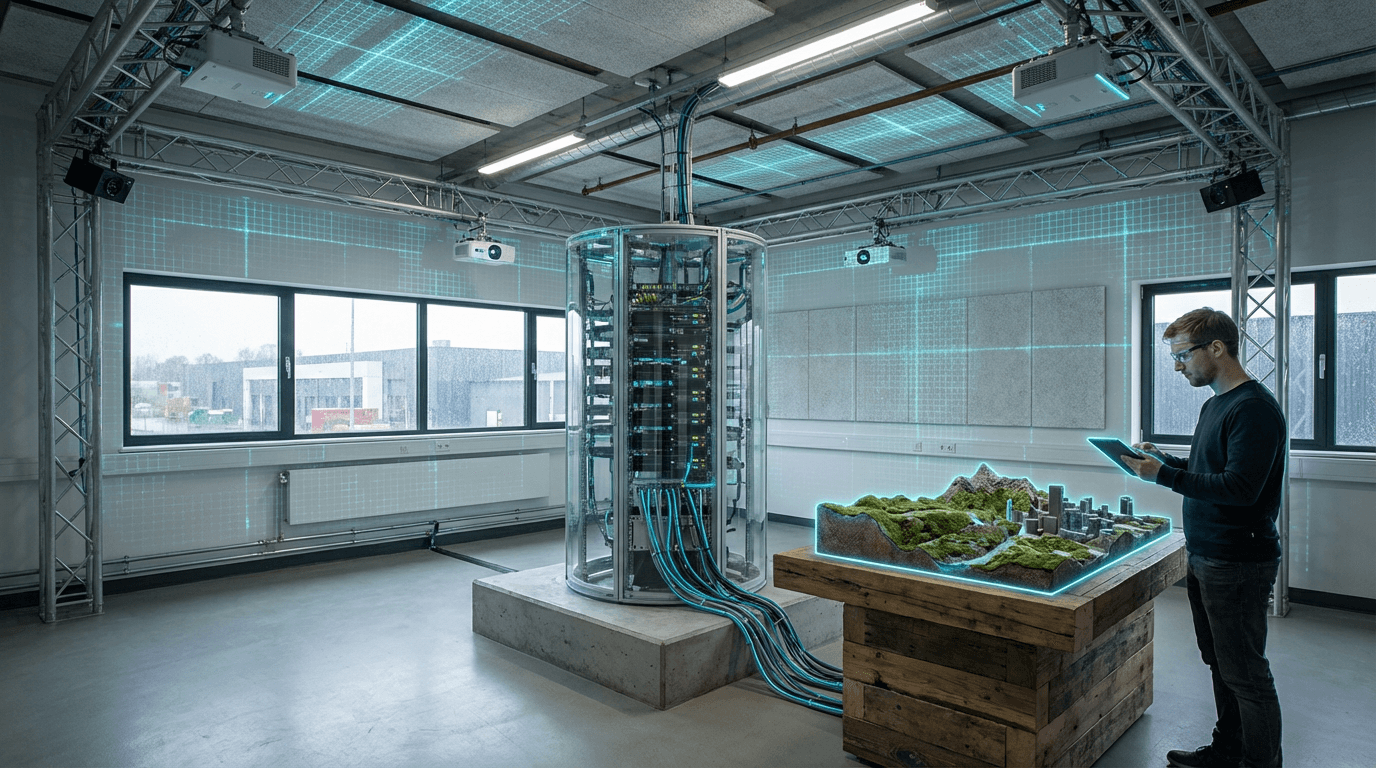
Procedural World Generation Engines
Procedural world generation engines represent a fundamental shift in how virtual environments are created for entertainment and interactive media. Rather than manually crafting every element of a digital landscape, these systems employ sophisticated algorithms to automatically generate terrain, vegetation, architecture, and atmospheric conditions according to defined parameters and rule sets. The technology relies on mathematical functions such as Perlin noise, fractals, and cellular automata to create natural-looking variations and patterns that mimic real-world complexity. By combining these foundational algorithms with constraint systems, biome definitions, and asset libraries, procedural generation engines can produce environments that feel both organic and intentional. Advanced implementations incorporate machine learning models that analyse existing content to understand design principles, enabling the generation of worlds that maintain artistic coherence while offering near-infinite variation.
The entertainment industry faces mounting pressure to deliver increasingly expansive virtual worlds while managing escalating production costs and development timelines. Traditional manual world-building approaches require teams of artists and designers to spend months or years crafting environments, a process that becomes economically unsustainable as audience expectations for scale and detail continue to grow. Procedural generation addresses this challenge by dramatically reducing the human labour required to populate virtual spaces with diverse, detailed content. This technology enables smaller development teams to create experiences that would otherwise demand studio-scale resources, democratising access to large-scale world creation. Furthermore, these systems solve the storage and distribution problem inherent in massive game worlds—rather than storing every tree, rock, and building as individual assets, the engine stores the algorithmic rules and seeds that generate them on-demand, significantly reducing file sizes and memory requirements.
Current adoption of procedural world generation spans from independent game developers to major entertainment studios, with notable implementations in exploration-focused games, survival experiences, and virtual reality applications. The technology proves particularly valuable for streaming platforms developing interactive content, where the ability to generate unique environments for each viewer session creates personalised experiences at scale. Research suggests that combining procedural generation with directed design—where human creators establish key landmarks and narrative spaces while algorithms fill the connective tissue—produces the most compelling results. Industry analysts note growing interest in applying these techniques beyond gaming, including virtual production for film and television, where procedurally generated backgrounds can reduce reliance on physical sets and location shooting. As computational power increases and algorithms become more sophisticated, procedural world generation is evolving toward systems that can generate not just static environments but dynamic ecosystems with simulated weather patterns, evolving civilisations, and responsive narrative elements, positioning this technology as foundational infrastructure for the next generation of immersive entertainment experiences.
Related Organizations

Generates a semantic 3D digital twin of the entire Earth using satellite imagery and AI.

Developers of Houdini, a procedural 3D software widely used for building automated content pipelines.



Developers of Unreal Engine 5, which features Lumen, a fully dynamic global illumination and reflection system designed for next-gen consoles and PC.

Global leader in GIS software (ArcGIS), providing the spatial analytics layer used by thousands of local governments for urban planning and policy.

Creators of Gaia and other environment generation tools for Unity.

Creators of the Unity Engine and the ML-Agents toolkit, which allows researchers to train intelligent agents within game environments.


AI engine for game development that uses bots to test games and simulate player behavior.
Supporting Evidence
Research this in Signals
Signals turns a topic into a sourced research record you can inspect and rerun. Your first scan is free, and this one starts with Procedural World Generation Engines already loaded, so edit it or scan as is.