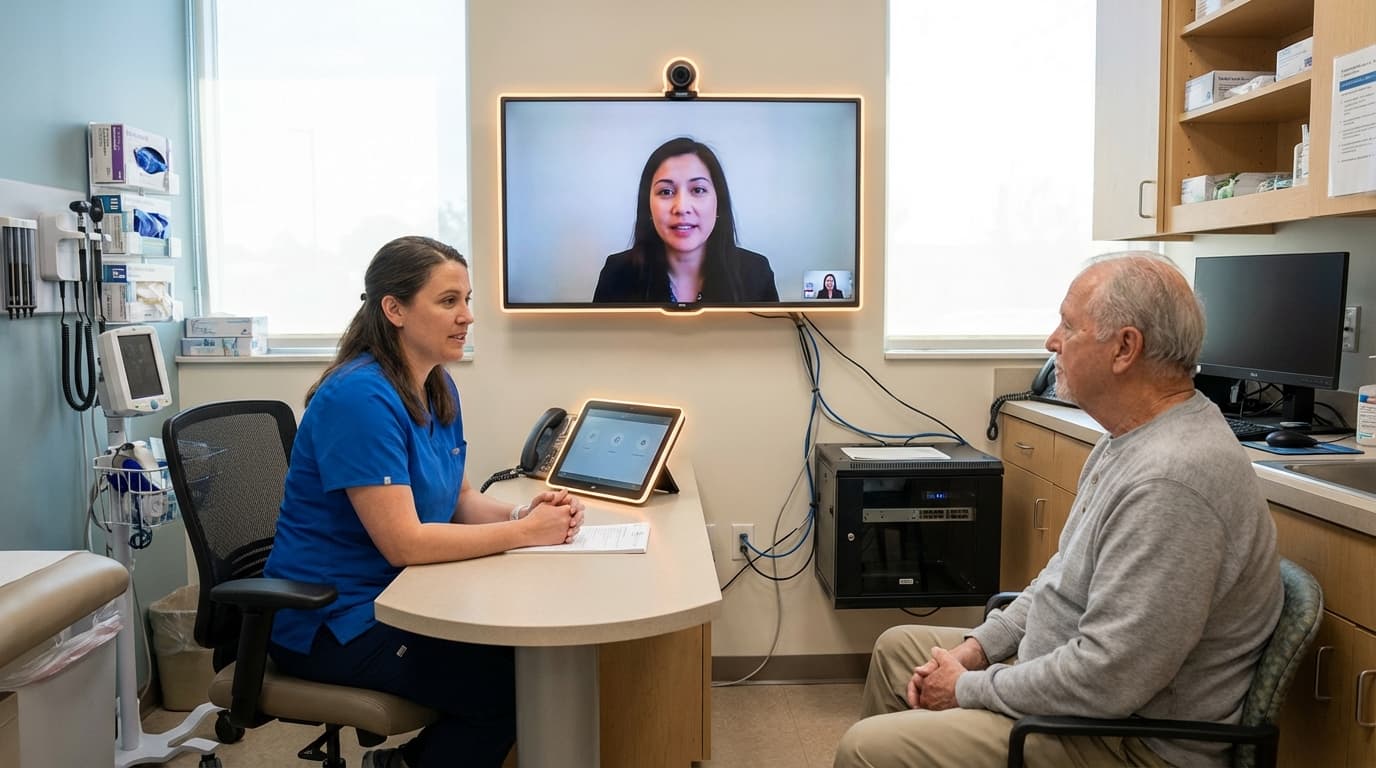
Integrated Behavioral Telehealth in Primary Care
Integrated behavioral telehealth represents a fundamental restructuring of how mental health services are delivered within primary care settings. Rather than treating mental and physical health as separate domains requiring distinct appointments and providers, this approach embeds virtual behavioral health specialists directly into primary care workflows. The system operates through secure video platforms that connect patients with psychologists, psychiatrists, social workers, and licensed counselors during or immediately following their primary care visits. Clinical integration is achieved through shared electronic health records, standardized screening protocols administered during routine check-ins, and collaborative care agreements that allow primary care physicians and behavioral health specialists to coordinate treatment plans in real time. The technical infrastructure typically includes HIPAA-compliant telehealth platforms, integrated scheduling systems, and clinical decision support tools that flag patients who may benefit from behavioral health intervention based on chronic disease markers, medication patterns, or screening results.
This model addresses a persistent challenge in healthcare delivery: the artificial separation between mental and physical health services that creates access barriers and fragmented care. Traditional referral pathways often result in patients waiting weeks or months for mental health appointments, with many never completing the referral due to stigma, logistical barriers, or lack of available providers in their geographic area. Research suggests that up to 70 percent of primary care visits involve behavioral health components, yet most primary care settings lack adequate mental health resources. By placing behavioral health specialists virtually within the primary care team, this approach enables immediate "warm handoffs" where a patient expressing anxiety about diabetes management or depression symptoms can speak with a counselor within minutes rather than weeks. The model proves particularly valuable for managing chronic conditions like diabetes, hypertension, and cardiovascular disease, where psychological factors significantly influence treatment adherence and outcomes. It also reduces the stigma associated with seeking mental health care by normalizing these services as a routine component of overall health management.
Early implementations in integrated health systems and federally qualified health centers indicate promising outcomes in terms of both access and clinical effectiveness. Patients report higher satisfaction with care coordination and reduced burden associated with managing multiple appointments across different locations. The model has gained traction in rural and underserved areas where behavioral health specialist shortages are most acute, allowing a single psychiatrist or psychologist to support multiple primary care clinics across a wide geographic region. Follow-up therapy sessions, medication management, and ongoing counseling can be delivered entirely through telehealth, with primary care providers maintaining oversight of the overall treatment plan. This approach aligns with broader healthcare trends toward value-based care models that emphasize prevention, care coordination, and population health management. As healthcare systems increasingly recognize the interconnection between mental and physical health outcomes, integrated behavioral telehealth is positioned to become a standard component of primary care delivery rather than an innovative exception.
Related Organizations

Behavioral health medical group that integrates directly into primary care and women's health practices.

A platform that connects primary care providers with mental health professionals and resources.

A leading provider of telepsychiatry services for health systems and community health centers.


Oak Street Health
United States · Company
A network of value-based primary care centers for adults on Medicare.

A membership-based primary care practice on a mission to make getting quality care more affordable and accessible.

Virtual mental health services for high-acuity patients.

A global telehealth platform connecting providers, insurers, and patients.


A mental health care provider that acquired the technology assets of Mindstrong, a pioneer in keyboard-interaction phenotyping.
Supporting Evidence
Research this in Signals
Signals turns a topic into a sourced research record you can inspect and rerun. Your first scan is free, and this one starts with Integrated Behavioral Telehealth in Primary Care already loaded, so edit it or scan as is.