Vertiport Networks
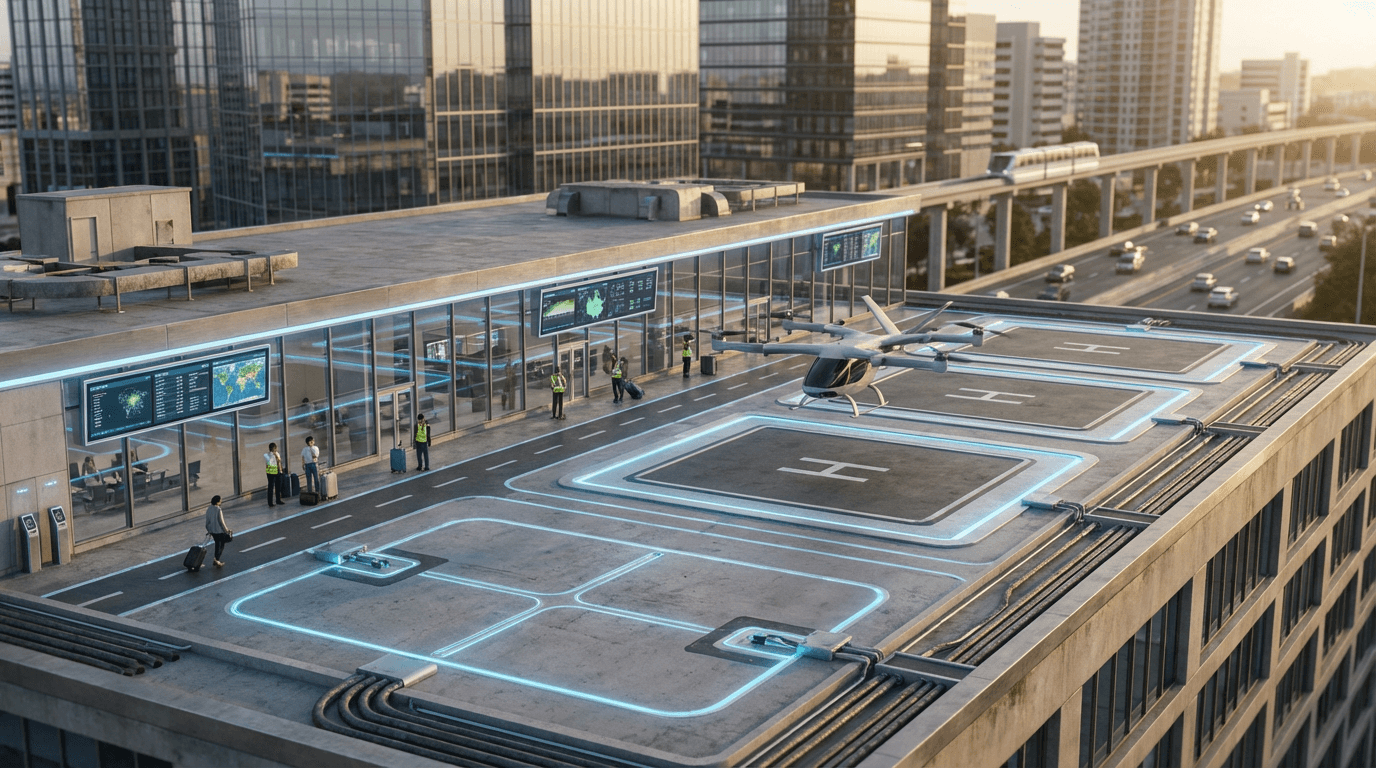
Vertiport networks represent a fundamental infrastructure layer for the emerging urban air mobility ecosystem, providing dedicated facilities for electric Vertical Take-Off and Landing (eVTOL) aircraft operations within metropolitan areas. Unlike traditional airports or heliports, vertiports are specifically engineered to accommodate the unique operational characteristics of eVTOL vehicles, including their quieter electric propulsion systems, shorter flight ranges, and higher frequency operations. These facilities typically feature multiple landing pads, passenger terminals, charging infrastructure, and air traffic management systems designed to handle the anticipated volume of urban air taxi services. The physical design of vertiports varies based on location and capacity requirements, ranging from rooftop installations on existing buildings to ground-level facilities integrated with transit centers, parking structures, or dedicated standalone complexes. Key technical considerations include approach and departure paths that minimize noise impact on surrounding communities, robust electrical infrastructure to support rapid charging of multiple aircraft, and weather protection systems to maintain operations across diverse conditions.
The development of vertiport networks addresses several critical challenges facing urban transportation systems, particularly the growing congestion on ground-level roads and the limitations of existing public transit infrastructure to serve dispersed metropolitan regions. By creating a three-dimensional transportation layer, vertiports enable point-to-point connectivity that bypasses surface congestion, potentially reducing travel times for medium-distance urban trips from hours to minutes. This infrastructure also solves the "last-mile" problem inherent in traditional aviation by situating landing facilities within or near urban centers rather than at distant airports. Early planning efforts emphasize multimodal integration, positioning vertiports as nodes within broader transportation networks where passengers can seamlessly transfer between air taxis, trains, buses, and ground vehicles. The business model enabled by vertiport networks extends beyond passenger transport to include time-sensitive cargo delivery, emergency medical services, and disaster response applications, creating multiple revenue streams that can justify the substantial capital investment required for network development.
Several metropolitan regions have begun establishing vertiport networks through public-private partnerships, with initial deployments focusing on connecting airports to city centers and linking business districts across sprawling urban areas. Regulatory frameworks are evolving in parallel, with aviation authorities developing certification standards specific to vertiport operations that differ from traditional airport requirements. The infrastructure buildout faces challenges including community acceptance, airspace integration with existing helicopter and drone operations, and the need for standardization across different eVTOL vehicle designs from competing manufacturers. Industry observers note that successful vertiport networks will likely emerge first in regions with supportive regulatory environments, existing transportation congestion problems, and geographic features such as waterways or terrain that make ground transportation particularly challenging. As battery technology improves and eVTOL aircraft achieve commercial certification, the density and sophistication of vertiport networks are expected to increase, potentially transforming urban mobility patterns and reshaping metropolitan development around these new transportation nodes in ways analogous to how subway stations and highway interchanges influenced twentieth-century urban growth.
Related Organizations

Leading designer, developer, and operator of vertiport infrastructure for the advanced air mobility industry.

Infrastructure giant establishing a network of vertiports in the US and Europe to support eVTOL operations.

Developer of 'Air-One', a rapidly deployable, modular vertiport hub for drones and eVTOLs.

Operator of Paris airports, actively building a vertiport network in Paris for the 2024 Olympics and beyond.

Developing an all-electric vertical takeoff and landing aircraft for commercial passenger service.

German aircraft manufacturer specializing in multicopter designs like the VoloCity for inner-city flights.

Building the digital operating system (Vertiport Automation System) to manage high-volume vertiport traffic.
Supporting Evidence
Research this in Signals
Signals turns a topic into a sourced research record you can inspect and rerun. Your first scan is free, and this one starts with Vertiport Networks already loaded, so edit it or scan as is.