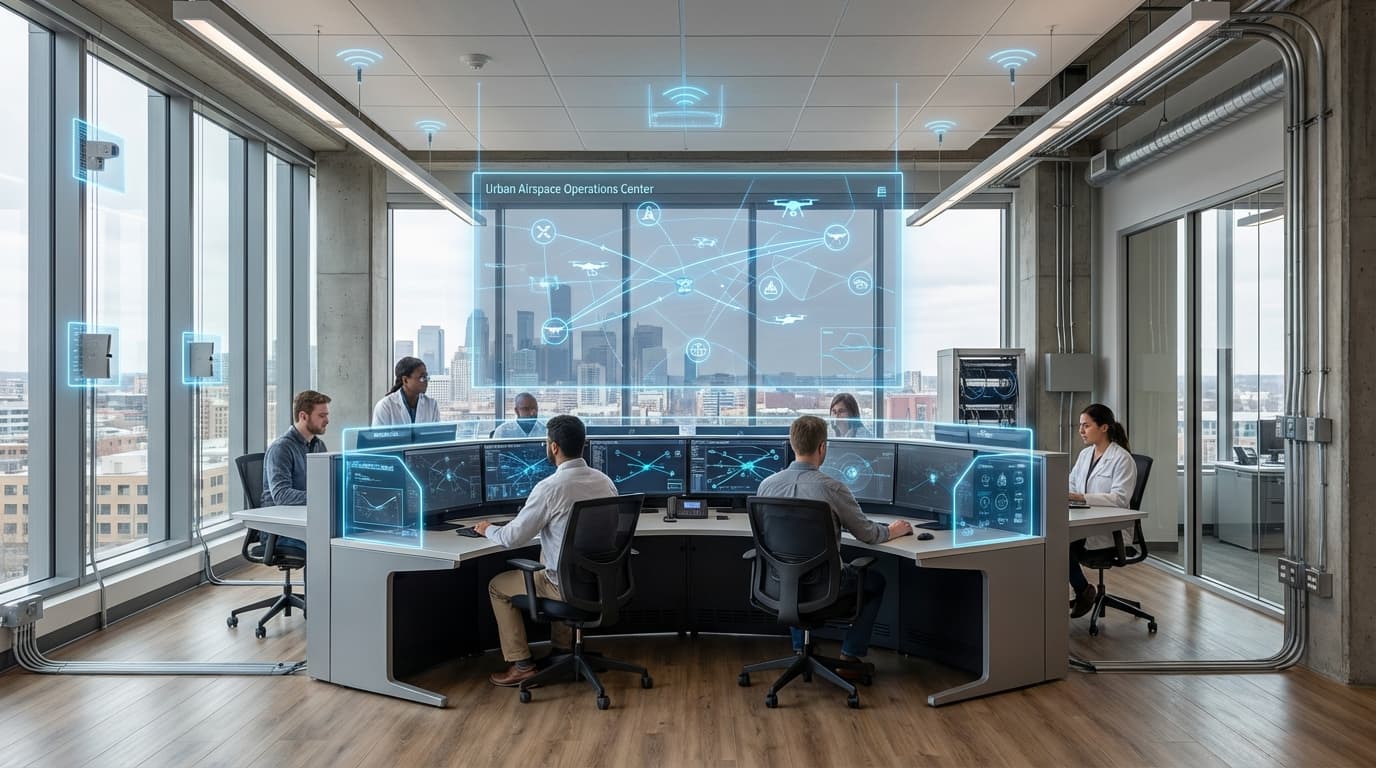
UAM Traffic Management (UTM)
Urban Air Mobility Traffic Management (UTM) represents a fundamental reimagining of how airspace is controlled and coordinated, specifically designed for the emerging ecosystem of low-altitude aerial vehicles. Unlike traditional air traffic control systems that rely on centralized radar tracking and human controllers managing relatively predictable flight patterns, UTM operates as a distributed digital infrastructure that can simultaneously coordinate thousands of autonomous and piloted aircraft operating below 400 feet. The system integrates multiple data streams—including real-time weather conditions, no-fly zones, temporary flight restrictions, vehicle telemetry, and ground infrastructure status—into a unified operational picture. At its technical core, UTM employs sophisticated algorithms for dynamic airspace allocation, creating virtual corridors and deconfliction zones that adjust in real-time based on traffic density, vehicle capabilities, and environmental conditions. The architecture typically combines cloud-based processing with edge computing capabilities, enabling both centralized strategic planning and localized tactical decision-making that can respond to changing conditions within milliseconds.
The proliferation of commercial drone operations and the anticipated arrival of electric vertical takeoff and landing (eVTOL) air taxis have exposed critical gaps in existing aviation infrastructure. Traditional air traffic control was never designed to handle the volume, diversity, and operational patterns of urban air mobility—where hundreds of package delivery drones might need to navigate the same airspace as emergency medical flights, infrastructure inspection vehicles, and passenger-carrying air taxis. UTM addresses this challenge by automating the complex choreography of flight authorization, route optimization, and separation management that would be impossible for human controllers to manage at scale. The system enables new business models by reducing operational costs through automation, allowing smaller operators to participate in aerial commerce without requiring dedicated air traffic control resources. It also solves the critical safety challenge of preventing mid-air collisions and ensuring safe emergency landing procedures in densely populated urban environments where traditional aviation safety margins are impractical.
Several metropolitan areas have begun implementing UTM frameworks through pilot programs and regulatory sandboxes, with early deployments focusing on drone delivery corridors and designated eVTOL routes. These initial implementations demonstrate the system's ability to manage mixed operations—coordinating autonomous cargo drones alongside piloted aircraft while maintaining safety standards comparable to traditional aviation. The technology is particularly valuable in supporting emergency response scenarios, where UTM can instantly clear priority corridors for medical evacuation flights or create temporary no-fly zones around incident sites. As urban populations continue to concentrate and ground-based transportation infrastructure reaches capacity limits, UTM represents an essential enabler for the vertical expansion of mobility networks. The convergence of UTM with broader smart city initiatives—including integration with ground transportation management systems and building infrastructure—points toward a future where three-dimensional mobility becomes a routine element of urban life, fundamentally changing how people and goods move through metropolitan areas.
Related Organizations

Regulatory body defining the 'U-space' regulatory framework for drone integration in Europe.

Conducts advanced demonstrations like LCRD (Laser Communications Relay Demonstration) and DSOC (Deep Space Optical Comm).

Provides UTM software enabling authorities to visualize and manage drone traffic in their airspace.

Alphabet subsidiary developing an autonomous delivery drone service and an unmanned traffic management (UTM) platform.

Provides an integrated airspace management platform for U-space and UTM services.

Develops UTM and analytical software for drone operators and airspace authorities.

A joint venture between Boeing and SparkCognition building a blockchain-enabled airspace management system.

Prime contractor for the TeQuantS project and a key partner in ESA's quantum satellite initiatives.

Supplier of communication and information systems for control centers, actively developing UTM solutions for Austria and Norway.

Global technology company developing UTM hubs and U-space platforms for European airspace.
Major drone service provider and strategic investor in UTM technologies (majority shareholder of Unifly).
Supporting Evidence
Research this in Signals
Signals turns a topic into a sourced research record you can inspect and rerun. Your first scan is free, and this one starts with UAM Traffic Management (UTM) already loaded, so edit it or scan as is.