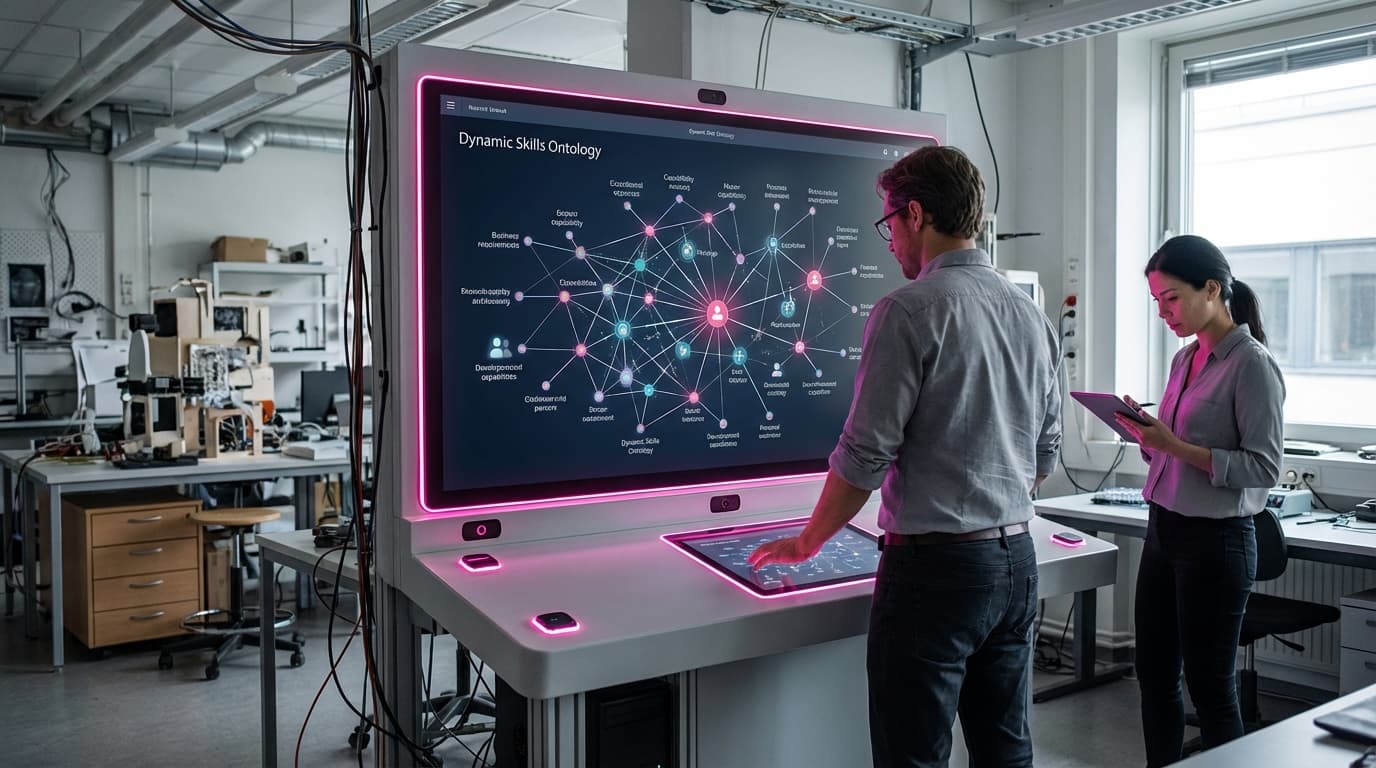
Dynamic Skills Ontologies
Dynamic skills ontologies represent a fundamental shift from traditional human resource management systems by creating living, interconnected maps of organizational capabilities. These systems employ graph database architectures combined with natural language processing and machine learning algorithms to continuously analyze multiple data streams—including project deliverables, internal communications, code repositories, document contributions, and collaboration patterns. Rather than relying on self-reported competencies or periodic performance reviews, the technology infers skills through behavioral signals and work artifacts. The underlying graph structure captures not just individual capabilities but the relationships between skills, revealing how expertise clusters within teams and identifying knowledge dependencies across the organization. Advanced implementations can detect emerging skills before employees formally recognize them, tracking how individuals apply knowledge from one domain to solve problems in another.
The primary challenge these systems address is the growing mismatch between organizational knowledge and its discoverability. In large enterprises, critical expertise often remains invisible to those who need it most, leading to redundant hiring, inefficient project staffing, and missed opportunities for internal mobility. Traditional skills inventories become outdated almost immediately, failing to capture the rapid evolution of capabilities in knowledge-intensive industries. Dynamic ontologies solve this by treating skills as fluid rather than fixed, recognizing that expertise develops through practice and collaboration rather than formal certification alone. This approach enables organizations to identify hidden talent pools, reduce dependency on external recruitment, and build more resilient teams by understanding not just who knows what, but who is developing adjacent capabilities that could be leveraged for strategic initiatives.
Early adopters in technology, consulting, and professional services sectors are deploying these systems to improve project staffing efficiency and accelerate internal talent development. Research suggests that organizations using dynamic skills mapping can reduce time-to-staff for specialized projects by identifying internal candidates who might not surface through conventional keyword searches. The technology also supports workforce planning by revealing skill gaps and predicting future capability needs based on project pipelines. As remote and hybrid work models make informal knowledge discovery more difficult, these systems become increasingly valuable for maintaining organizational coherence. The trajectory points toward integration with learning platforms and career development tools, creating closed-loop systems where skill identification automatically triggers personalized development recommendations, fundamentally transforming how organizations cultivate and deploy their collective intelligence.
Related Organizations

A talent intelligence platform that uses AI to match individuals with career paths, identifying skills gaps and suggesting upskilling opportunities.

A workforce intelligence platform acquired by Cornerstone that uses AI to map skills and labor market data.
An AI technology company that infers employee skills from digital footprints (emails, commits, tickets).


An internal talent marketplace that uses AI to mentor employees on potential career moves and projects within their organization.
A talent intelligence platform designed to bridge the skills gap.
AI-powered talent experience platform focusing on skills mapping and internal mobility in Europe.

A learning experience platform that uses data analytics to suggest personalized learning pathways and skill development for employees.


A major cloud-based people development software provider (LMS/LXP/HR).
Supporting Evidence
Research this in Signals
Signals turns a topic into a sourced research record you can inspect and rerun. Your first scan is free, and this one starts with Dynamic Skills Ontologies already loaded, so edit it or scan as is.